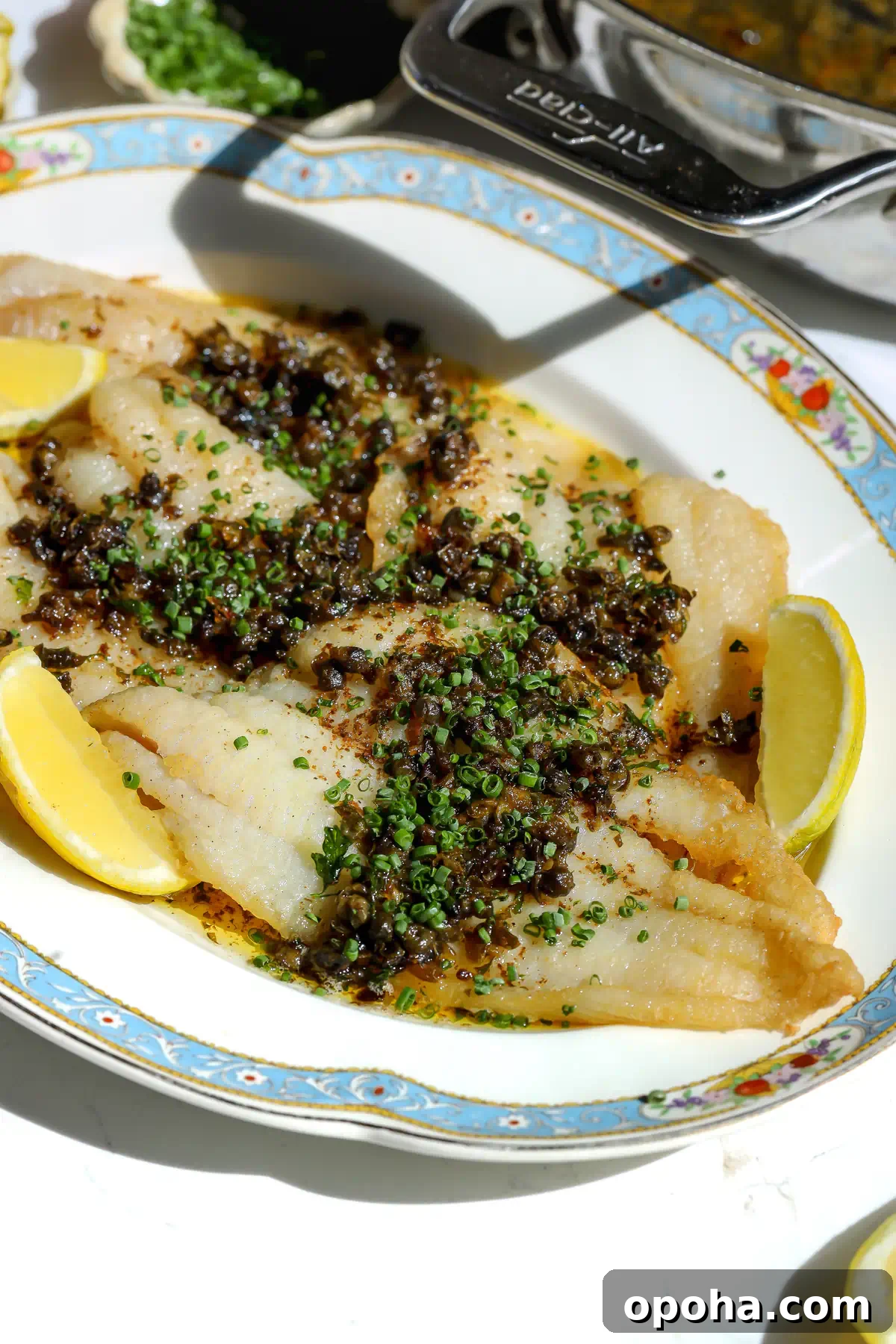
Sole Meunière is the classic French dish that famously inspired Julia Child — she called it “the most exciting meal of my life.” A perfectly seared fillet finished with nutty browned butter, bright lemon and briny capers is both elegant and surprisingly simple when you follow the right technique. This article explains how to get a clean, golden sear on delicate fish, build an authentic meunière sauce, and serve it beautifully.
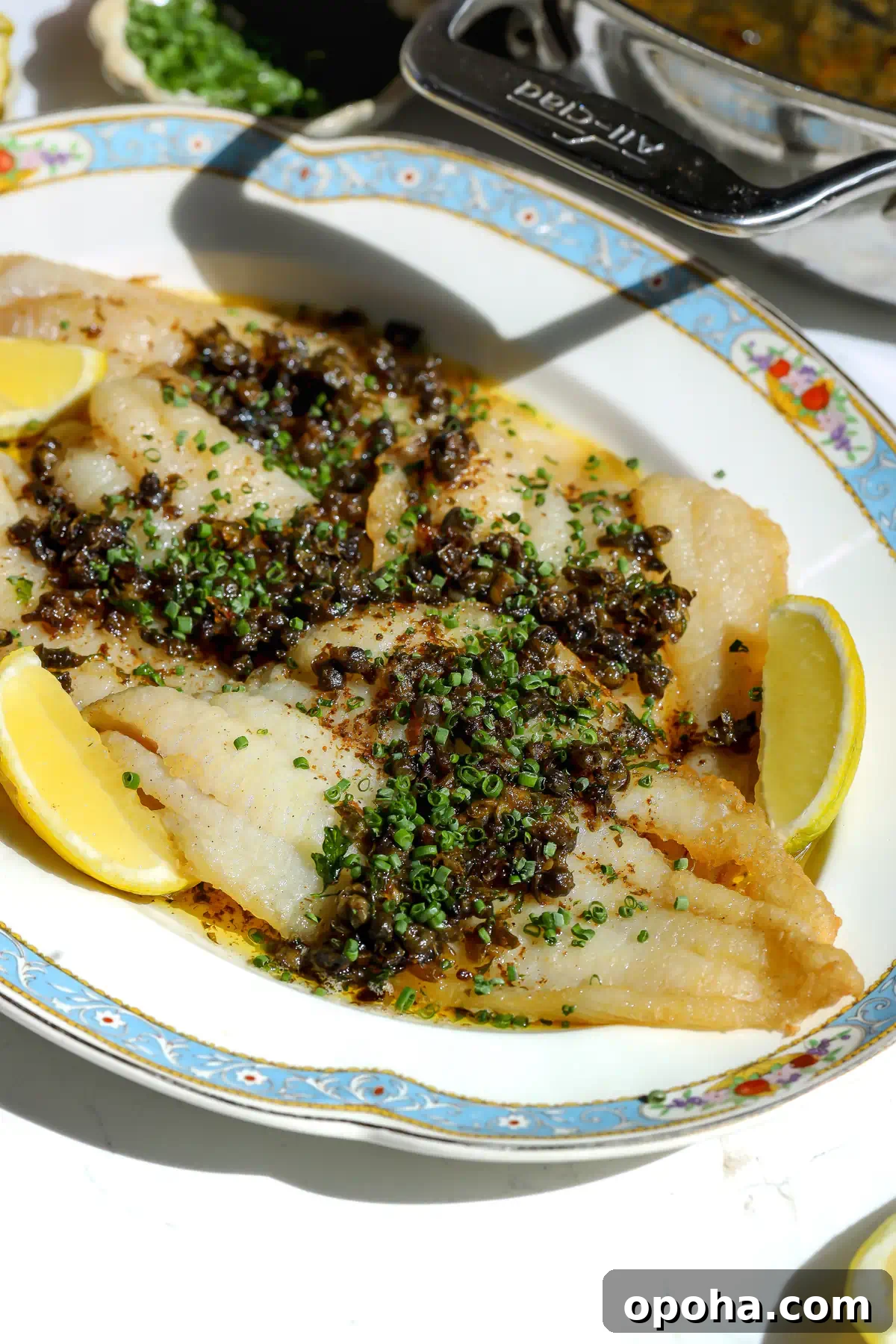
Table of Contents
- Ingredients You’ll Need
- How to Pan-Fry Sole
- Building the Meunière Sauce
- How to Serve
- Prep and Storage Tips
- Frequently Asked Questions
- Sole Meunière Recipe
Ingredients You’ll Need
Sole fillets: Petrale sole is my preference for its delicate texture and subtle sweetness, but traditional Dover sole or good-quality flounder work just as well. Make sure fillets are skinned and boneless. If sole isn’t available, consider flounder, halibut (cook slightly longer for thicker fillets), or tilapia as budget-friendly alternatives.
Clarified butter (ghee): Use clarified butter for frying so the milk solids are removed and the fat won’t burn at high heat. You can buy ghee or make it by clarifying butter at home. If you don’t have ghee, a neutral high-smoke-point oil like avocado oil will work for searing.
Meunière sauce: For the sauce you want regular unsalted butter so the milk solids brown and create that signature nutty flavor. Optional: a small splash of tamari at the end for an extra savory dimension.
Coating and garnishes: Use all-purpose flour seasoned with salt to dredge the fillets. For the sauce and finish, have capers (and a teaspoon of caper brine), fresh lemon (zest and juice), and chopped flat-leaf parsley. Optional chives for garnish.
How to Pan-Fry Sole
Choose the right pan: For a reliable sear use a heavy-bottomed skillet — nonstick or stainless steel both can work if you manage the heat correctly.
Prep the fillets: Pat fillets completely dry with paper towels. Mix flour with salt (and white pepper if you like), dredge the fillets and shake off excess. Chill on a sheet pan in the fridge for 15–20 minutes; this helps the coating adhere and prevents it from becoming gummy.
Heat the pan: Preheat a dry pan over high heat for a couple of minutes. Test by flicking a few drops of water — they should sizzle and evaporate quickly. Reduce to medium-high before adding the clarified butter so it won’t scorch.
Sear technique: Add clarified butter and, once it’s shimmering, lay the fillets in the pan. Immediately give each fillet a quick wiggle with the spatula to spread the fat under the fish and reduce sticking. Cook 2–3 minutes on the first side until a golden crust forms and the fish releases naturally. Flip carefully with a wide, thin spatula and cook the second side 1–2 minutes.
Batch cooking: Don’t overcrowd the pan — cook two fillets at a time so the temperature stays high and the fish fries instead of steaming. Wipe the pan between batches to remove burnt flour.
Building the Meunière Sauce
Use the same pan: The sauce is easiest made in the same skillet after cooking the fish; the fond and residual butter add flavor.
Make the browned butter: Add unsalted butter to the pan over medium heat. Let the milk solids brown until they smell nutty and turn golden — watch closely so they don’t burn. Add capers, a splash of caper brine and lemon zest early so their flavors infuse while the butter continues to brown for 3–5 minutes.
Finish off: Remove from heat before adding lemon juice (about half a lemon to start) and, if using, a small teaspoon of tamari and a touch of honey to balance acidity. Taste and adjust lemon and seasoning. Stir in chopped parsley just before spooning the sauce over the fillets.
Variation: A traditional French meunière is butter, lemon, and parsley. For a Creole-inspired twist, whisk in a splash of Worcestershire, a dash of hot sauce and a spoonful of cream to loosen and enrich the sauce.
How to Serve
Serve the fillets immediately with the meunière sauce spooned over. Lemon wedges on the side, a scattering of chopped parsley and chives finish the plate. Crispy potatoes or simple steamed vegetables make ideal sides — choose something that will soak up the buttery sauce without overpowering the delicate fish.
Want to save this recipe to your collection?
Prep and Storage Tips
Prep: Pat fillets fully dry and check for bones. Dredge just 15–20 minutes before cooking so the coating stays crisp. Have butter measured, lemon zested and juiced, and parsley chopped before you start — the sauce comes together quickly.
Make-ahead: You can prepare the sauce a day ahead, cool and refrigerate it in an airtight container. Gently reheat and stir while you cook the fillets. The fish is best cooked right before serving.
Storage: Leftovers keep 1–2 days in the fridge in an airtight container. Reheat gently in a skillet; avoid freezing, as delicate sole and the sauce do not freeze and reheat well.
Frequently Asked Questions
No — the milk solids in regular butter will burn at the high pan temperature needed for a good sear. Use clarified butter or a neutral high-smoke-point oil like avocado oil for frying.
Common causes: the pan wasn’t hot enough, the fillets were too wet, or you didn’t give the fillet that immediate wiggle to settle the fat underneath. Also avoid crowding the pan.
Not as written, but you can substitute a gluten-free flour blend for the all-purpose flour when dredging.
Not with the butter in the sauce, but using ghee (clarified butter) reduces lactose since the milk solids are removed. Adjust to your tolerance and dietary needs.
Yes, if they are fully thawed and patted completely dry. Fresh fillets will give the best texture and flavor.
|
4 servings
Equipment
- Bowl
- Sheet pan
- Heavy-bottom skillet (stainless steel or nonstick)
- Chef’s knife
- Zester
Ingredients
- 4 dover or petrale sole fillets, skinned and boneless
- 1/4 cup all-purpose flour
- 1 tsp kosher salt
- 1/2 tsp white pepper (optional)
- 4 tbsp clarified butter (for frying), divided
Meunière Sauce
- 5–6 tbsp unsalted butter
- 3 tbsp capers
- 1 tsp caper brine
- 1 lemon — zest and about 1/2 of the juice
- 1/2 tsp honey (optional)
- 1 tsp tamari (optional)
- 2 tbsp parsley, chopped
- Chives, to taste, for topping
- Lemon wedges, for serving
Instructions
- Prep the fish: Pat fillets dry. Mix flour, salt and white pepper. Dredge both sides of the fillets in the flour, shake off excess and place on a sheet pan. Refrigerate 15–20 minutes.
- Sear the fish: Preheat a heavy skillet over high heat for about 2 minutes. Reduce to medium-high and add 2 tbsp clarified butter. When shimmering, add two fillets and immediately give each a quick wiggle to prevent sticking. Cook 2–2.5 minutes per side until golden and the fish releases naturally. Remove and keep warm. Wipe the pan clean, add the remaining 2 tbsp clarified butter and cook the remaining fillets the same way.
- Meunière sauce: In the same pan over medium heat, add the unsalted butter and let it brown until nutty and golden (about 2 minutes to start, then 3–5 minutes while adding capers and zest so flavors meld). Watch the milk solids and remove from heat before they darken. Stir in caper brine, a squeeze of lemon juice to taste, tamari and honey if using. Finish with chopped parsley.
- Assemble and serve: Spoon the sauce over the cooked fillets, sprinkle with parsley and chives, and serve with lemon wedges.
Nutrition
Calories: 293 kcal • Carbohydrates: 8 g • Protein: 1 g • Fat: 29 g • Saturated fat: 18 g • Sodium: 849 mg
Nutrition information is an approximation.
Additional Info
Course: Main Course
Cuisine: French
Keyword: fish recipe, sole