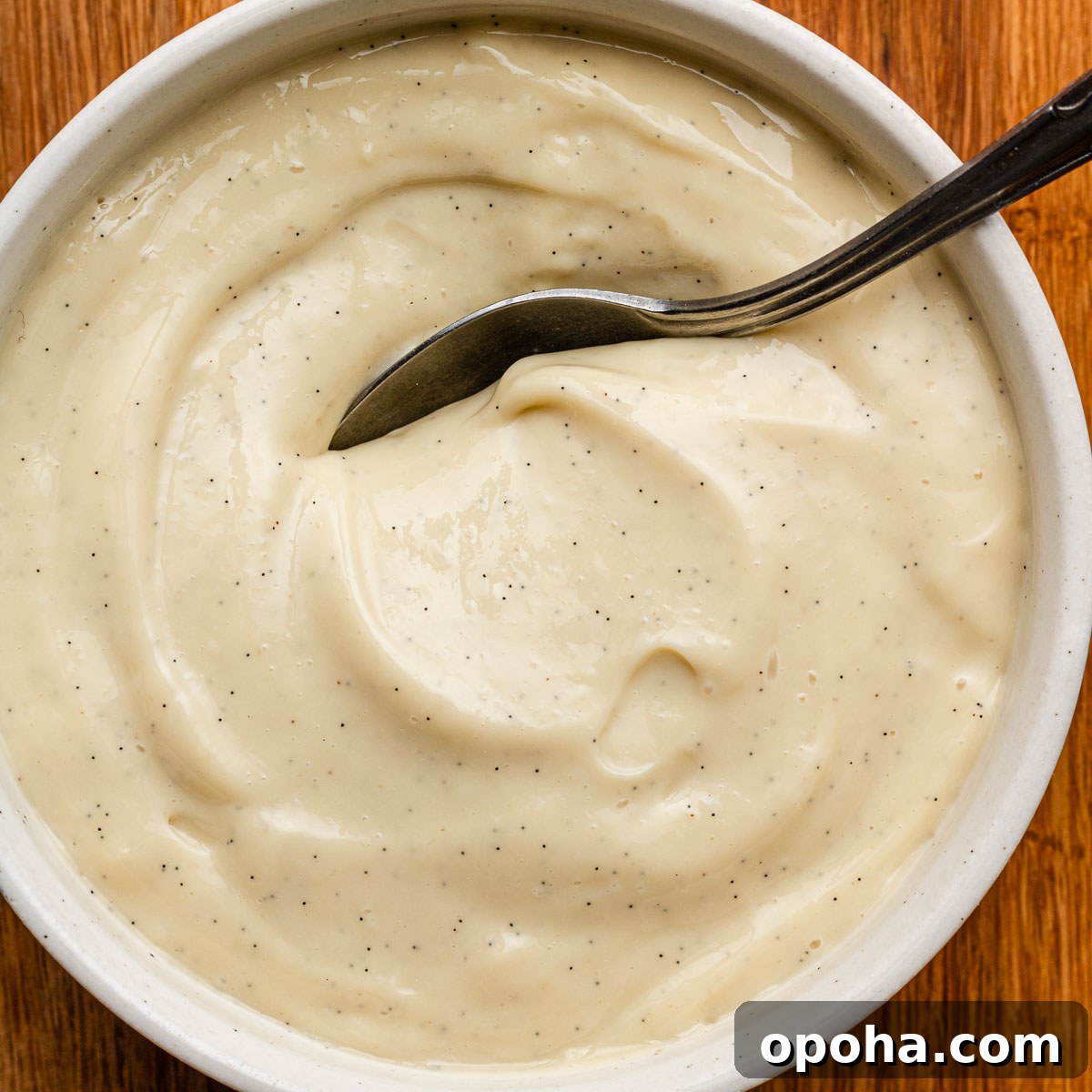
Learn how to make custard cream with this easy recipe that produces a rich, velvety filling perfect for desserts like taiyaki, dorayaki, and roll cakes. With simple ingredients such as milk, egg yolks, and sugar, this custard cream is a versatile staple for both Western and Japanese confections.
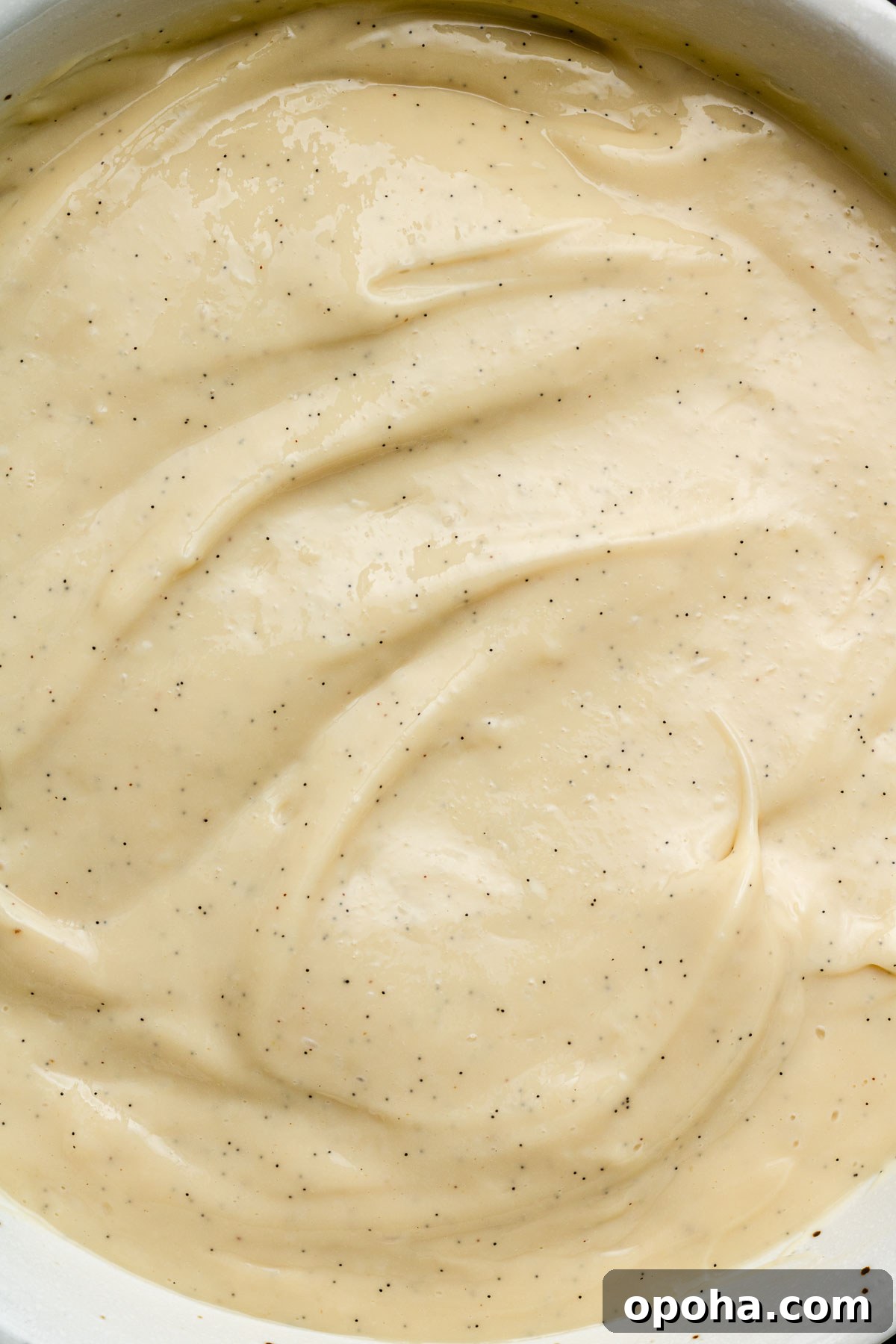
Table of Contents
- What is Custard Cream?
- Whats the difference between pastry cream and custard cream?
- Custard Cream Ingredients
- How to Make Custard Cream
- Stages of Custard Cream
- Tips to Making Smooth Custard Cream
- How to Store Custard Cream
- FAQ
- What to use custard cream for?
- Custard Cream Recipe
What is Custard Cream?
Custard cream is a smooth, rich filling made from milk, egg yolks, sugar, and a thickening agent such as cornstarch or flour. It’s common in Western pastries and widely used in Japanese sweets, where it fills taiyaki, custard pan, dorayaki, and nama donuts. It’s also popular in crepes, roll cakes, and layered cakes, providing a creamy, delicate flavor and texture.
Whats the difference between pastry cream and custard cream?
Pastry cream and custard cream share the same basic ingredients and flavor, but pastry cream tends to be thicker because it uses a higher proportion of starch. That makes pastry cream suited for tarts and firmer pastry fillings. Custard cream is often slightly lighter and can be used both as a filling and served on its own. Either can be adjusted in consistency by changing the starch or liquid ratios.
Custard Cream Ingredients
Here’s what you’ll need:
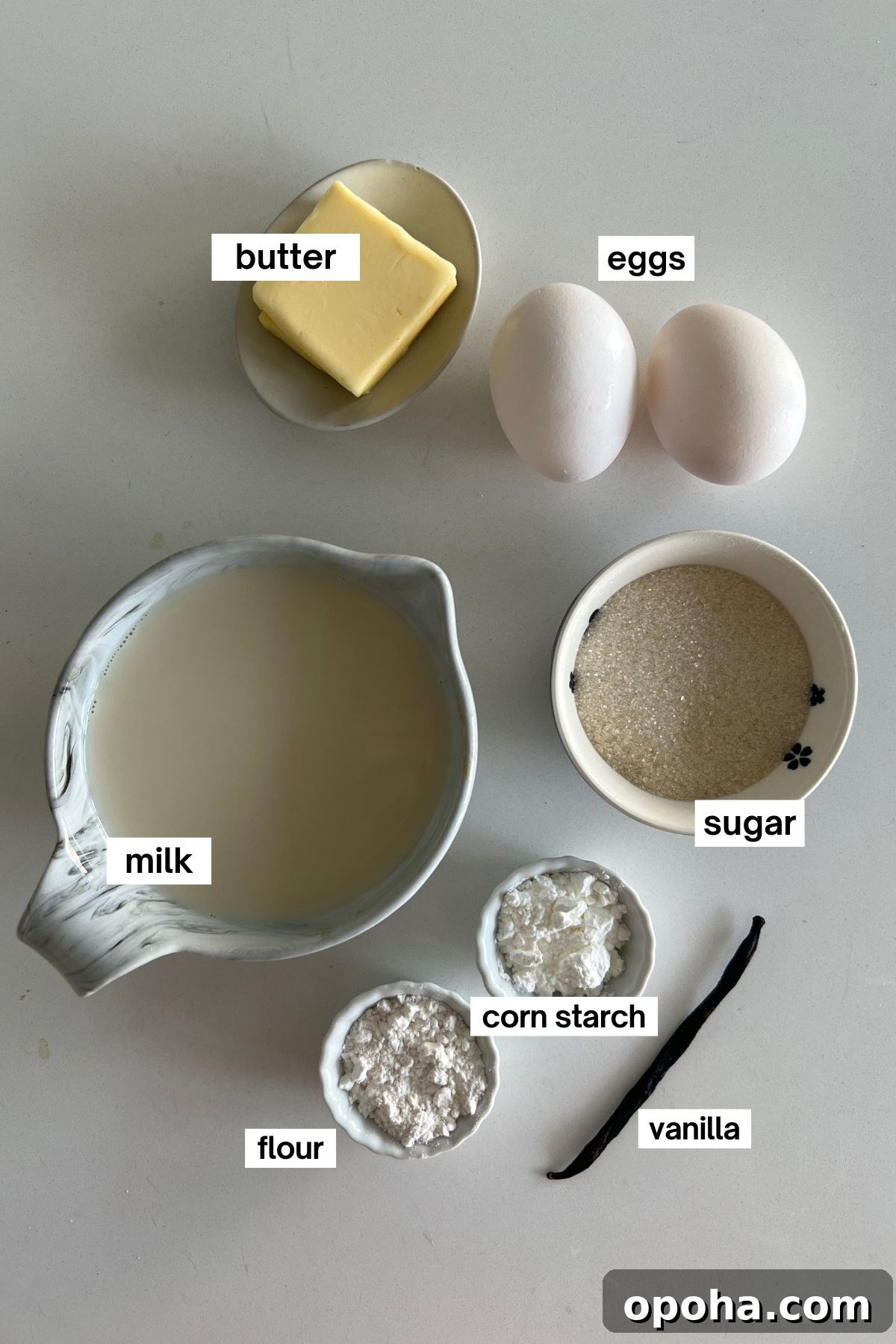
- Vanilla bean or vanilla extract – adds aromatic depth.
- Milk (preferably whole milk) – gives creaminess and body.
- Egg yolks – create a silky, custard texture.
- Sugar – sweetens and balances flavor.
- Cake flour and cornstarch – cornstarch yields a pudding-like texture, flour creates a denser cream; a blend stabilizes and smooths the custard. Substitute one for the other if needed.
- Unsalted butter – enriches and smooths the finished cream.
- Pinch of salt – enhances flavor.
How to Make Custard Cream
This custard is traditionally made on the stove for the best texture, though a microwave method can work for less delicate uses. Stove-top cooking yields a silkier, more stable cream suitable for chilled desserts.
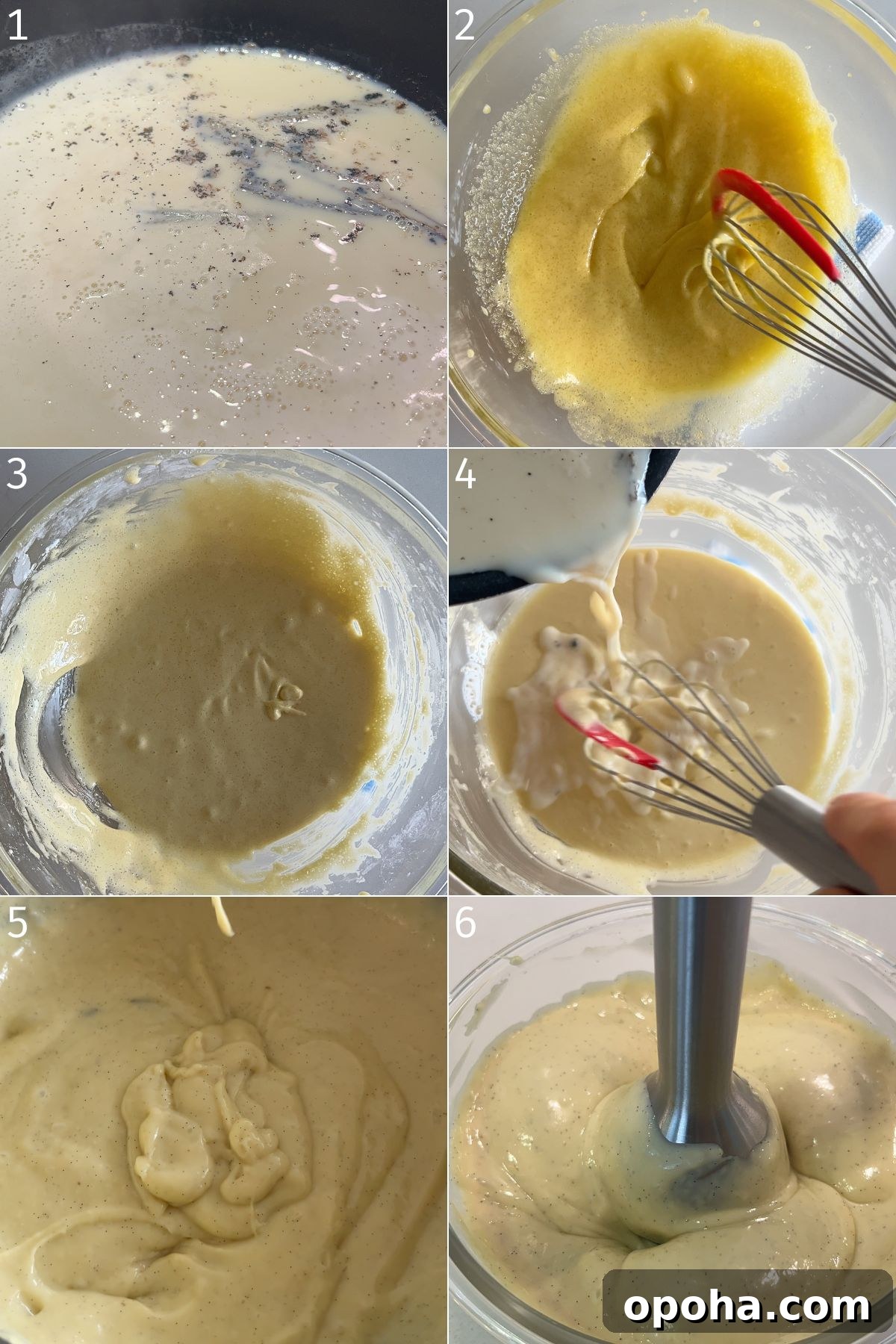
- Prepare vanilla milk: Split the vanilla bean and scrape the seeds into the milk, then warm until it lightly simmers (about 180°F / 82°C).
- Whisk yolks and sugar: Combine egg yolks, sugar, and a pinch of salt, whisking immediately until pale.
- Add starch and flour: Sift cornstarch and cake flour into the yolk mixture and whisk until smooth.
- Temper the eggs: Gradually whisk warm milk into the yolks to avoid curdling. Add vanilla extract if not using a bean.
- Strain and cook: Strain the blended mixture back into the pot and cook over medium-high heat, stirring constantly until the custard thickens, loosens, and becomes shiny.
- Finish with butter: Stir in butter until fully incorporated.
- Optional blend: For extra smoothness, blend briefly with an immersion blender; this helps maintain texture after freezing and thawing.
- Cool: Transfer to a bowl, press plastic wrap directly on the surface to prevent a skin, cool quickly, then refrigerate.
Stages of Custard Cream
Recognizing the cooking stages helps prevent under- or overcooking:
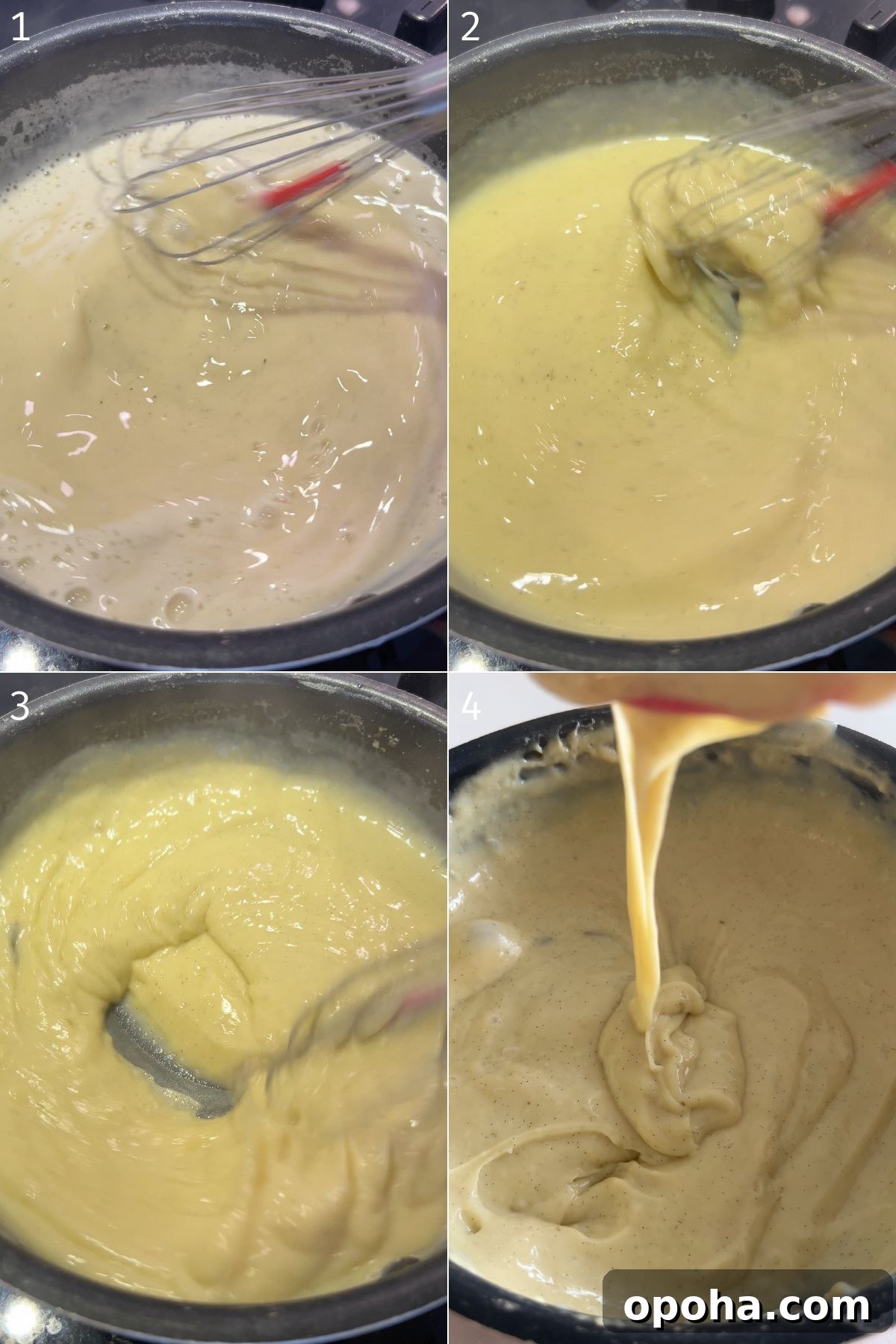
- Liquid stage: The mixture is thin before heat is applied.
- Starts to thicken: As it heats, the custard will suddenly thicken from the bottom; stir vigorously to avoid burning and lumps.
- Thickened: Continue cooking past initial thickening until the mixture becomes looser and glossier—this ensures the starch is fully cooked.
- Shiny and looser: When the custard loses firmness and becomes smooth and shiny with visible bubbles, the starch is done and the custard is ready to finish.
Tips to Making Smooth Custard Cream
- Whisk immediately: Combine sugar and yolks right away to avoid grainy lumps.
- Milk temperature: Heat the milk to just under a simmer (about 180°F / 82°C) to temper eggs safely.
- Strain: Strain the mixture before cooking to remove any undissolved bits for a silky finish.
- Use appropriate heat: Cook on higher heat for induction or electric stoves, medium to medium-high for gas—stir continuously to prevent lumps and ensure even cooking.
- Incorporate butter well: Whisk in butter and optionally blend with an immersion blender for a smoother, firmer custard that holds up well when frozen and thawed.
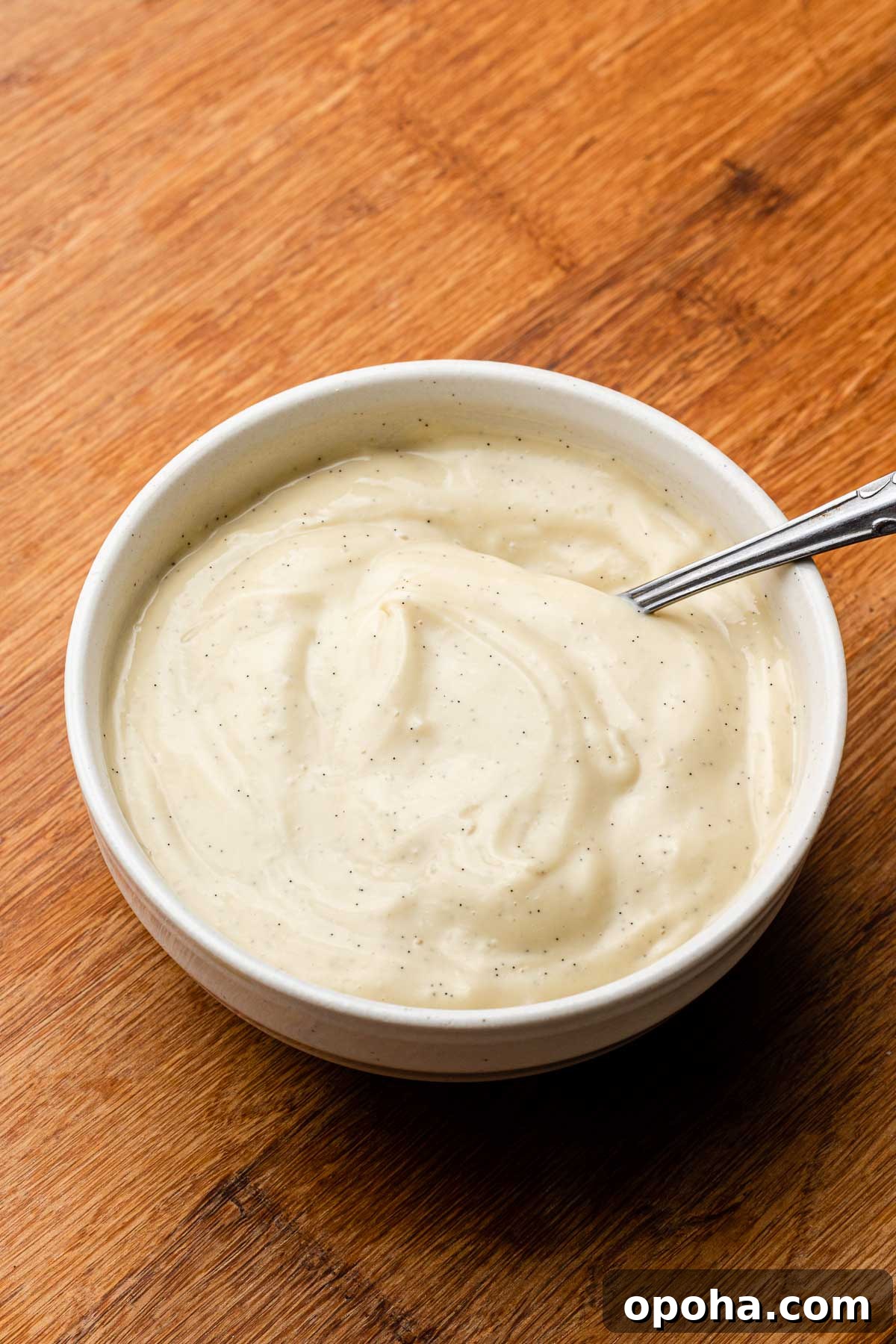
How to Store Custard Cream
Custard cream can be made in advance and freezes well.
For refrigeration: cool the custard to room temperature, transfer to an airtight container, press plastic wrap directly on the surface to prevent a skin, and refrigerate for 3–4 days.
For freezing: cool and portion the custard, then place it in vacuum-sealed bags or airtight containers that touch the custard directly. Freeze for 2–3 months. Thaw overnight in the refrigerator and whisk vigorously before use. If needed, blend briefly to restore a perfectly smooth texture.
FAQ
Graininess usually comes from not whisking continuously while heating or from undissolved starch or flour. Whisk constantly and strain the mixture to avoid lumps.
Traditional recipes include cake flour, which contains gluten. To make it gluten-free, replace the flour with a gluten-free blend or increase the cornstarch.
Thin custard usually means the starches didn’t fully gelatinize or the liquid-to-thickener ratio is off. Ensure proper tempering and sufficient cooking time at the correct heat.
Overcooking or using too much cornstarch or flour can make custard overly thick. To loosen it, fold into whipped cream or use it as a dense filling for bread or pastries.
Yes—an eggless version can be made using cornstarch as the primary thickener. The flavor will differ slightly; a pinch of kala namak can mimic an egg-like note.
Replace milk with plant-based alternatives or dairy-free heavy cream and use a vegan butter substitute. You may need to increase fat for a richer mouthfeel.
Make it eggless by relying on cornstarch for thickening and using plant-based milk and butter alternatives. Flavor will be different, but texture can be similar.
What to use custard cream for? (Recipes using custard cream)
This custard cream works well in a variety of recipes:
Japanese Desserts
- Nama donuts
- Taiyaki
- Dorayaki
- Custard pan
- Roll cake
- Chiffon cakes
- Shortcakes
Western Desserts
- Diplomat cream
- Filling for choux pastry and cream puffs
- Fruit tarts
- Cake fillings
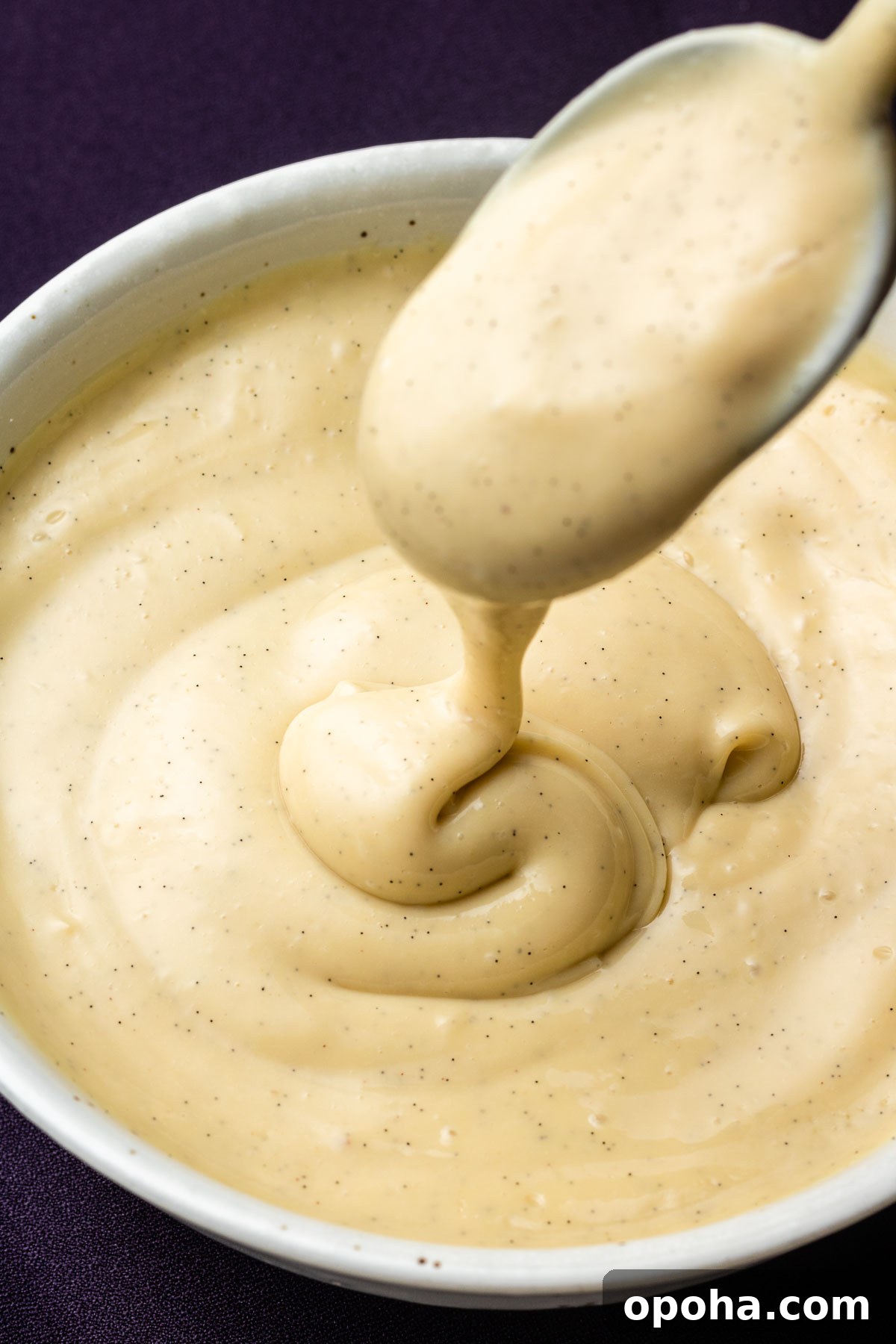
Enjoy! If you try this Custard Cream recipe, feel free to leave a comment or rating. I’d love to hear how you use it in your baking.
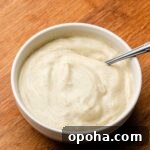
Custard Cream
5 from 1 review
- Author: Lisa Kitahara
- Total Time: 30 minutes
- Yield: 1 cup
- Diet: Vegetarian
Description
Learn how to make custard cream with this easy recipe that produces a rich, velvety filling perfect for desserts like taiyaki, dorayaki, and roll cakes. With simple ingredients such as milk, egg yolks, and sugar, this custard cream is a versatile staple for both Western and Japanese confections.
Ingredients
- 1 vanilla bean (or 1 tsp vanilla extract)
- 200 ml milk (preferably whole milk)
- 2 large egg yolks
- 4–5 tbsp (50–63 g) sugar, to taste
- 1 tbsp (8 g) cornstarch
- 1 tbsp (8 g) cake flour
- 1 tbsp + 1 tsp (20 g) unsalted butter
- Pinch of salt
Instructions
- Prepare Vanilla Milk: Split the vanilla bean, scrape the seeds into the milk, add the pod, and heat until it begins to simmer (about 180°F / 82°C).
- Mix Egg Yolks and Sugar: Whisk egg yolks and sugar immediately with a pinch of salt until pale and smooth.
- Incorporate Starch and Flour: Sift cornstarch and cake flour into the yolk mixture and whisk until combined.
- Temper the Eggs: Slowly add warm milk to the egg mixture, whisking constantly to prevent curdling. Add vanilla extract if using.
- Strain and Cook: Strain the mixture back into the pot and cook over medium-high heat, stirring constantly.
- Monitor Consistency: Stir until the custard thickens, then continues to loosen and become shiny—this shows the starch is cooked.
- Finish with Butter: Whisk in the butter and blend with an immersion blender if desired until fully incorporated.
- Cool Custard: Transfer to a bowl, press plastic wrap on the surface to prevent a skin, cool quickly, and refrigerate.
- To serve: Whisk the custard until smooth before using.
Notes
- *For a richer, thicker custard (for custard bread, for example), add an extra yolk and an additional 3 tbsp (50 ml) milk.
- Prep Time: 10 minutes
- Cook Time: 20 minutes
- Category: Dessert
- Method: Stove top
Okonomi Kitchen is a participant in the Amazon Services LLC Associates Program. When you purchase something through affiliate links, I may earn a small commission that helps support content creation. Thank you for your support!