
There is nothing more lovely and fragrant in spring than a blooming lilac bush. Its blossoms announce the season with an unmistakable perfume and charm. If you love flowers, a lilac shrub deserves a place in your garden. This article explains how to propagate lilacs from suckers so you can add their timeless beauty to your landscape.

An Old-Fashioned Favorite
Although lilacs are not native to North America, they have become a familiar part of many homesteads and old farmsteads. Generations have planted them near houses, barns, and along property edges. Even after homes are abandoned and buildings fall into disrepair, lilacs often remain, standing as fragrant reminders of past lives and seasons.
Part of their enduring popularity comes from their hardiness. Lilacs are robust plants that require relatively little maintenance and can live for many years. Their tendency to spread through underground roots makes them self-preserving and easy to propagate.
How to Grow Lilacs from Suckers
Many lilac varieties send up suckers — shoots that arise from the root system. These suckers are ideal for propagation. If you have an established lilac nearby, removing and replanting a sucker is a simple way to start a new bush. Neighbors with older plants will often appreciate having the suckers removed.
Propagation is straightforward: dig up a sucker with a portion of its roots intact and transplant it to a new spot. The steps below will guide you through the process.
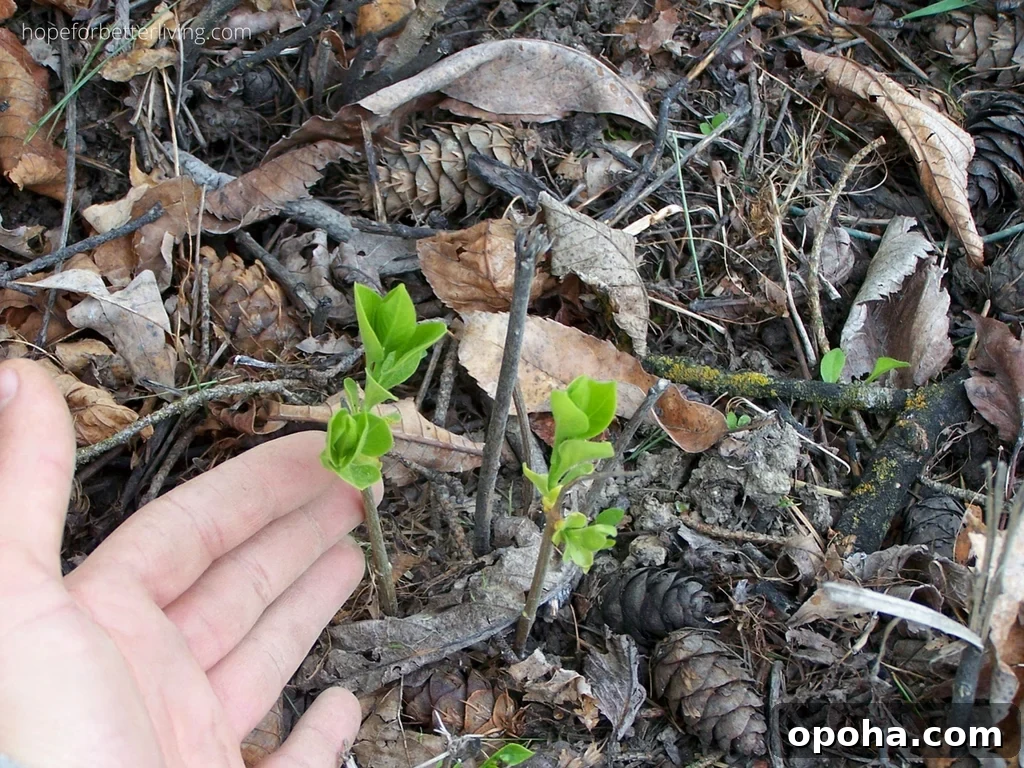
Digging Up Suckers for Successful Replanting
Gather a few simple tools: a hand shovel or spade, pruning shears, and a bucket or container to hold the suckers while you work. Choose a healthy young shoot that has emerged from the ground.
Use the shovel to loosen the soil around the shoot and carefully expose the roots. Follow the larger root back toward the parent shrub — lilac roots often run horizontally. To free the sucker, you will need to cut the main root where the sucker branches from it.
Before making the cut, look for fine, hair-like roots on the sucker. These finer roots will sustain the young plant after it has been separated from the parent. Position your pruning shears just below these hair roots and sever the main connecting root. That ensures the sucker retains enough root structure to survive on its own.
Here is an example of a well-formed sucker with its own root system ready for transplanting:
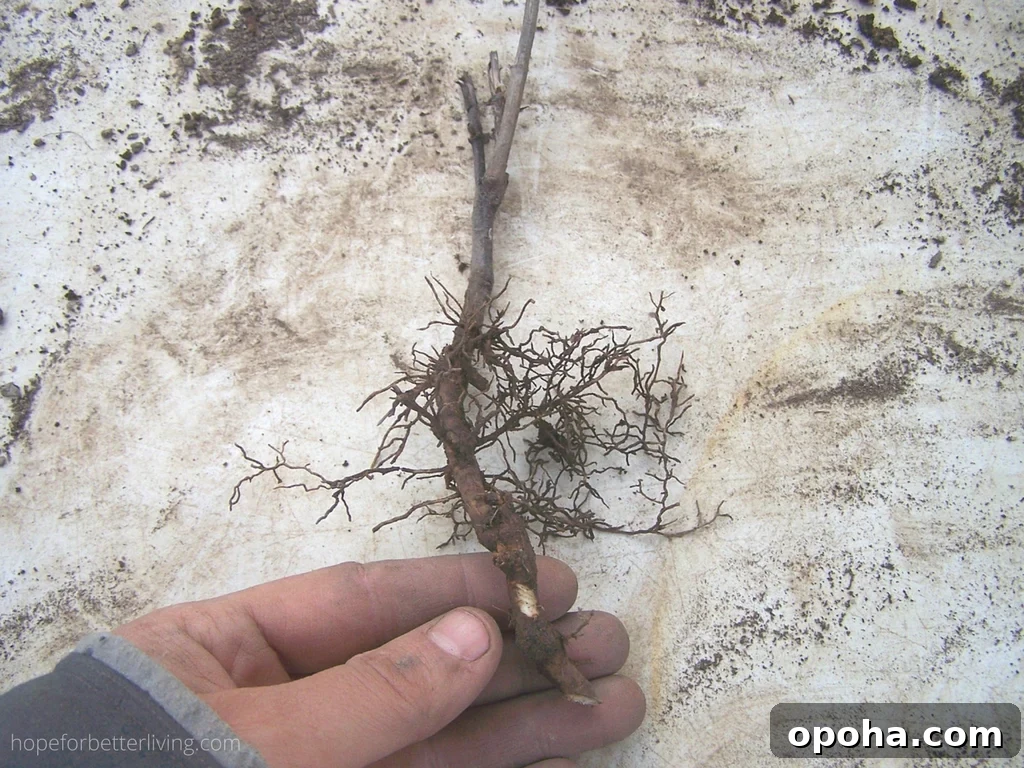
When a sucker has developed its own network of fine roots, it has a much higher chance of thriving after transplant.
Replanting Suckers Where You Want a Lilac
You can replant suckers wherever you’d like a new lilac bush — near a barn, beside a kitchen window, by the mailbox, or as part of a flowering hedge. If you are undecided about a permanent location, plant the young shoots in pots so their roots stay moist until you choose a final spot.
Whether you plant them directly in the ground or in containers, give each newly transplanted sucker a thorough watering. Keep the soil consistently moist for several weeks while the young root system establishes itself. Avoid letting the roots dry out during this critical period.
With a bit of care in the early weeks, your transplanted suckers will take hold and grow into flourishing lilac bushes. Spring is an ideal time to divide and plant suckers, so consider adding a few to your landscape this season.