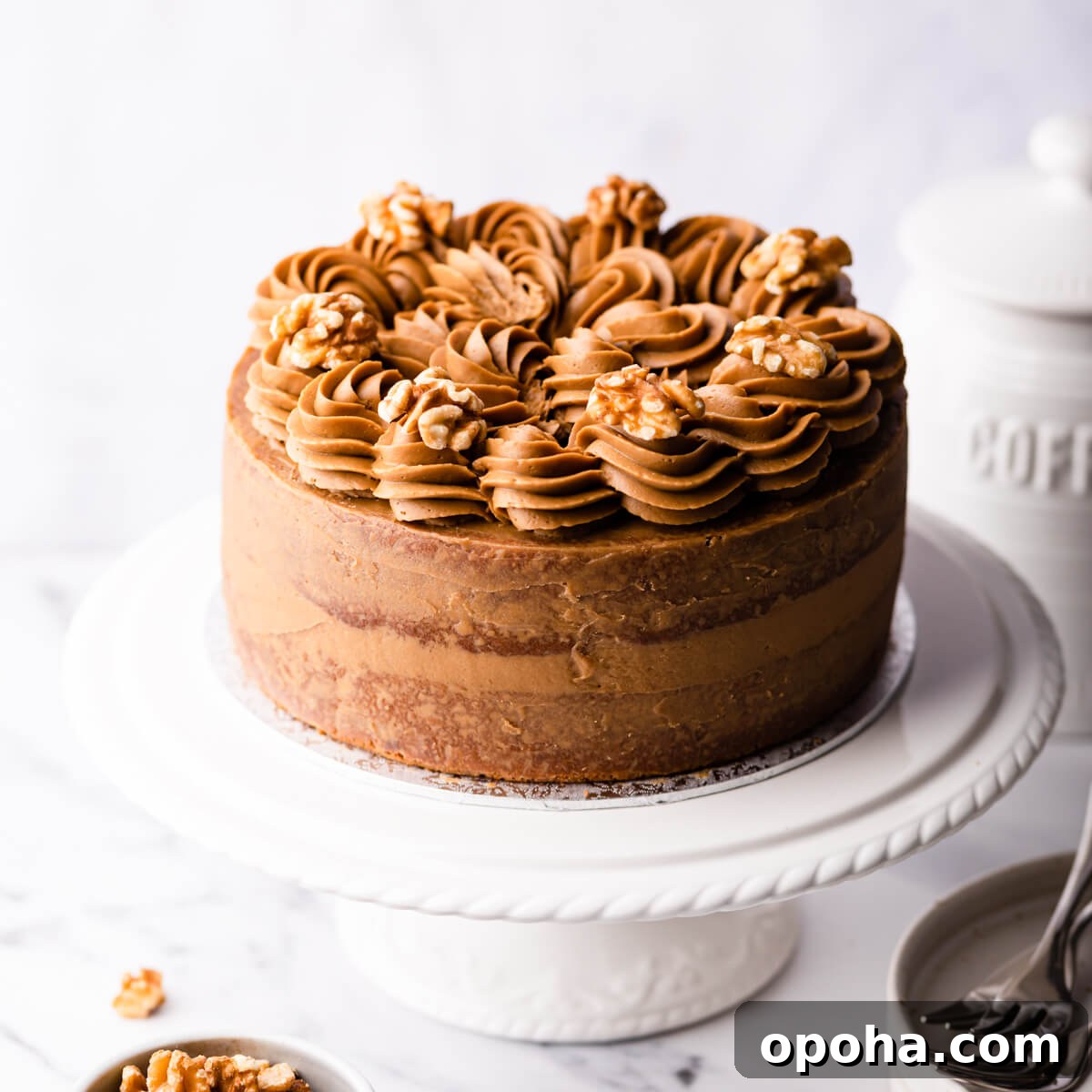
Coffee and walnut cake is a beloved British classic: a moist, tender sponge infused with coffee and studded with crunchy walnuts, layered and topped with smooth coffee buttercream. It’s a perfect pick for anyone who enjoys the aroma of freshly brewed coffee and the satisfying texture of nuts.
Simple enough for novice bakers yet reliable for more experienced hands, this cake works brilliantly for afternoon tea, bake sales or special occasions. The coffee adds a warm, slightly bitter edge that balances the sweetness, while the walnuts provide both flavour and bite.
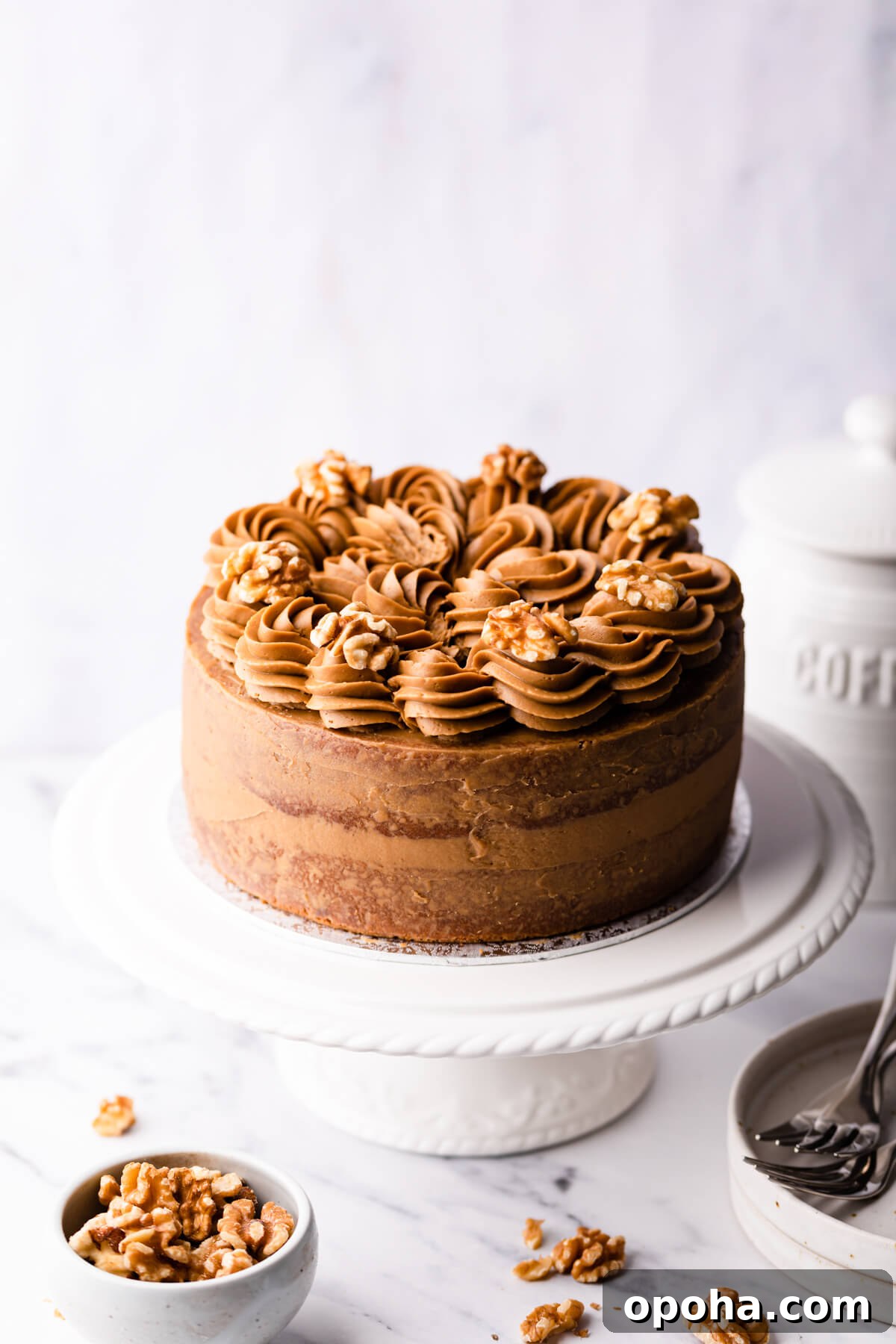
This recipe produces two even sponge layers that are easy to bake and assemble. The coffee flavour comes from instant coffee dissolved in boiling water, which keeps the batter texture consistent while giving a clear coffee note. The buttercream is enriched with a touch of double cream for a silky finish, but this is optional if you prefer a firmer frosting.
Ingredients
Here are the main ingredients you’ll need for this coffee and walnut cake:
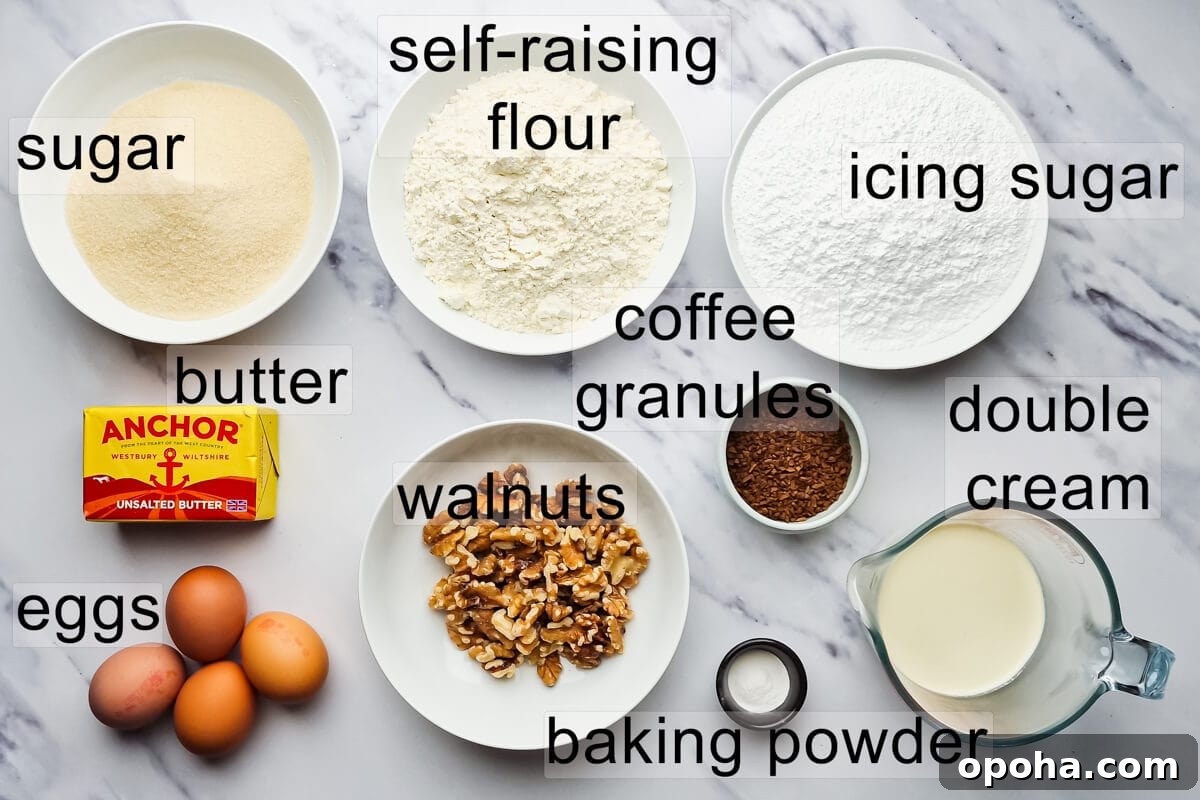
- Unsalted butter
- Sugar (golden caster or caster)
- Instant coffee
- Eggs
- Self-raising flour
- Baking powder
- Walnuts
For the buttercream you will also need icing sugar and double cream (optional) in addition to more butter.
Scroll to the recipe card at the bottom for exact quantities and timings.
Instructions
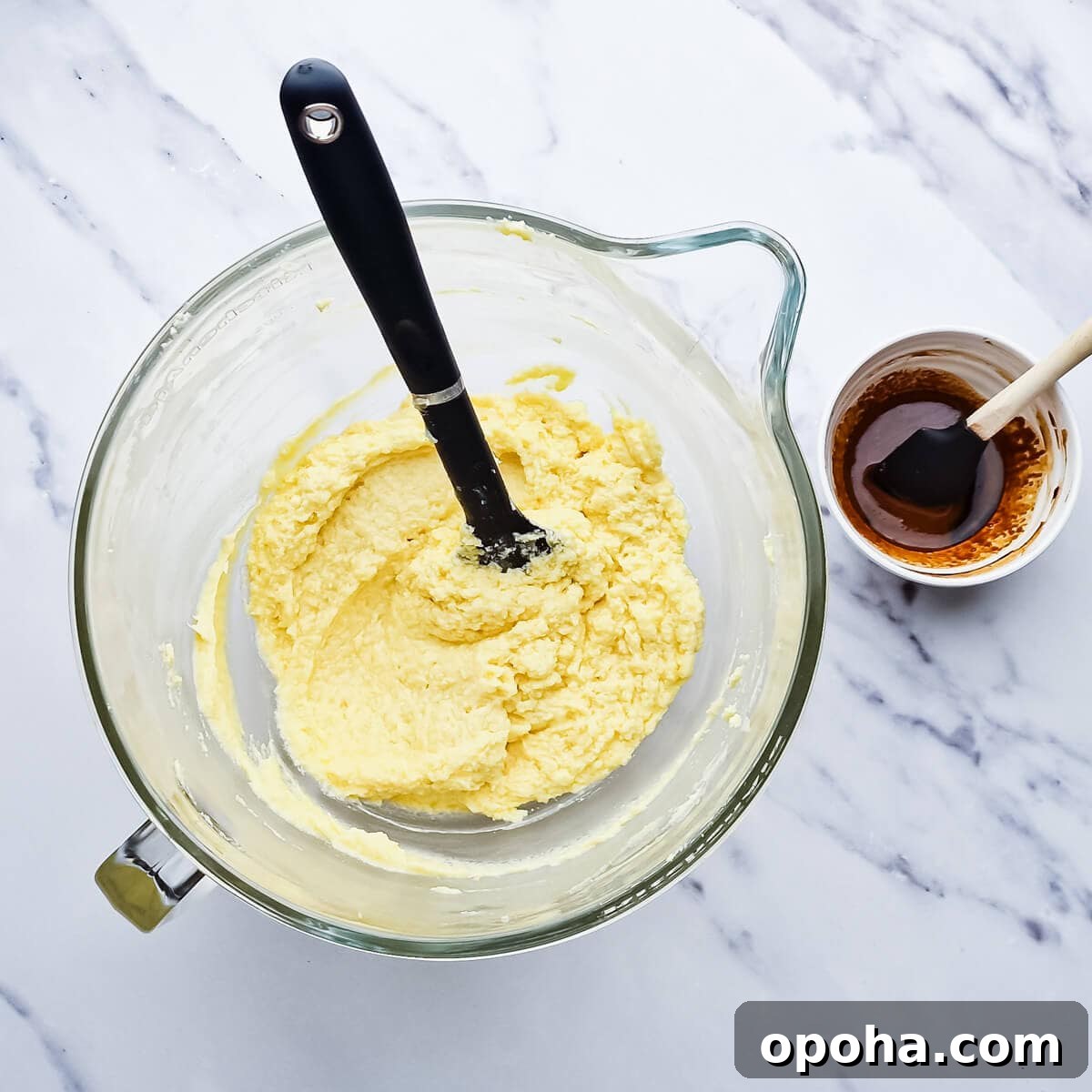
Cream the butter and sugar until pale and fluffy, then add the eggs one at a time. Dissolve the instant coffee in a small amount of boiling water to make a smooth paste.
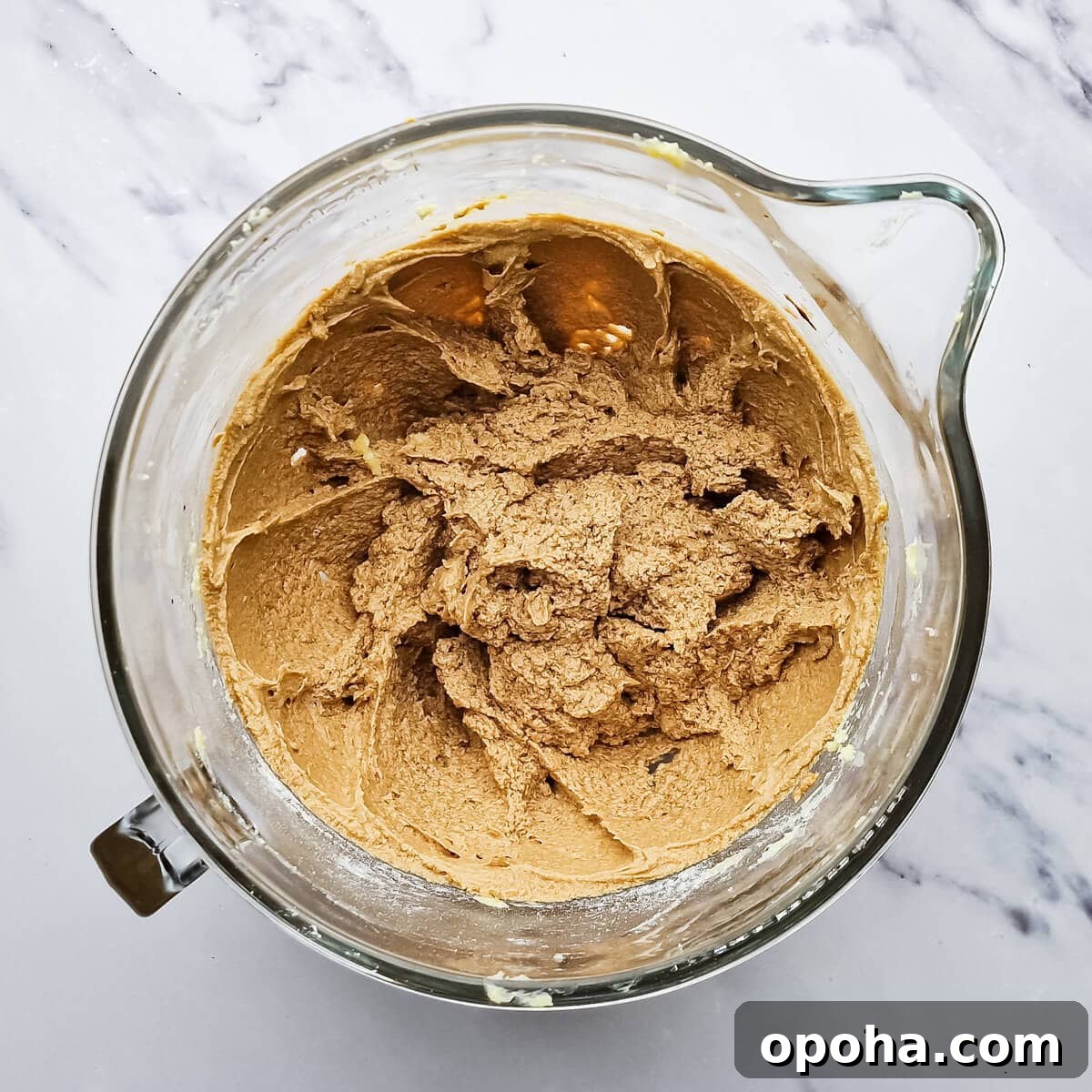
Beat the coffee mixture into the creamed butter, sugar and eggs until combined.
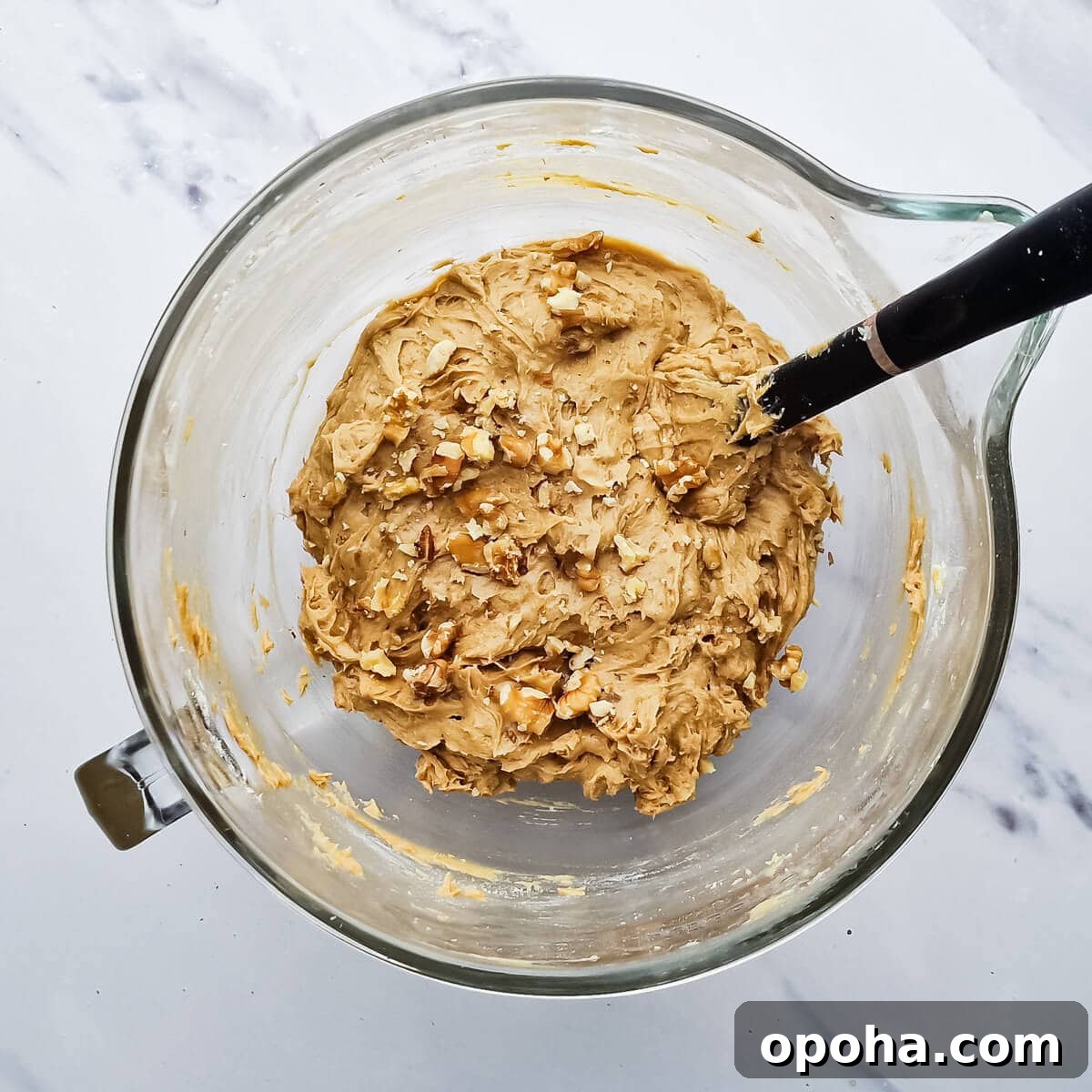
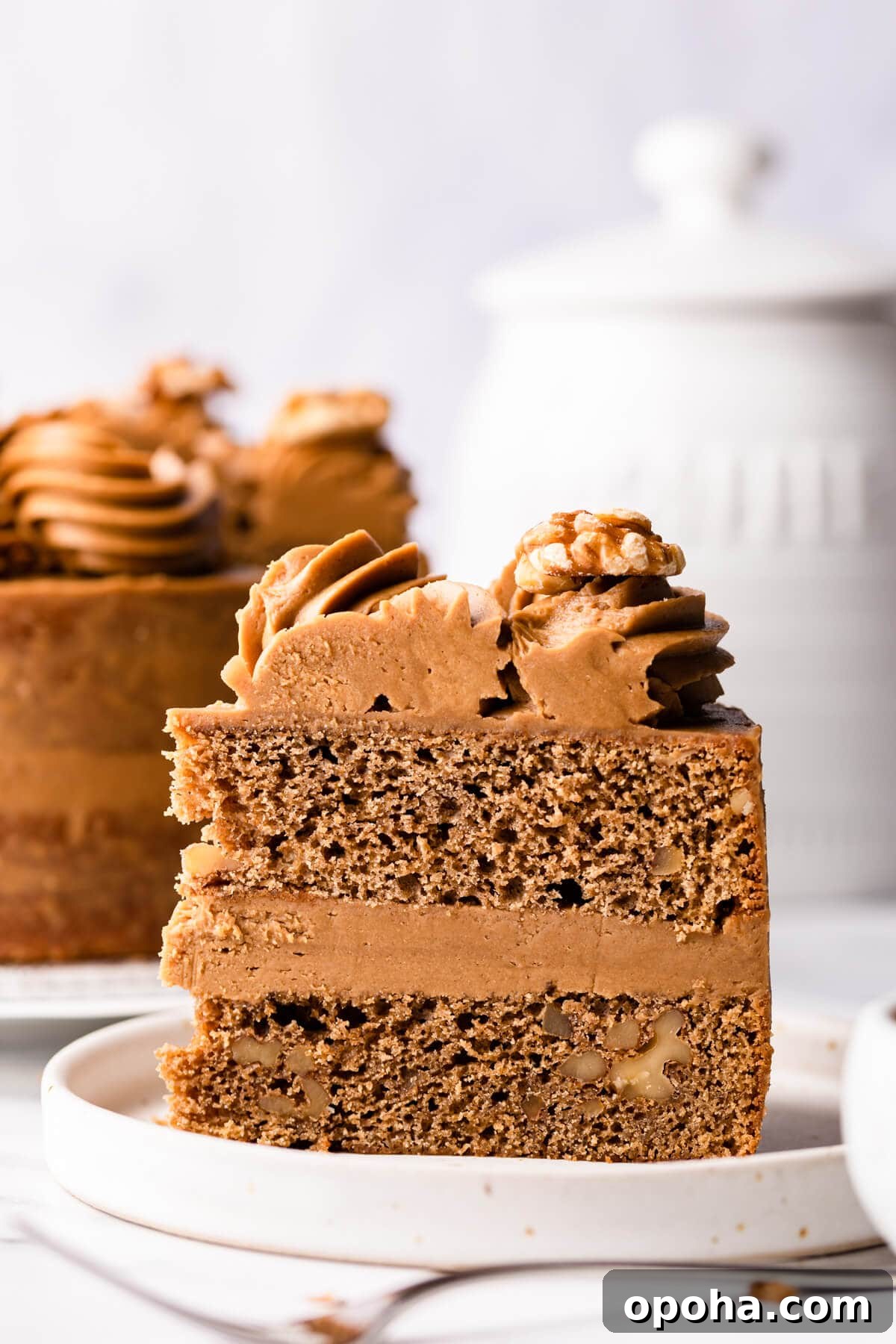
Sift in the flour and baking powder, fold briefly to combine, then fold through the chopped walnuts. Reserve a few walnut halves for decorating if you like.
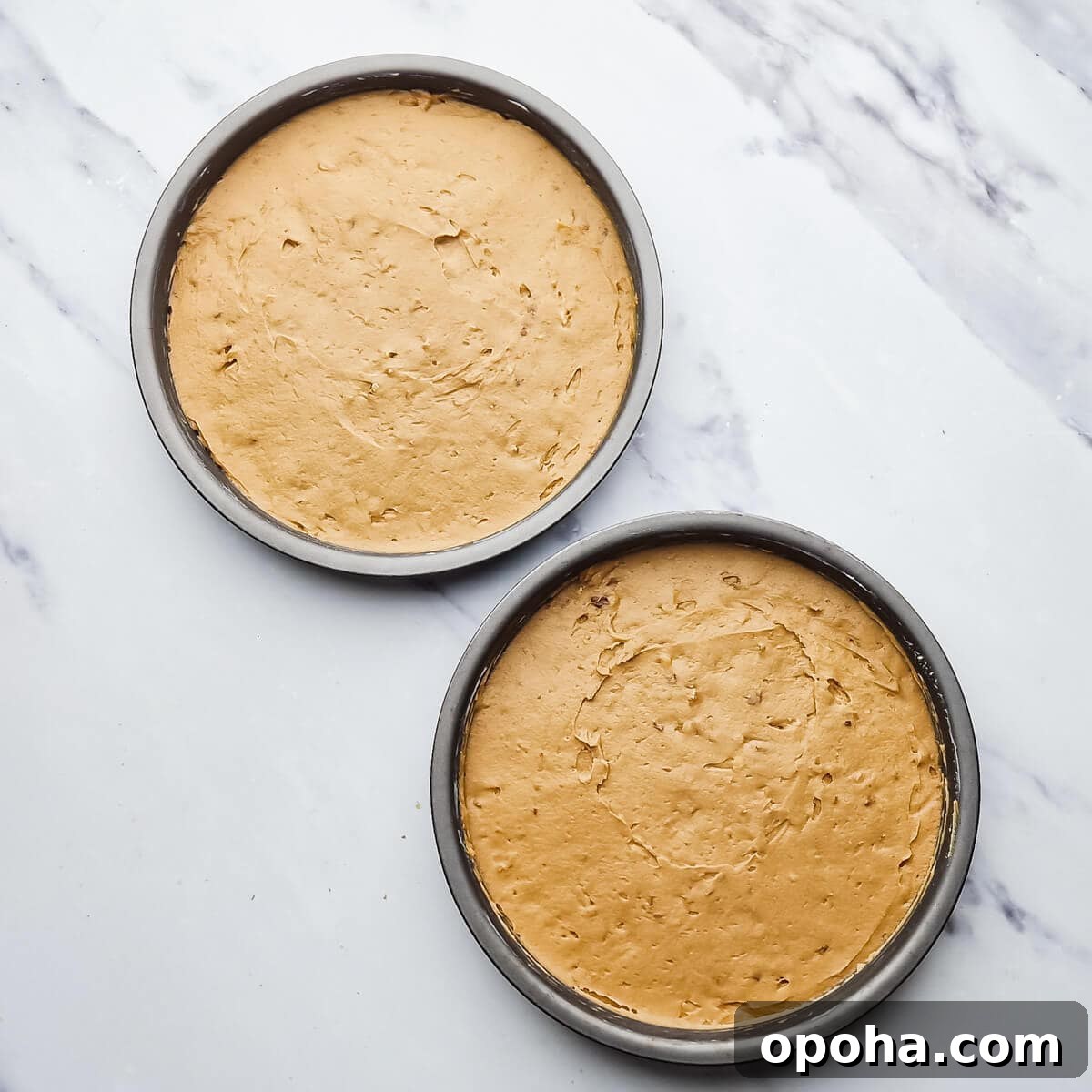
Divide the batter between two lined 20cm (8″) tins and bake for 25–30 minutes, or until a skewer comes out clean. Cool completely on a rack before assembling.
Hint: To get flat layers, use a cake leveller or a large serrated knife to trim any domes, or turn the cooled sponges upside down before frosting.
Cake assembly
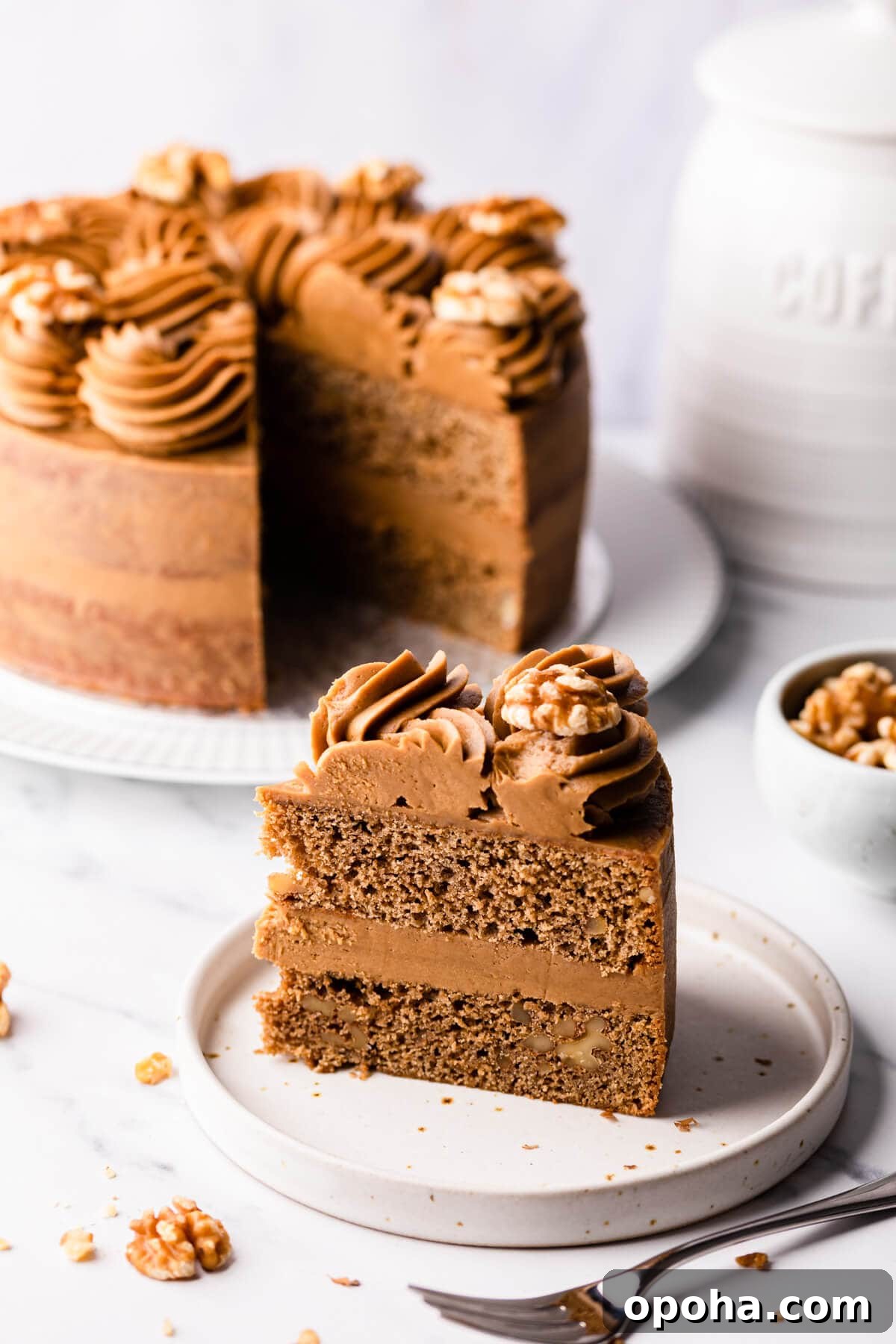
When the sponges are fully cooled, spread or pipe coffee buttercream between the layers and over the top. The recipe makes enough buttercream to fill the cake and pipe simple decorations.
If you prefer a semi-naked finish with a crumb coat and more piping detail, double the buttercream quantities. Any leftover buttercream freezes well for up to three months.
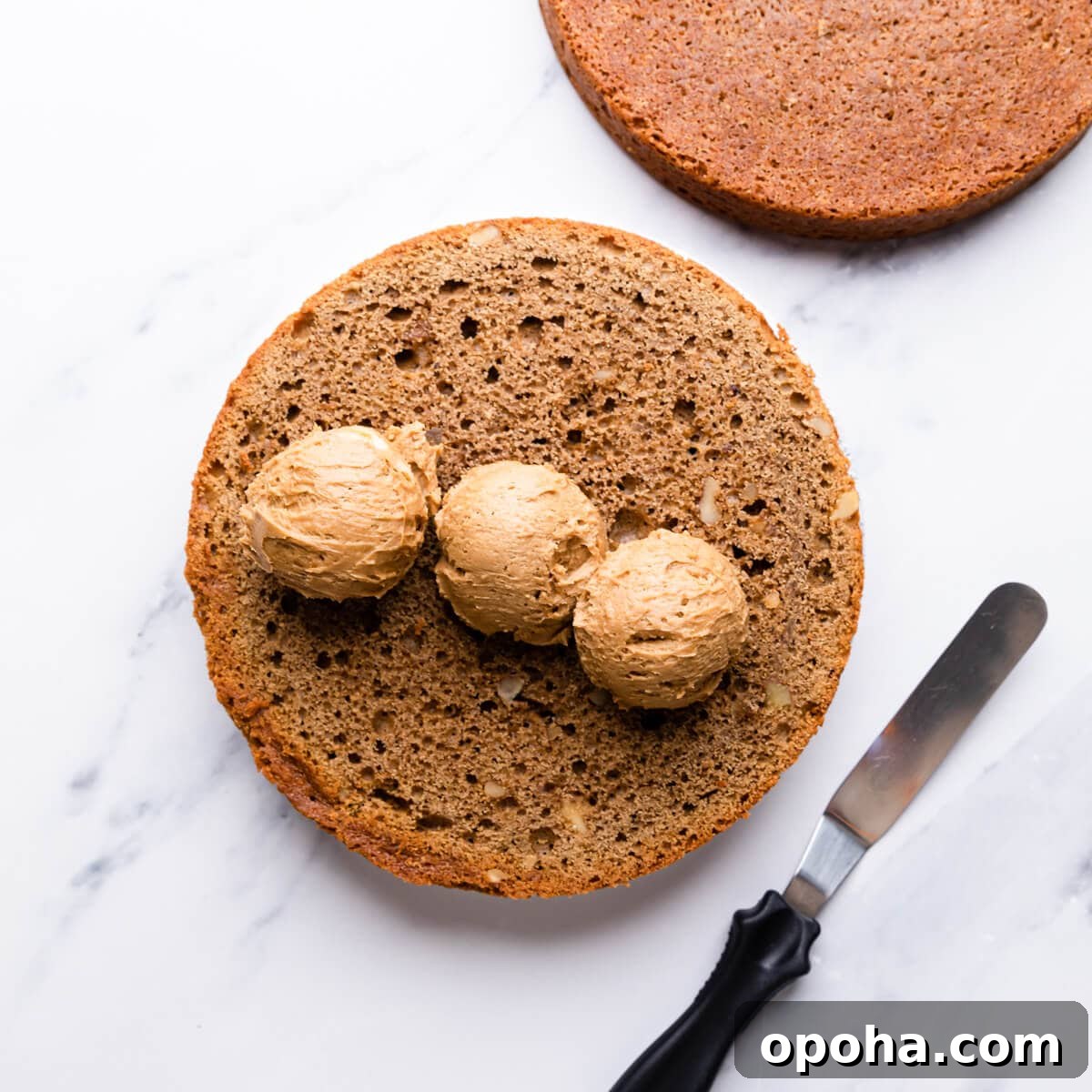
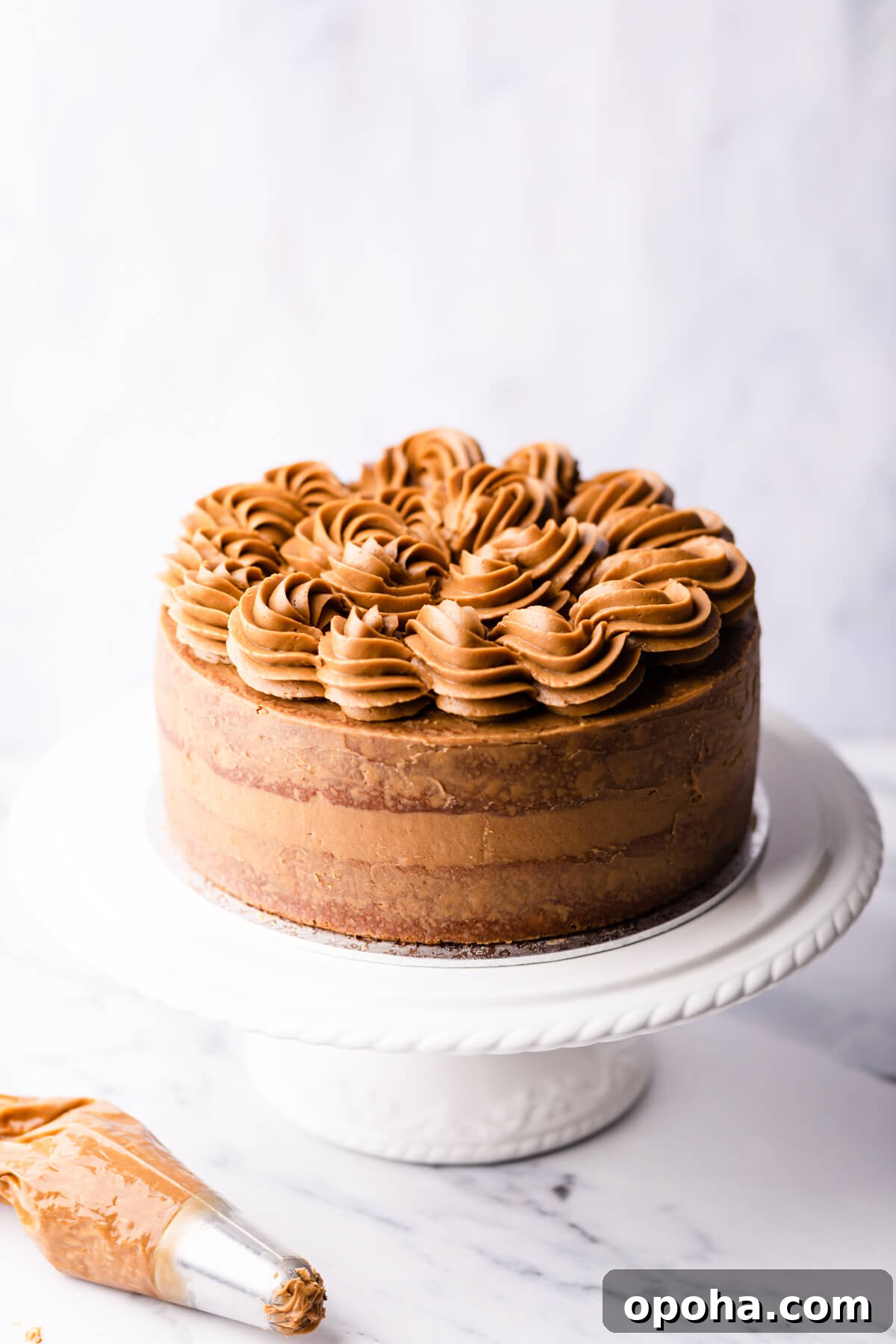
Place one sponge on your board, spread or pipe a layer of buttercream, then top with the second sponge. Finish by piping swirls or spreading the remaining buttercream across the top.
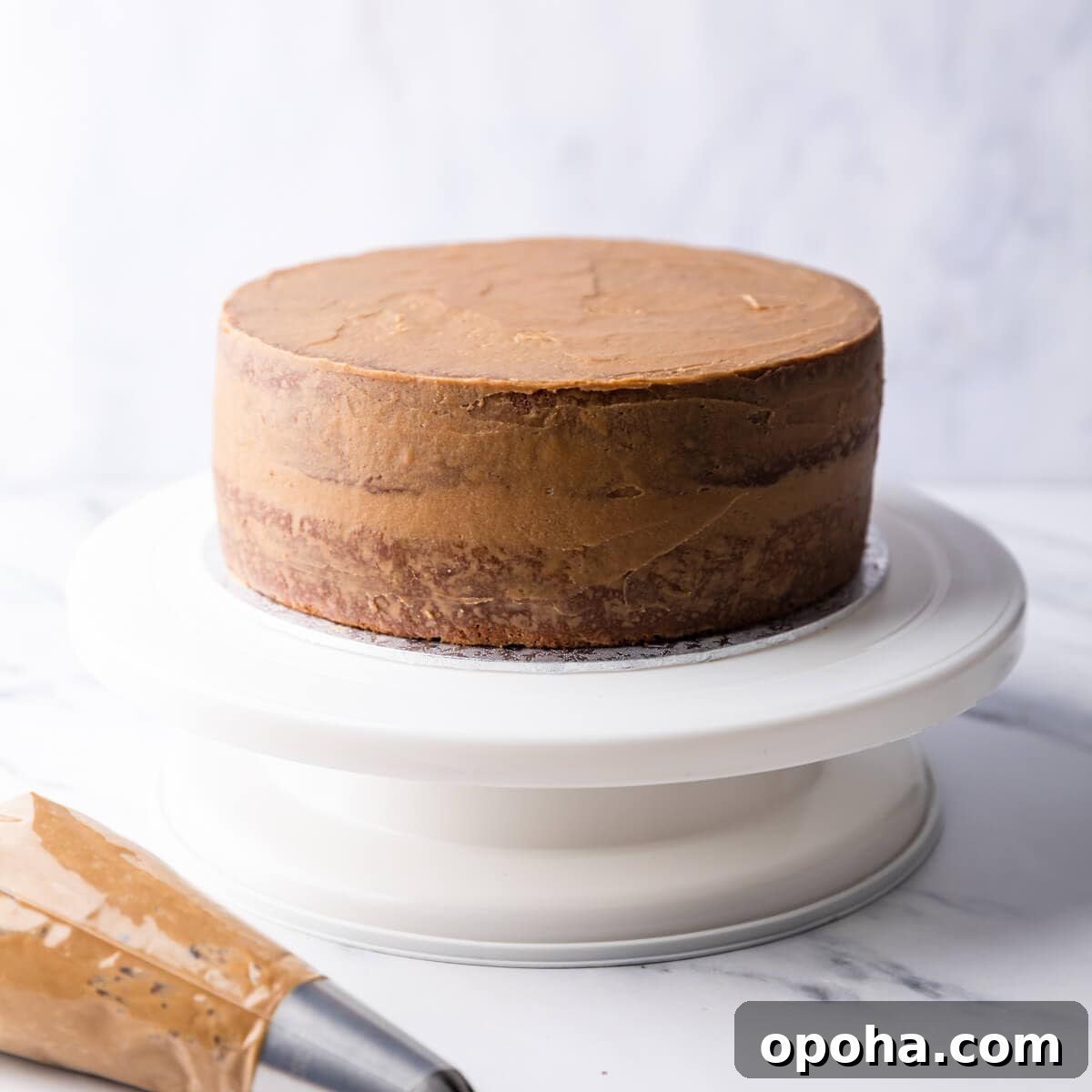
For a semi-naked look, apply a thin crumb coat first, chill briefly, then add final decorations and walnut halves.
Substitutions
- Butter – Unsalted butter gives the best flavour, but a baking margarine will also work.
- Sugar – Golden caster is ideal, but white caster or granulated sugar is fine. Light brown soft sugar can be used for a deeper flavour.
- Instant coffee – Use instant granules or espresso powder. If using brewed coffee, limit the liquid to about 50ml for the batter and the same for the buttercream. Decaf works if you want a caffeine-free cake.
- Flour – If you only have plain flour, add 2 teaspoons extra baking powder to replace self-raising flour.
- Walnuts – Substitute hazelnuts, pecans or almonds if preferred.
- Double cream – Adds silkiness to the buttercream and tones down sweetness, but it’s optional.
Variations
- Cupcakes – Make 10–12 cupcakes with the same batter; bake for about 15–20 minutes and top with coffee buttercream.
- Stronger coffee flavour – Increase the coffee slightly or add a spoonful of coffee extract to intensify the taste.
- Spiced twist – A pinch of cinnamon or cardamom in the batter complements the coffee beautifully.
- Decaf version – Use decaffeinated coffee for a caffeine-free treat.
- Gluten free – Use a gluten-free self-raising flour and gluten-free baking powder.
Equipment
- Electric mixer – Hand-held or freestanding with a paddle attachment.
- Mixing bowls.
- Baking tins – Two 20cm (8″) round tins; you can use smaller tins for a three-layer cake but adjust baking times.
- Baking paper – To line the tin bases.
- Piping bag and nozzle – Optional for decoration; an offset spatula works well for spreading.
Storage
Keep leftover cake in an airtight container in the fridge for up to 4 days. Allow to come to room temperature before serving for best flavour.
Plain sponges freeze well for up to 3 months when wrapped in a double layer of clingfilm. Defrost at room temperature for several hours or overnight in the fridge.
Buttercream can be frozen separately for up to 3 months. Thaw in the fridge overnight, bring to room temperature and re-whip briefly before using.
Top tip
Don’t chop walnuts too finely. Slightly larger pieces give texture, aroma and visual appeal. Finely ground nuts can release too much oil and make the cake dense or greasy. Aim for a mix of sizes and chop by hand rather than using a food processor for the best results.
FAQ
Yes. If using brewed coffee, limit it to around 50ml for the sponges and the same amount for the buttercream to avoid altering the batter consistency.
Sinking usually means the cake needed more time in the oven. Check from 25 minutes onwards and test with a skewer. Oven performance varies, so ensure the centre is fully set before removing.
Yes, the cake contains some caffeine when made with regular coffee. The amount per slice is modest, but use decaf if you want a caffeine-free version or are serving children.
Pin or save the recipe from the recipe card and photos above.
If you try this recipe, please consider leaving a rating or a comment — it helps other readers and I love hearing your feedback.
📖 Recipe
Coffee and Walnut Cake
25
30
55
10 people
864kcal
Equipment
- 2 x 20 cm (8″) round cake tins
- Baking paper
- Hand-held mixer or freestanding mixer with paddle attachment
- Mixing bowls
Ingredients
For the sponges:
- 15 g instant coffee (granules or powder)
- 250 g unsalted butter, softened
- 250 g golden caster sugar (or white caster/granulated)
- 4 large eggs, beaten
- 250 g self-raising flour
- 1 tsp baking powder
- 100 g walnuts (roughly chopped)
For the buttercream:
- 250 g unsalted butter, softened
- 320 g icing sugar
- 15 g instant coffee
- 85 ml double cream (optional)
Instructions
To make sponges:
- Preheat the oven to 170°C (160°C fan). Grease and line two 20 cm (8″) cake tins.
- Mix 15 g instant coffee with 1 tbsp boiling water to make a smooth paste.
- Beat 250 g softened butter with 250 g sugar until pale and fluffy (3–5 minutes). Add the 4 beaten eggs, one at a time, then beat in the coffee paste.
- Sift in 250 g self-raising flour and 1 tsp baking powder, mix on low until combined. Fold in 100 g chopped walnuts, reserving some halves for decoration.
- Divide between tins and bake for 25–30 minutes or until a skewer comes out clean. Cool in tins for 10 minutes, then transfer to a rack to cool completely.
To make buttercream:
- Beat 250 g softened butter with 320 g icing sugar on low until combined, adding the sugar in two or three batches.
- Dissolve 15 g instant coffee in 1 tbsp boiling water, add 85 ml double cream (optional) and whisk together. Add this mixture to the butter and sugar and beat until smooth. Remove air bubbles by folding briefly with a spatula.
To assemble the cake:
- Level the sponges or turn them upside down. Place one sponge on a board, spread or pipe buttercream, then top with the second sponge.
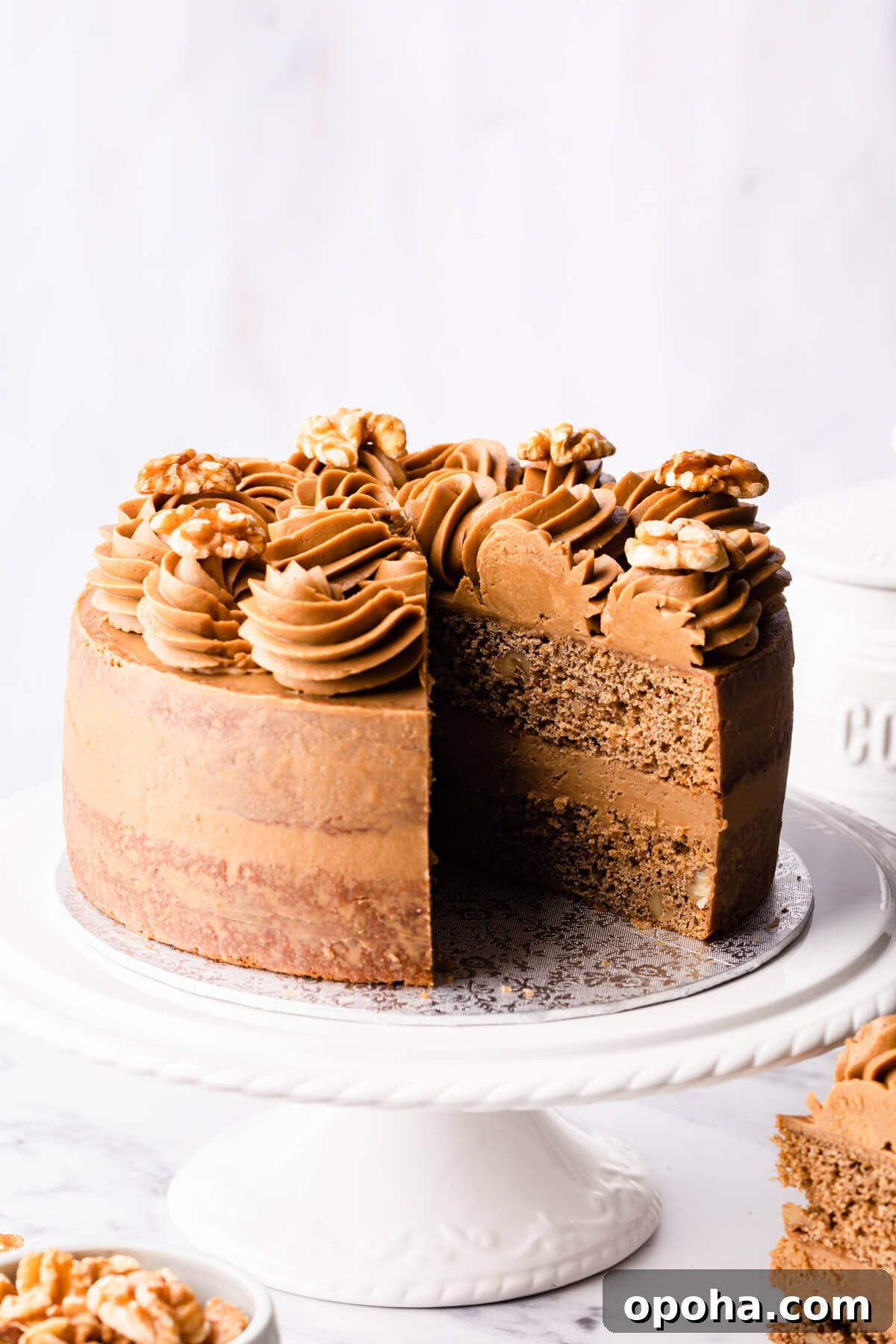
- Cover the top with remaining buttercream, pipe swirls if desired and decorate with reserved walnut halves. Slice and enjoy.
Recipes are developed and tested using metric grams—digital scales will give the most accurate results. US customary conversions are provided but may not have been tested.
Notes
- Self-raising flour: If you only have plain flour, use the same weight and add 2 tsp baking powder extra.
- Instant coffee: Use instant granules or espresso powder. For brewed coffee use up to 50 ml for the sponge.
- Buttercream: The quantities here are enough to fill the cake and pipe a few decorations. Double the recipe for a crumb-coated semi-naked finish with extra piping.
Storage:
You can bake the sponges a day ahead; wrap well and keep airtight. Sponges freeze for up to 3 months. Thaw at room temperature for a few hours before using.
Buttercream can be made a day ahead and stored in the fridge. Bring to room temperature and re-whip before using. It can also be frozen for up to 2–3 months.
Store the finished cake in the fridge in an airtight container for up to 4 days and bring to room temperature before serving.
Nutrition
| Calories: 864 kcal
This recipe was originally posted in November 2020 and updated with new photos and revised tips in March 2023.