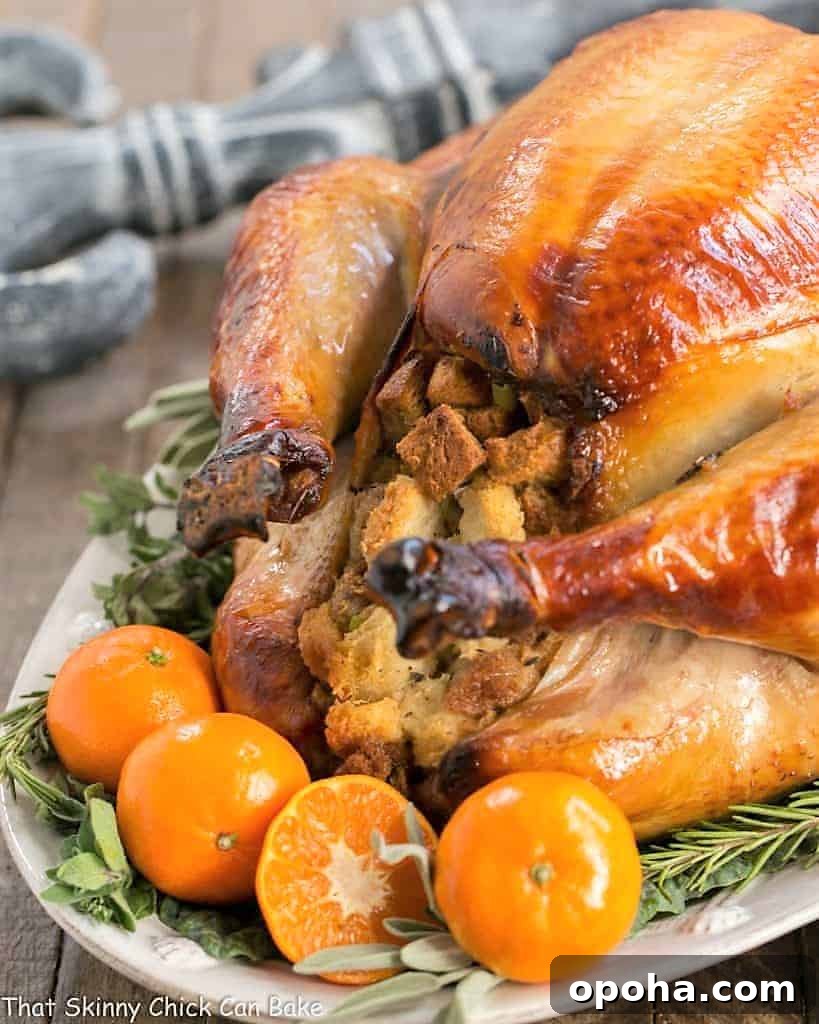
A few years ago my girlfriend insisted I try her Honey Brined Turkey for Thanksgiving. The bird was deeply flavorful and remarkably moist—never dry.
I copied down her Turkey Brine recipe and roasted a beautifully bronzed, juicy turkey for the holidays.
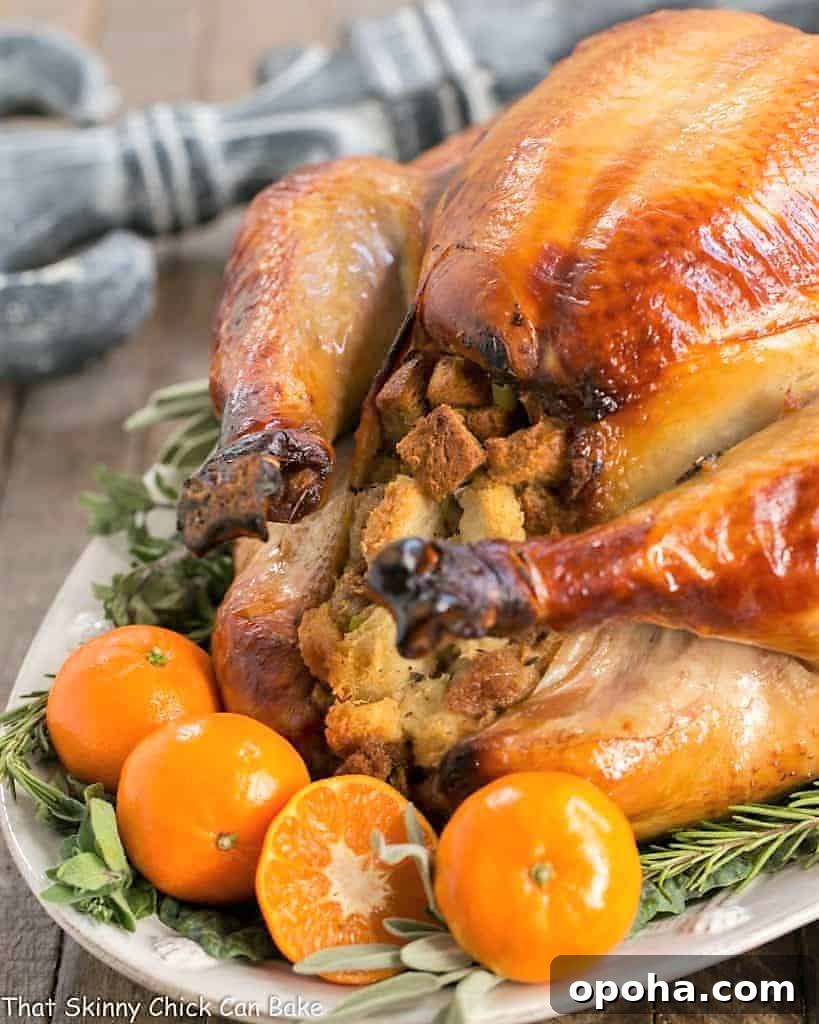
Why You Must Make
- I’ve been wet-brining our Thanksgiving turkey for several years now. It reliably produces moist, tender white meat.
- This brine is straightforward and uses common pantry ingredients you likely already have.
- Molasses and soy sauce give the turkey a rich, dark glaze and a balanced sweet-and-salty flavor that’s irresistible.
- Unlike many store-bought brined turkeys, this homemade brine uses simple, natural ingredients—no preservatives or odd additives.
If you prefer to avoid a wet brine, consider a dry-brined turkey for similar benefits with less mess. For smaller gatherings, a grilled turkey breast is another excellent, flavorful option.
Ingredient Notes
- Kosher Salt – The primary seasoning for the brine. Its coarser crystals make it easier to measure and avoid over-salting compared with table salt.
- Hot Water – Warms the brine so the salt dissolves quickly.
- Molasses – Contributes sweetness, depth, and the mahogany color on the skin.
- Soy Sauce – Adds salt and savory umami that enhances the turkey’s overall flavor.
- Honey – Rounds out the sweetness and adds a subtle floral note.
- Ice – Cools and dilutes the brine to a safe temperature before you add the turkey.
- Turkey – Make sure the bird is fully thawed before brining.
Expert Tips
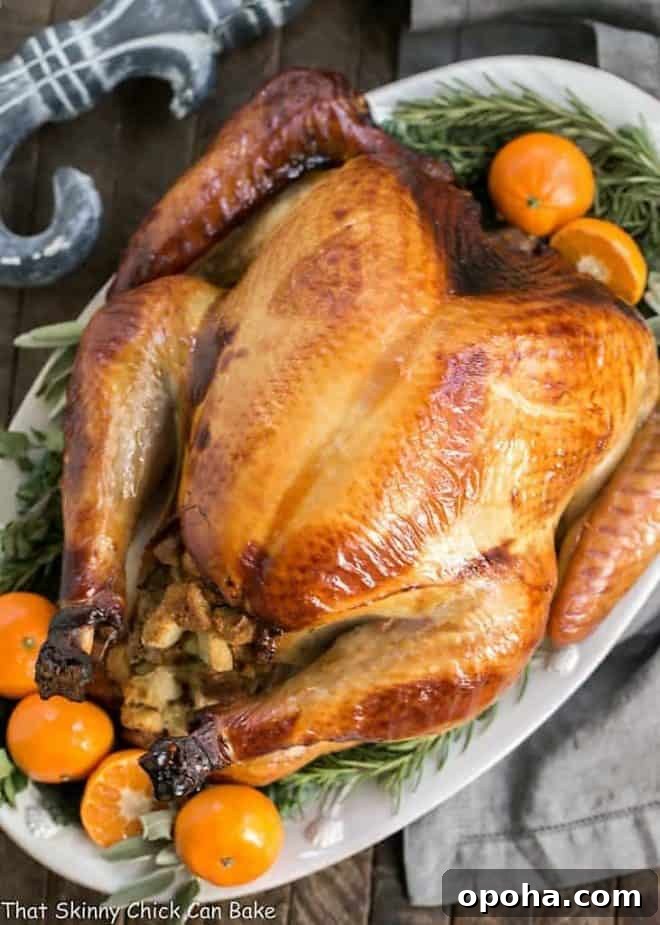
When I first made this brine I didn’t have much mild molasses and supplemented with blackstrap. Although blackstrap is darker and more intense, the turkey still turned out wonderfully. The skin developed a deep color from the brine, while the meat remained juicy and flavorful.
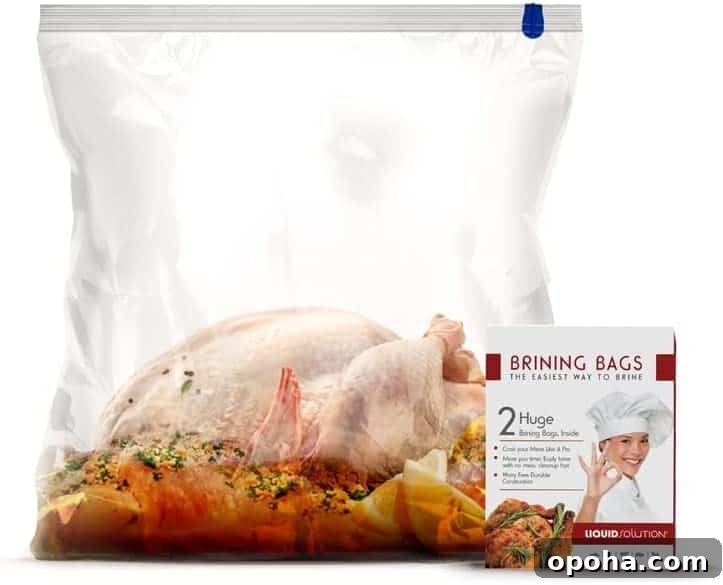
- Use a heavy-duty, extra-large brining bag and consider double-bagging to prevent leaks.
- Dissolve the salt in the hottest water first; it speeds up mixing. After the salt is dissolved, add molasses, soy sauce, and honey. You can include aromatics—garlic, peppercorns, bay leaves, or fresh herbs—if desired.
- Allow the brine to cool to near refrigerated temperature before adding the turkey; then add ice if needed to ensure the mixture stays cold.
- Brine the turkey 12 hours or overnight for best results. Avoid brining longer than 18 hours to prevent overly salty meat or an unpleasant texture.
- Pro tip: If your refrigerator is full, set the sealed bag in a large cooler packed with ice, replenishing ice as needed. Keep the bird refrigerated or chilled at all times while brining to ensure food safety.
- For even roasting, truss the turkey (tie the legs and tuck the wings). When roasting, cover the turkey with foil once the skin is nicely browned to prevent over-browning while the interior finishes cooking.
- If you stuff the turkey, check the stuffing temperature before removing the bird from the oven—stuffing can absorb some of the brine’s saltiness, so factor that into seasoning.
- If you forget to brine, a flavor injection can boost juiciness and add seasonings directly into the meat just before roasting.
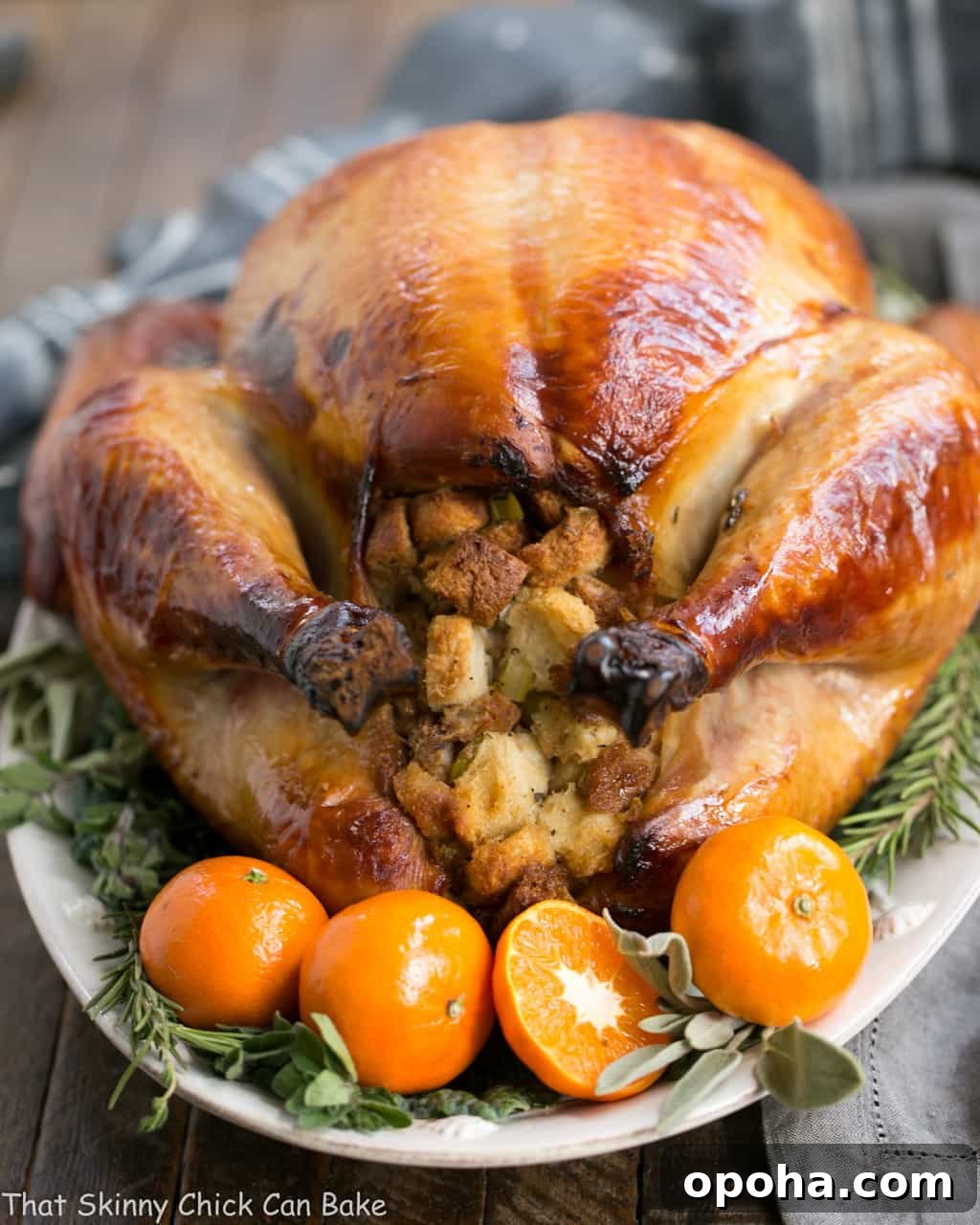
Frequently Asked Questions
Brining uses a salt solution to allow salt and moisture to penetrate the meat through osmosis. The process helps protein fibers retain moisture during cooking, resulting in juicier, more tender meat. A homemade brine achieves this with simple, natural ingredients.
For a wet brine, 8–18 hours is ideal. Shorter times still help tenderize, but brining too long can make the meat overly salty or change its texture. A dry brine is a different method and usually takes a couple of days to fully penetrate.
A common guideline is 1 tablespoon of kosher salt per cup of water (or equivalent liquid). Because kosher salt is less dense than table salt, this ratio prevents over-salting. Adjustments are possible if you prefer a milder brine.
Beyond salt, water, and sugar, try herbs, spices, citrus peels, whole garlic cloves, peppercorns, or aromatics like bay leaves. Sugars can be white sugar, brown sugar, molasses, or honey—each contributes a different flavor and color.
Yes. Keep the turkey chilled while brining to prevent bacterial growth. A refrigerator is best; a large cooler with plenty of ice is a safe alternative if refrigerator space is limited. Monitor and replace ice as necessary.
Rinsing is not recommended because it washes away the flavorful salt that has penetrated the skin. Instead, drain the turkey and pat it dry thoroughly, then refrigerate uncovered for 4–6 hours to help the skin crisp during roasting.
Roast as you normally would. A common method is to start at a higher temperature to develop color, then reduce to finish cooking. Baste occasionally with pan juices, butter, or a little wine, and tent with foil once the bird has achieved a deep brown color to prevent burning while the interior reaches a safe temperature.
You May Also Like:
- No-Boil Slow Cooker Mashed Potatoes
- Shredded Brussels Sprouts with Pistachios, Cranberries, and Parmesan
- The Best Thanksgiving Stuffing
- Spinach Soufflé
- Praline-Topped Sweet Potato Casserole
- Best Holiday Side Dish Recipes
- More holiday recipe ideas
Stay connected on social media and tag me if you try this recipe. If you enjoyed it, please rate the recipe in the card below.
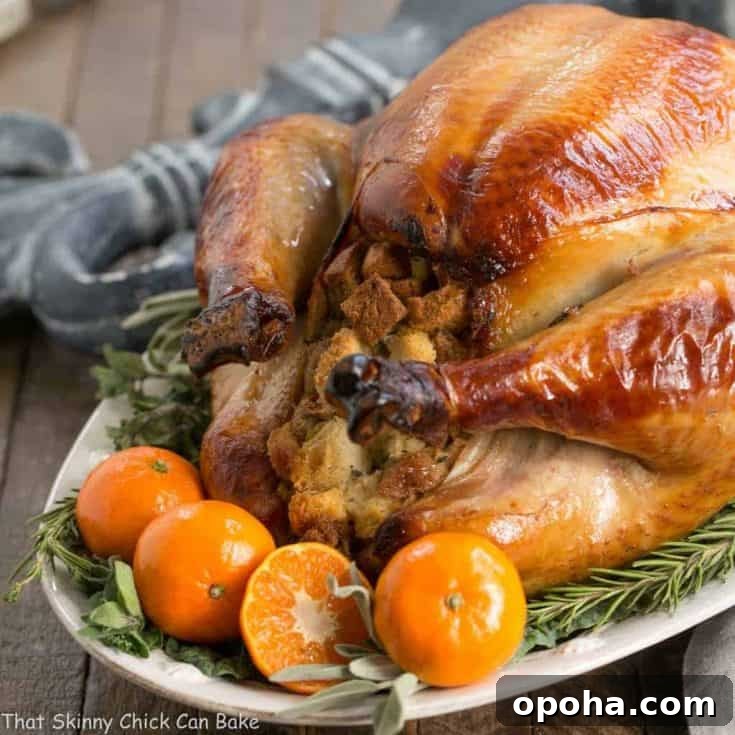
Honey Brined Turkey Recipe
15 minutes
3 hours
3 hours 15 minutes
16 servings
The perfect way to achieve succulent, flavorful meat from your holiday turkey.
Ingredients
Brine:
- 1 pound kosher salt
- 6 quarts hot water
- 1 cup molasses
- 1 cup soy sauce
- 1 cup honey
- 5 pounds of ice
- 16-pound turkey, defrosted (any size will work)
Instructions
- Pour hot water into an extra-large brining bag, then add the kosher salt. Agitate the bag until the salt dissolves completely.
- Stir in the molasses, soy sauce, and honey until everything is well combined.
- Add the turkey (remove giblets first), seal the bag securely, and ensure there is room for the brine to circulate.
- Place the sealed bag in a cooler packed with at least 5 pounds of ice, or set it in a tray in the refrigerator to catch any leaks.
- Allow the turkey to brine for about 12 hours or overnight. Do not exceed 18 hours to avoid oversalting.
- When ready to roast, drain the turkey well and pat it dry. Refrigerating uncovered for a few hours helps the skin crisp during roasting.
Notes
Recipe adapted from a friend, Mary Ann. Roasting times will vary depending on turkey size and oven. Nutrition estimates are approximate because brined liquids are not consumed and ingredients like molasses affect color and calories. The molasses may darken the meat slightly, but it will remain delicious and juicy.
Recommended Products
As an Amazon Associate and member of other affiliate programs, the author may earn from qualifying purchases.
-
 Roasting Pan
 -
Brining Bags
-
Turkey Baster
Nutrition Information:
Yield:
16
Serving Size:
1
Amount Per Serving (estimated):
Calories: 991
Total Fat: 34g
Saturated Fat: 10g
Trans Fat: 0g
Unsaturated Fat: 22g
Cholesterol: 494mg
Sodium: 12355mg
Carbohydrates: 34g
Fiber: 0g
Sugar: 33g
Protein: 131g
Note: Nutrition figures are estimates and skewed because the brine is not consumed.
How much did you love this recipe?
Please leave a comment or share a photo if you try this turkey.