Thanksgiving feels comforting because it celebrates sameness. Families cling to long-held traditions, and the classic turkey dinner rarely changes. Even odd dishes that no one eats would cause a stir if they vanished from the table. There’s a special comfort in routine.
In our home, turkey is non-negotiable. We’re fortunate to get birds from Darrel Winter and Corrine Dahm in Dalemead, who have raised turkeys for decades, and a good bird makes a big difference. The real challenge, however, is managing a whole turkey: thawing, stuffing, calculating roast times, and fitting it into a busy oven schedule. Many people wrestle with when to start and how to get the turkey in and out without waking up at dawn.
I’ve tried spatchcocking—removing the backbone and flattening the bird—which speeds roasting but eliminates the option to stuff. Most people cook stuffing separately anyway, though that always felt like settling for a different dish. A recent conversation with chef Jamie Harling of Deane House gave me a simpler idea: break the turkey into pieces and roast them. Pieces cook faster and more evenly, but I initially worried about losing the traditional stuffing cooked inside the bird. Jamie’s suggestion—make the stuffing separately—got me thinking: why not combine the benefits of both approaches?
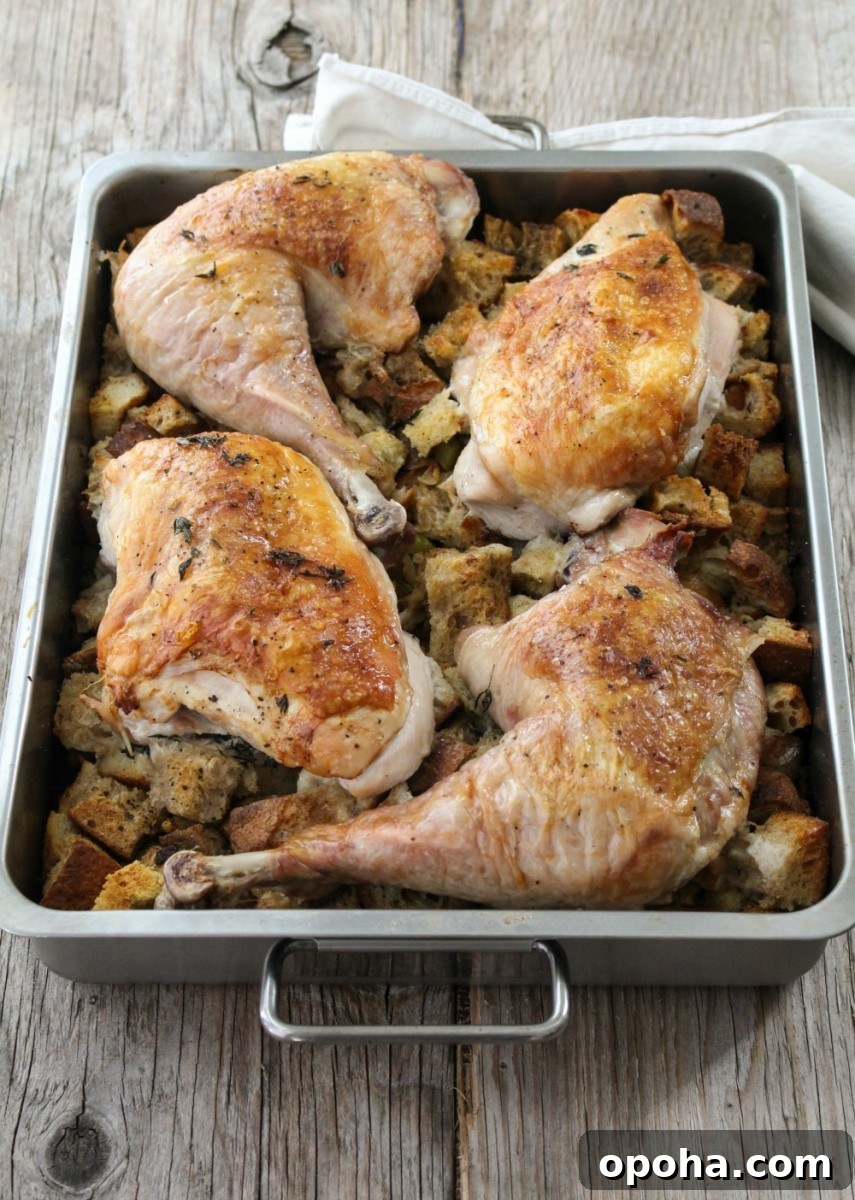
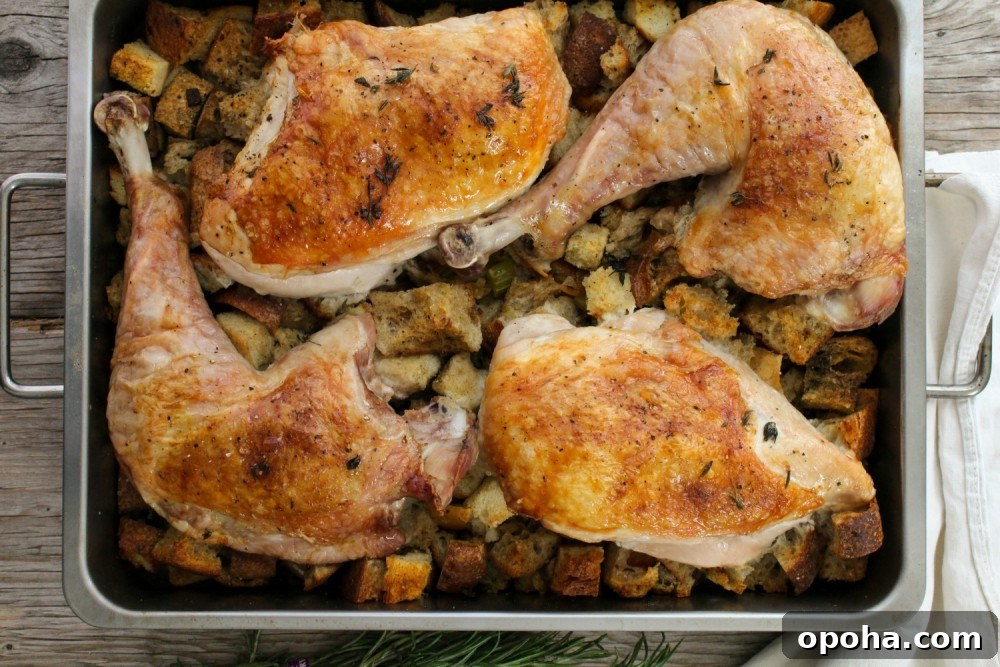
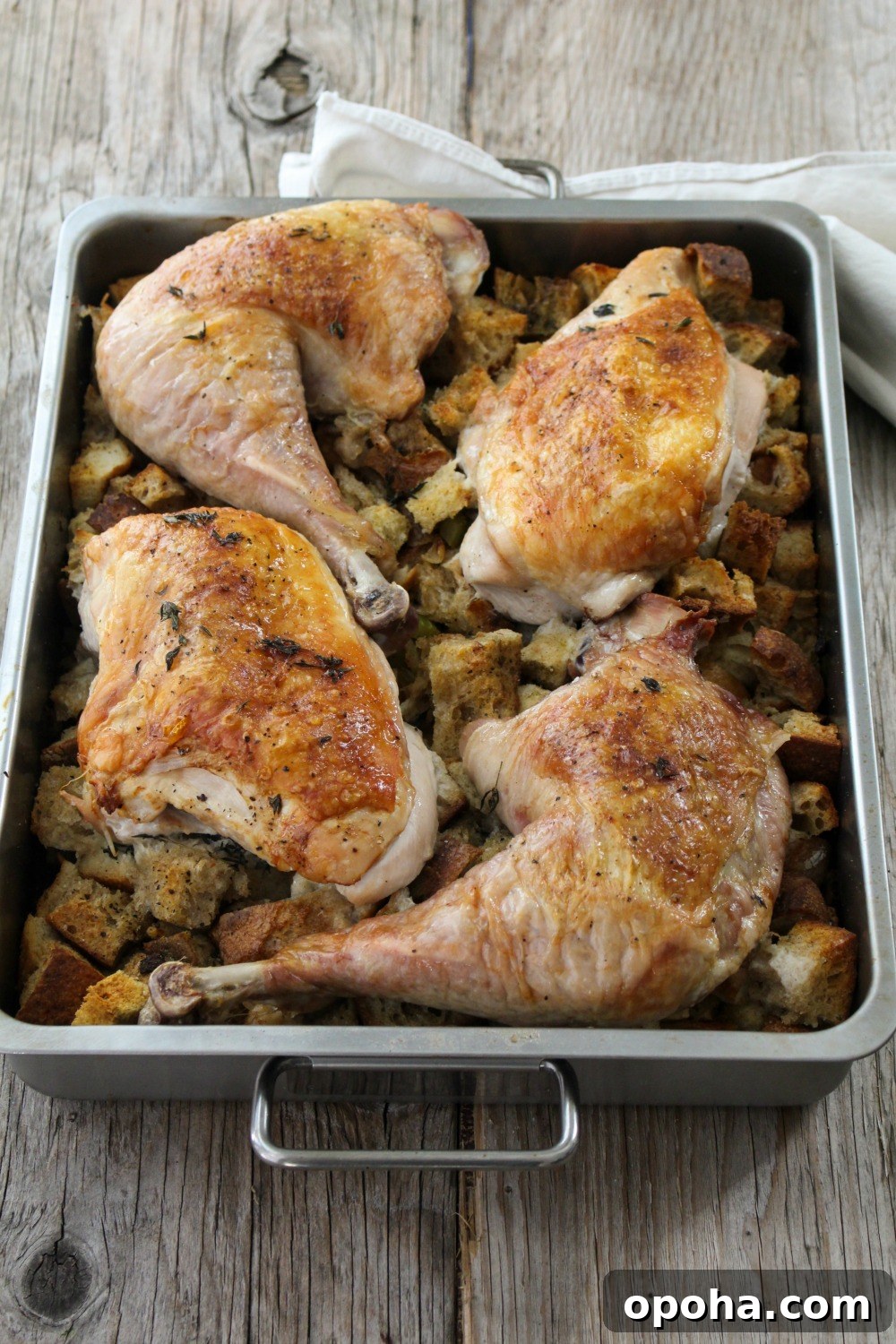
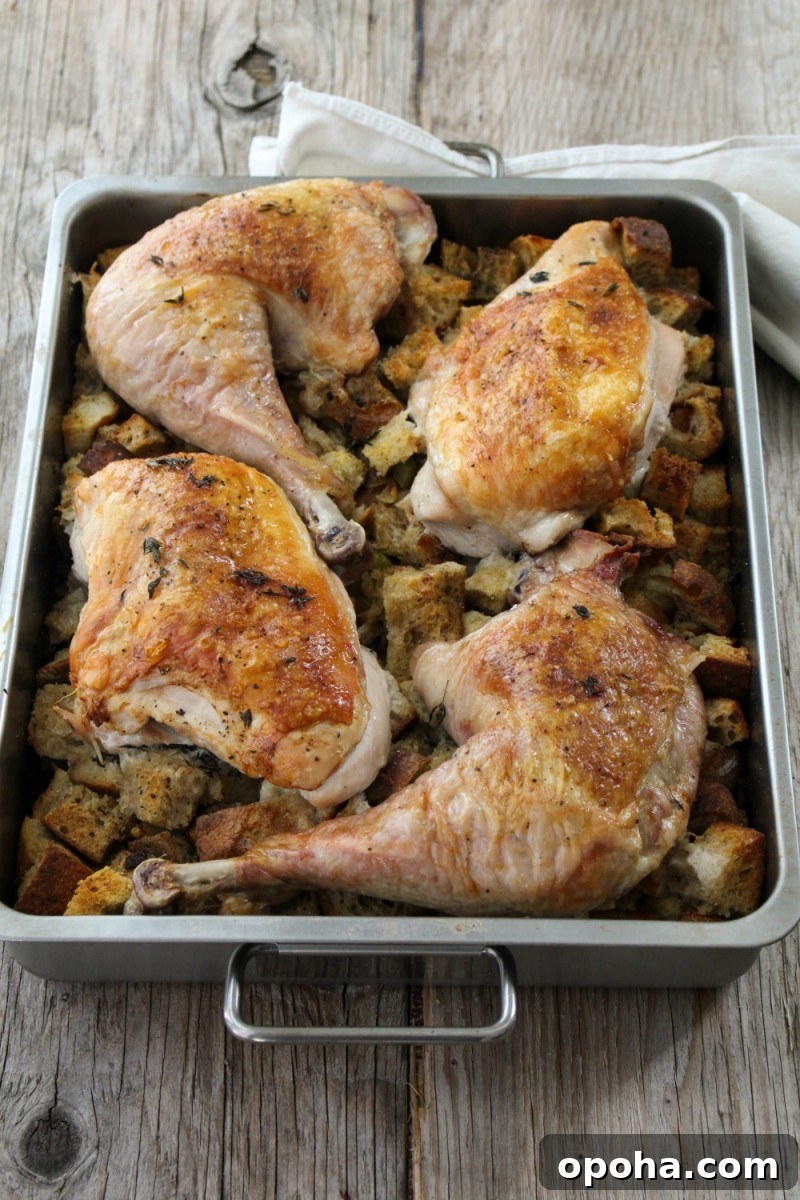
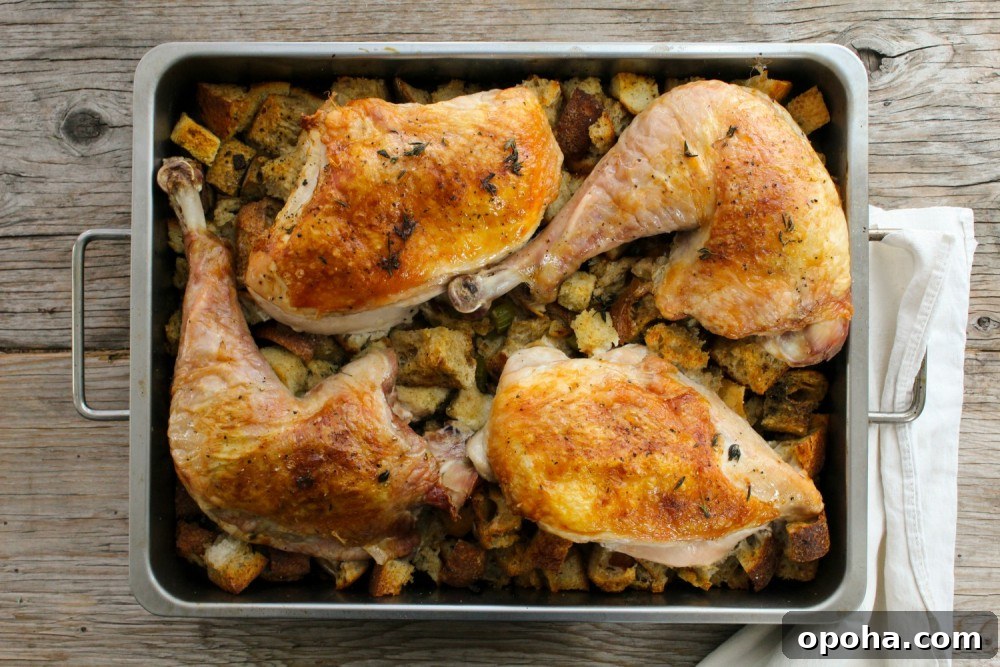
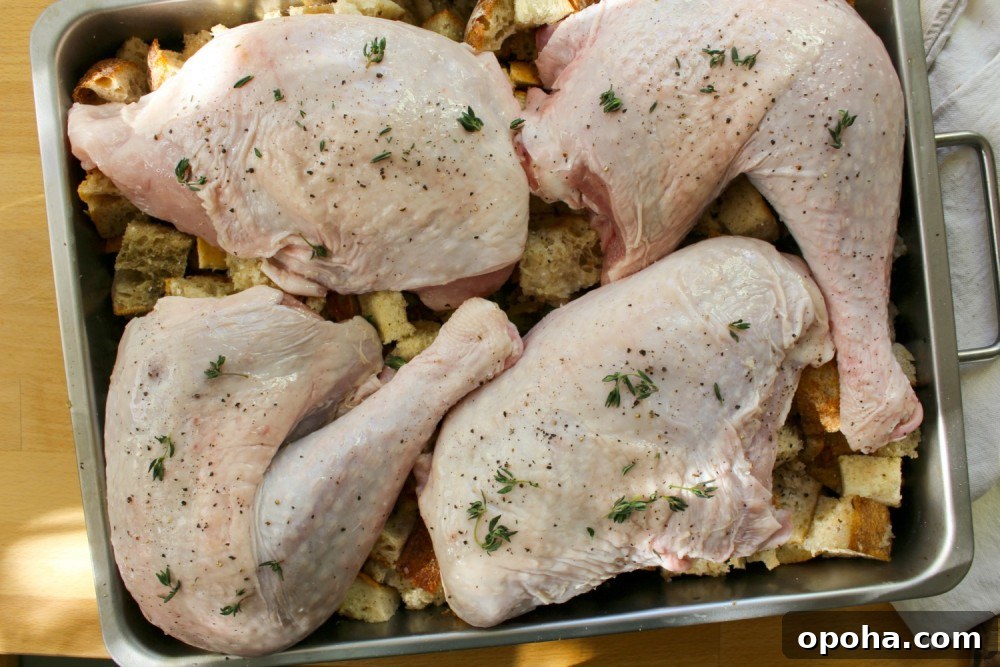
My solution was to roast the turkey pieces on top of a large, shallow pan of stuffing. As the turkey roasts, its juices drip into the stuffing, flavoring it the same way it would if cooked inside the cavity. Because the stuffing sits in a pan with direct oven heat, it cooks more thoroughly than when tucked inside the bird, and the increased surface area creates more crispy, caramelized bits.
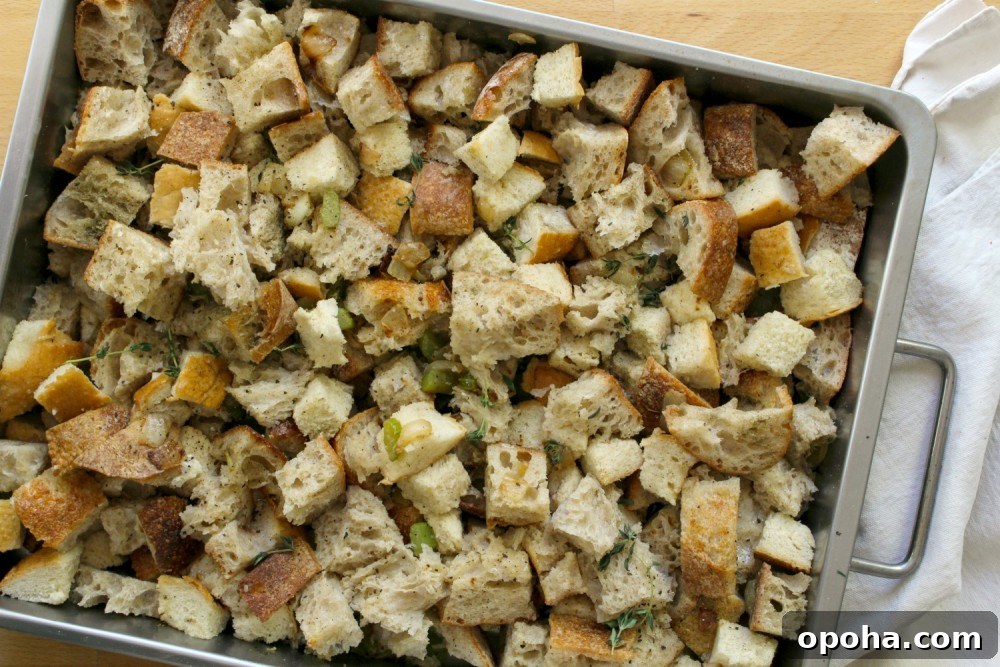
You can use any stuffing you prefer and prepare the turkey pieces as you normally would. I pat the skin dry, rub it with softened butter and a touch of canola oil, then season with salt and pepper. I added fresh thyme for visual appeal. The stuffing I used was straightforward: day-old sourdough cubes, sautéed onions and celery in butter, sage, and stock—classic and reliable.
If you prefer not to break the bird down yourself, ask your butcher to do it. It’s simpler than it sounds—one Co-op butcher took about five minutes to portion my turkey while I shopped. He boxed the carcass and giblets so I could still make stock. I roasted the carcass and wings in a separate pan alongside the turkey pieces and stuffing to collect browned bits for gravy. Instead of straining pan juices awkwardly, I removed the roasted bones and finished the gravy on the stove. Roasted bones also produce a darker, more flavorful stock.
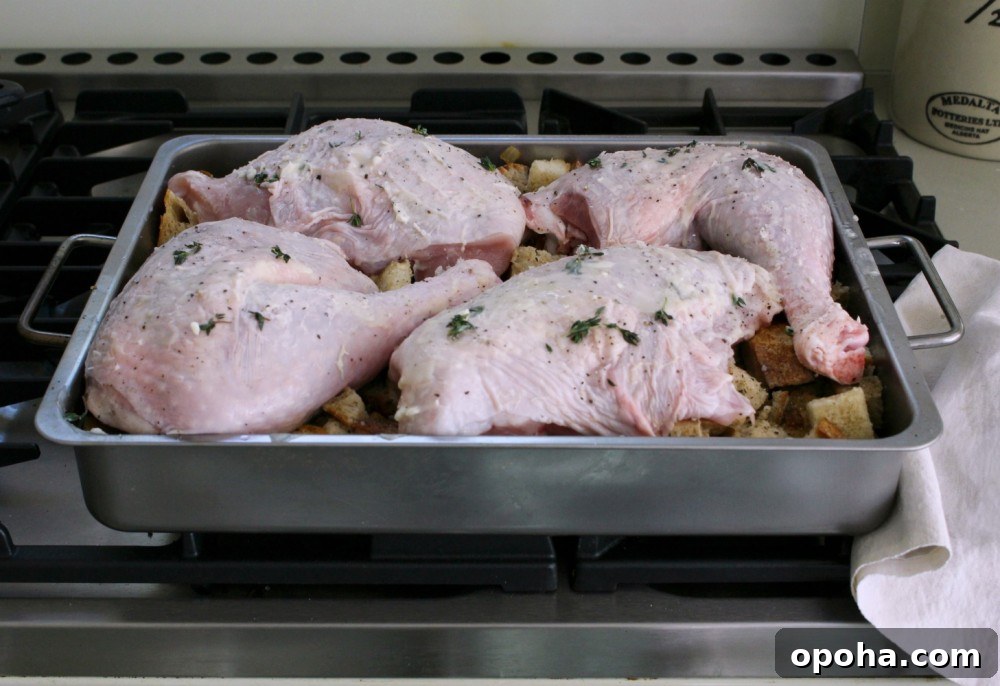
A 5.6 kg (12 lb) bird roasted in pieces in just one hour and twenty minutes. That’s a dramatic time savings compared with roasting the whole bird.
The benefits are many: handling pieces is easier and neater, thawing is less stressful, and carving becomes simple and clean. The kitchen doesn’t end up looking like a battleground after carving, and you don’t have to cram the carcass into a pot to make stock because you can roast the bones separately and use those for gravy and broth. And of course, the extra crispy skin and stuffing edges are an undeniable bonus.
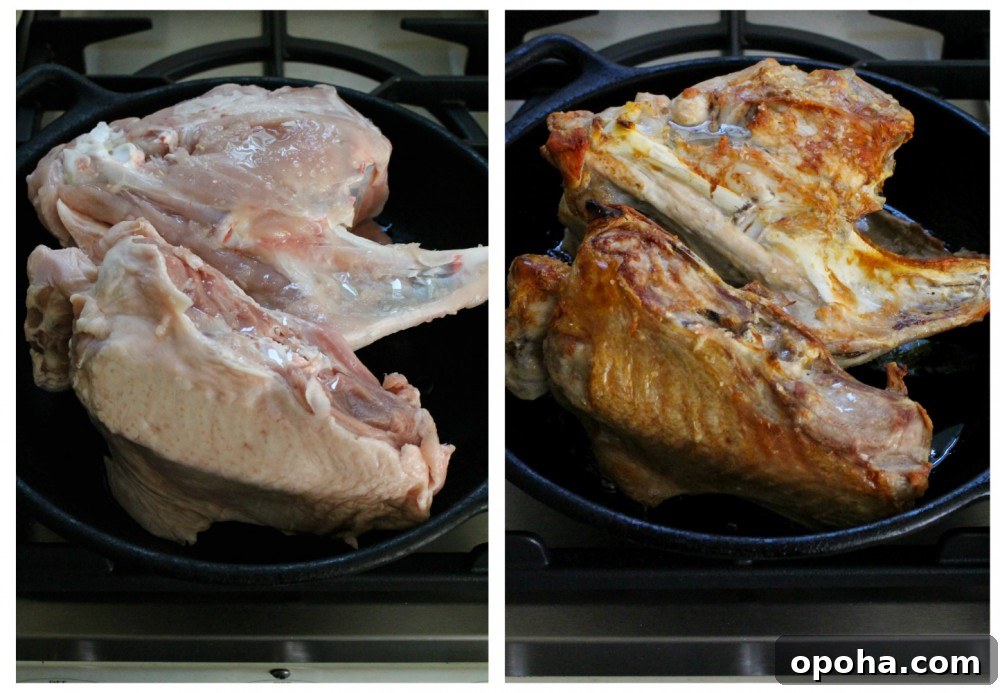
I’ve brined, barbecued, smoked and deep-fried turkeys over the years, but roasting the bird in pieces on top of stuffing may be the most useful technique yet. We don’t present a single whole bird at the table, so nothing traditional is lost, and everything is gained: faster roasting, simpler carving, more flavor in the stuffing, and unbeatable crispy bits.
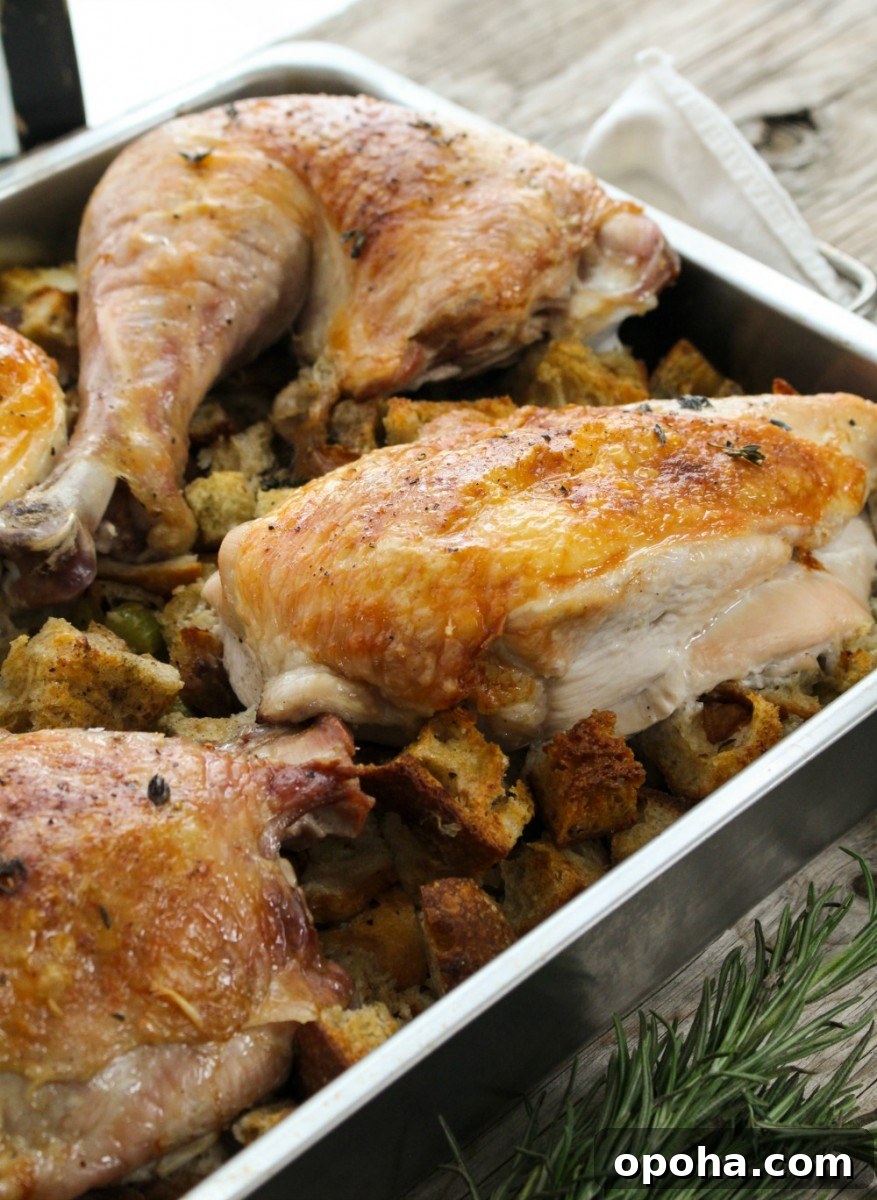
This approach really is a game changer. Thanks to Jamie Harling for the idea—sometimes a small change makes a big difference at the Thanksgiving table.