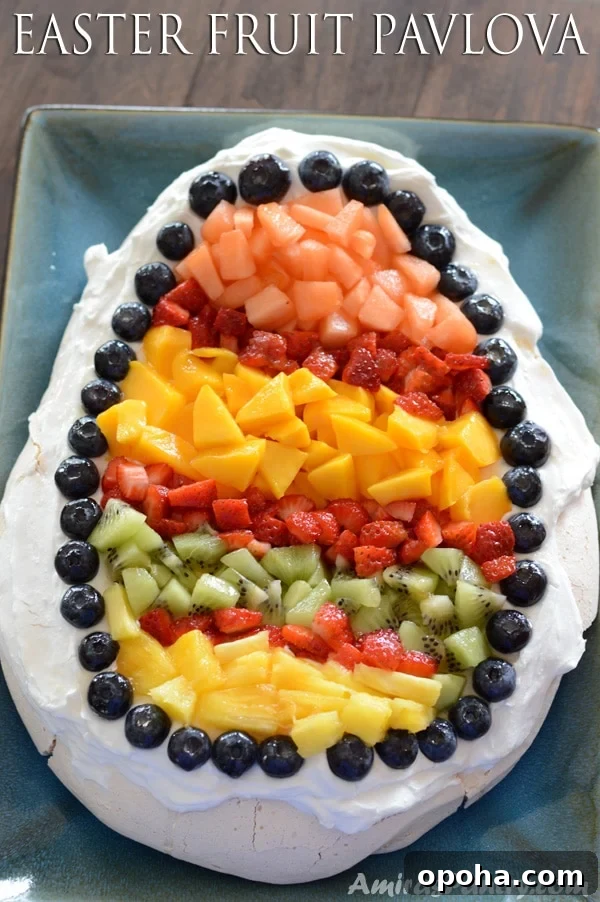
An Easter-themed pavlova that’s crisp on the outside with a marshmallow-soft center. Pavlova is an excellent low-fat base for fresh fruit and whipped cream.
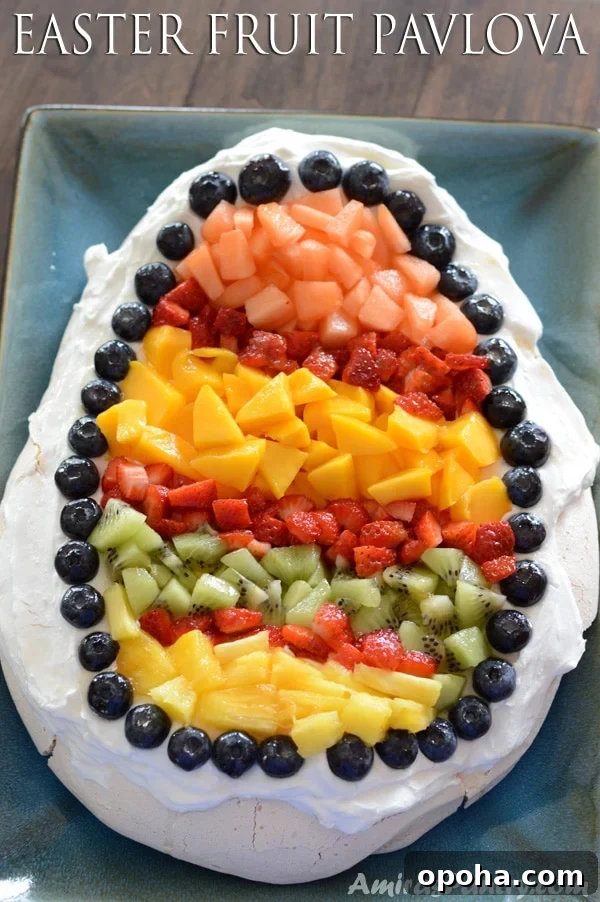
Pavlova has long been one of my favorite desserts, and I finally tried making it at home. The process seemed intimidating at first, but it’s surprisingly simple and delicious. Despite the name, pavlova is Australian, created to honor the famed Russian ballerina Anna Pavlova.
In Egypt, Easter Sunday is followed by a national spring celebration on Monday called Shamm El-Nessim. This ancient festival, with roots going back thousands of years, welcomes spring as a symbol of renewal and new beginnings. Egyptians of all faiths observe the day with family gatherings and outdoor festivities.
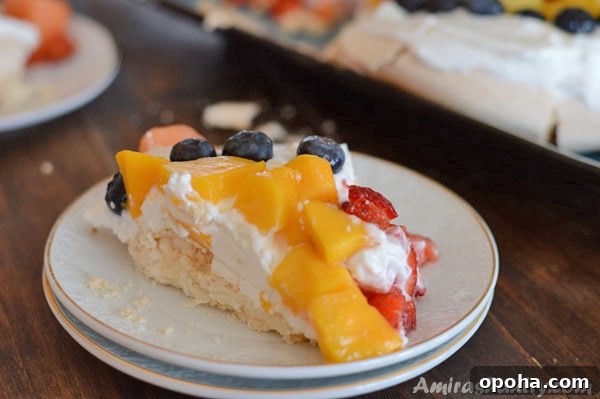
Shamm El-Nessim is usually full of activities: family visits, picnics, and short outings. One popular tradition is visiting the zoo—perhaps because vendors outside sell colorful dyed eggs, simit, and salted fish. The day often begins with a festive breakfast where children gather to color eggs. In my family we used natural dyes like red and yellow onion skins and beets to color eggs.
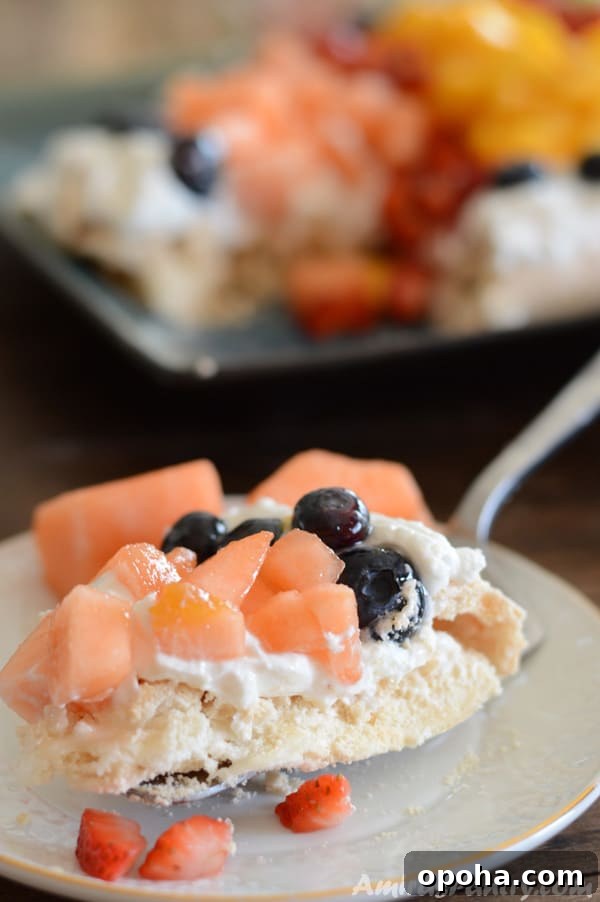
Historically, ancient Egyptians decorated eggs with prayers and wishes for the coming season, hanging baskets of eggs outside overnight so sunlight could “bless” them. The custom continues today in different forms.
Another Shamm El-Nessim tradition is eating salted, fermented fish. I never warmed to the strong aroma, so I prefer salted and smoked herring with lemon, tahini, and green onions served with pita bread. Green onions are also a classic part of the celebration.
How to make easy pavlova
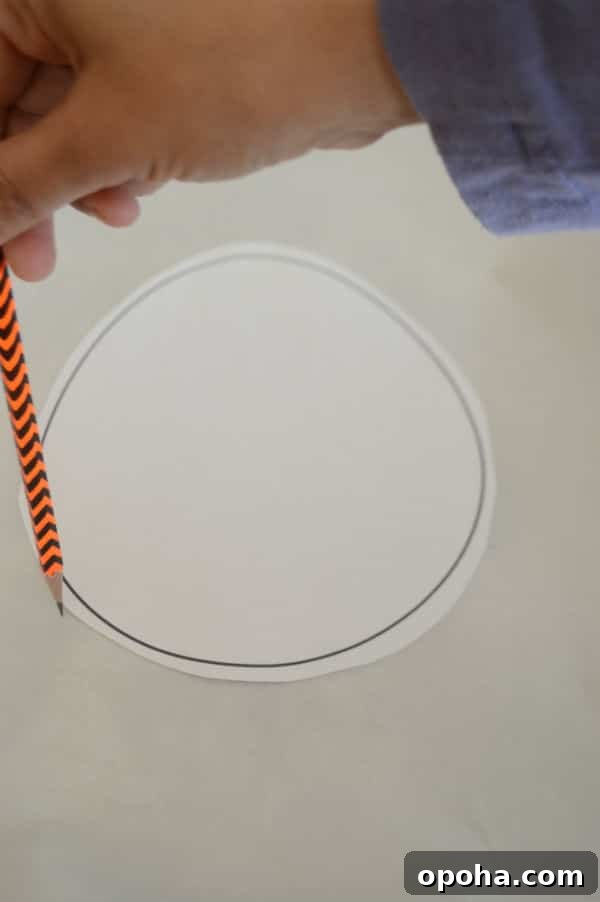
Start by printing or drawing a large egg template for the pavlova base. You can also make individual mini pavlovas. Line a baking sheet with parchment paper and trace the egg shape.
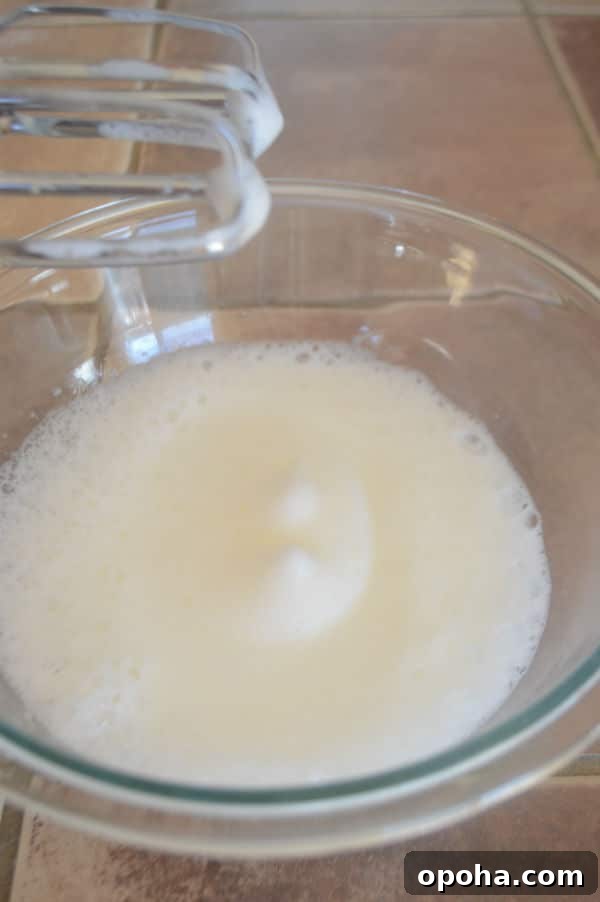
Beat egg whites in a clean bowl until frothy.
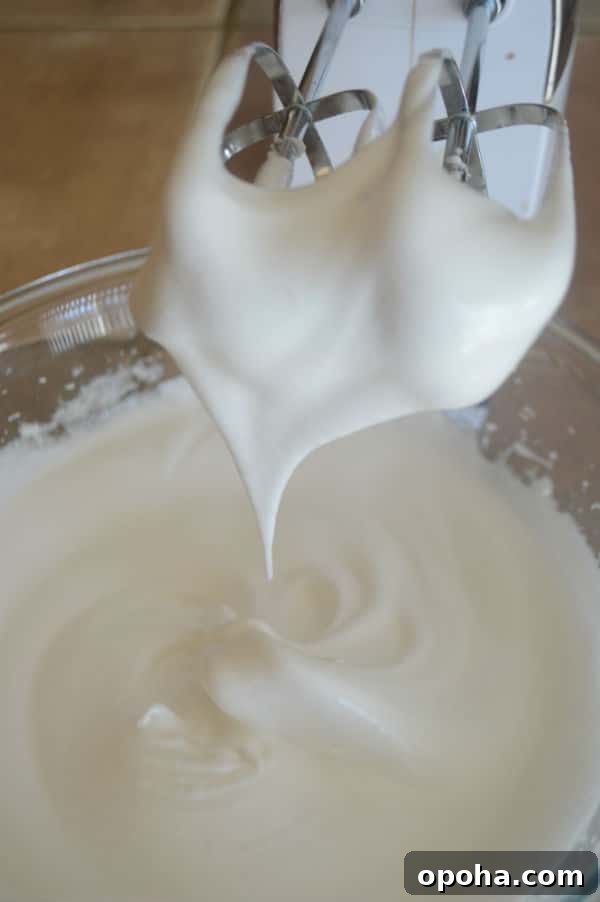
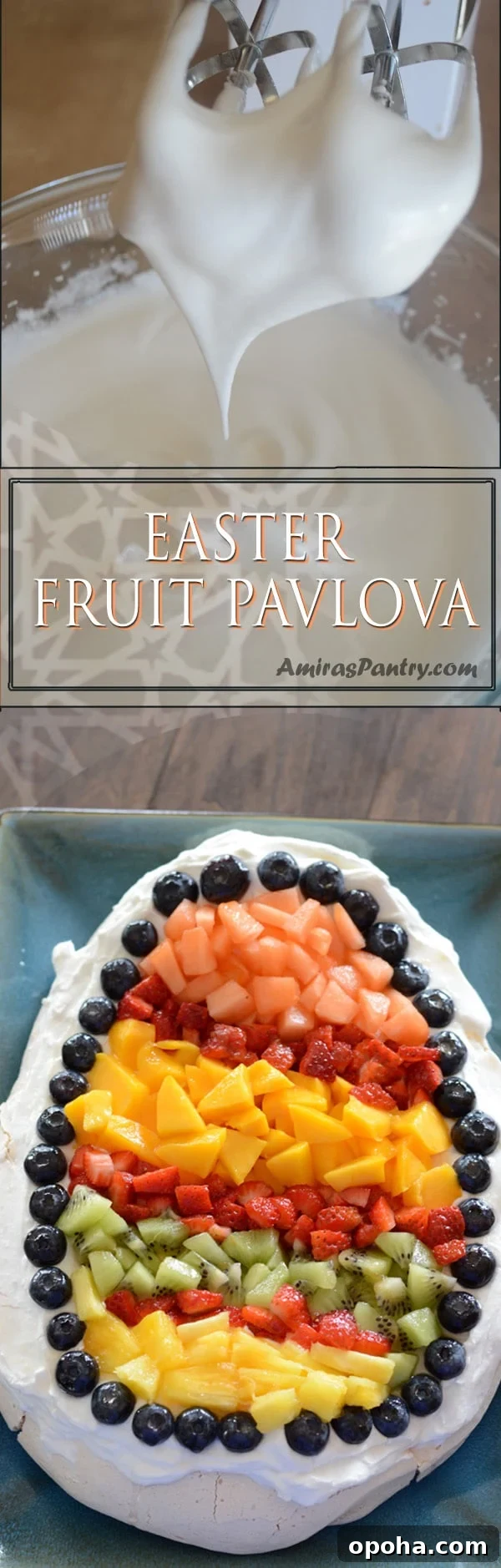
Gradually add sugar one tablespoon at a time, beating until you achieve stiff peaks.
Fold in a small bowl of cornstarch, vanilla, and vinegar. With a little of the meringue on your whisk, make four small dots on the baking sheet and place the parchment on top with the drawing facing down—these dots keep the paper from sliding.
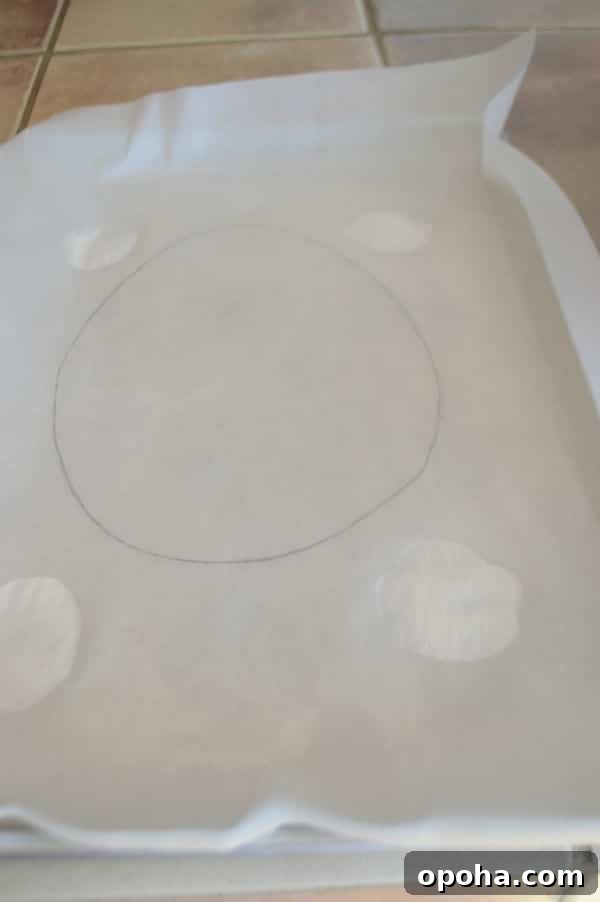
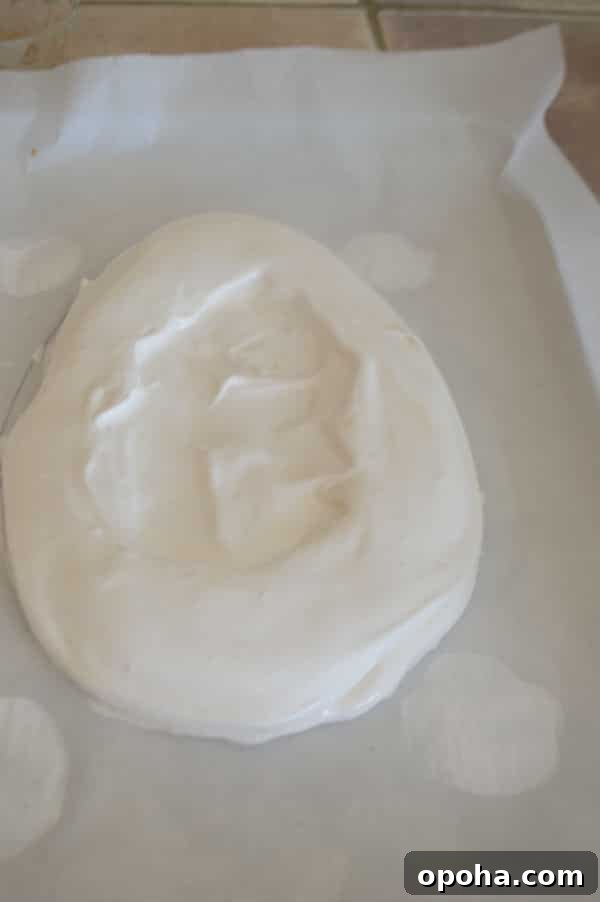
Spoon the meringue inside the egg outline and smooth it, shaping the edges slightly higher to hold the filling.
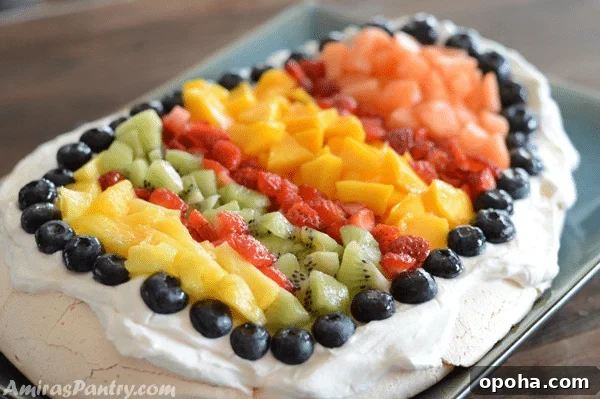
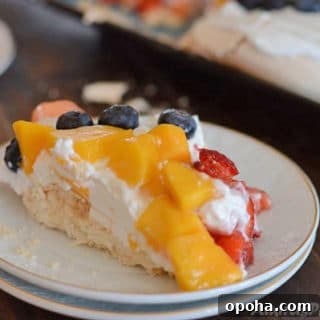
Bake according to the instructions below. While the pavlova cools in the oven, prepare the whipped cream and fruit. Assemble just before serving by topping the meringue with whipped cream and arranging fruit in an attractive pattern.
Pavlova tips and tricks:
My pavlova turned out with a delicate crisp crust and a marshmallowy center. These tips make the process easier:
- Use room-temperature egg whites rather than straight-from-the-fridge eggs.
- Avoid opening the oven while the pavlova bakes.
- Let the pavlova cool completely in the oven—ideally for several hours or overnight.
- For the whipped cream, add one tablespoon confectioners’ sugar and one teaspoon vanilla to balance sweetness.
Related Recipes
- Marshmallow Buttercream Frosting is a light, fluffy frosting that pairs well with chocolate cakes and cupcakes, adding a sweet, airy finish.
A fun, easy dessert to welcome spring — a great project to make with kids. If you try the recipe, a five-star rating is always appreciated!
Easter egg-shaped fruit Pavlova
Ingredients
For the pavlova:
- 4 egg whites about ⅔ cup, room temperature.
- 1 cup sugar
- ¼ teaspoon white vinegar
- 1 teaspoon vanilla extract
- 2 teaspoons cornstarch
For the whipped cream:
- 1 pint whipping cream
- 1 Tablespoon confectioners’ sugar
- 1 teaspoon vanilla extract
Fruits for topping (suggestions):
- 2 kiwis diced
- ⅓ cup diced cantaloupe
- 1 mango diced
- ¼ cup diced pineapple
- Less than a pint of blueberries
- 1 cup diced strawberries
Instructions
-
Preheat oven to 275°F (135°C).
-
Line a baking sheet with parchment and trace your egg template on the paper.
-
Beat egg whites in a clean bowl until frothy.
-
Gradually add sugar one tablespoon at a time while beating.
-
Beat until stiff peaks form.
-
Combine cornstarch, vinegar, and vanilla in a small bowl and fold into the meringue.
-
Use a little meringue on your whisk to make four dots on the pan, place parchment with the drawing down so it stays put.
-
Spoon the meringue into the traced egg shape, smoothing and building the edges slightly higher.
-
Reduce oven temperature to 250°F (120°C) and bake for about 50 minutes. Turn off the oven and let the pavlova cool completely inside for 2–3 hours or overnight.
-
Meanwhile, whip the cream with confectioners’ sugar and vanilla.
-
Just before serving, transfer the pavlova to a platter, spread the whipped cream on top, and arrange the fruit.
-
Serve and enjoy.