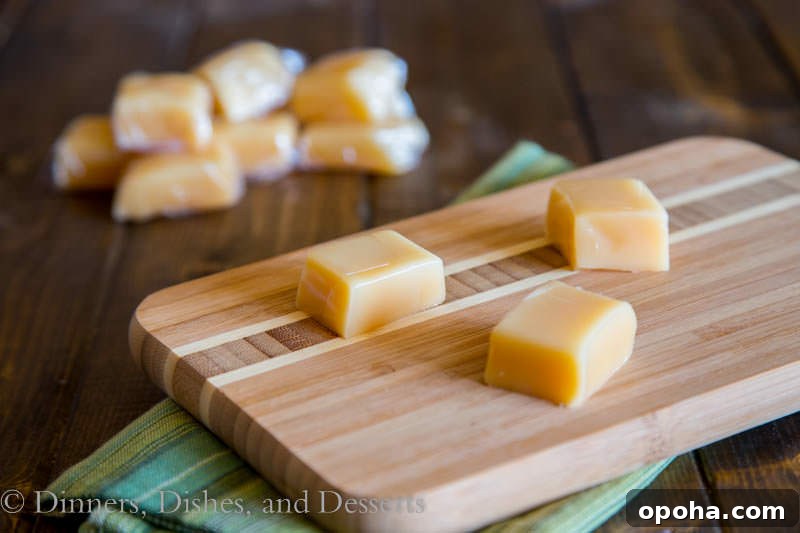
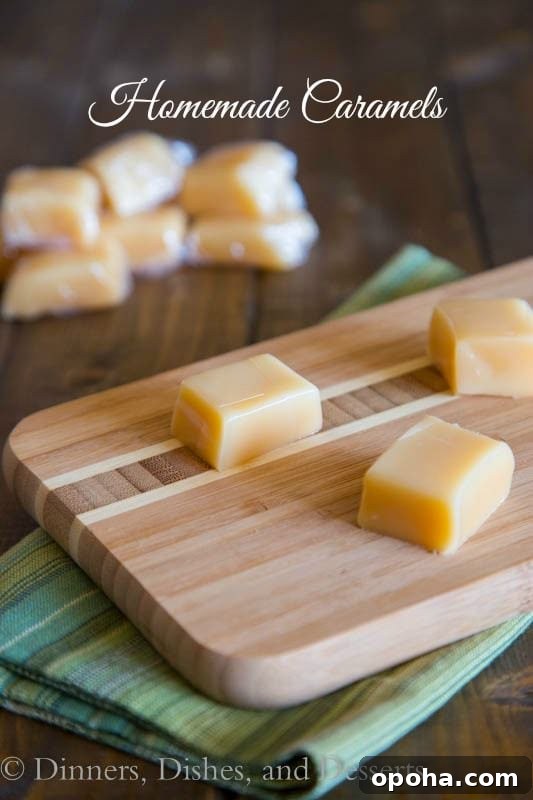
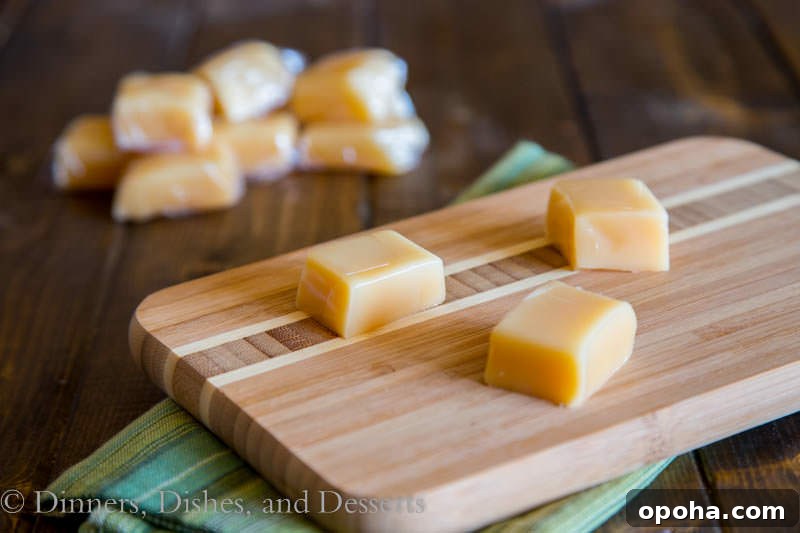
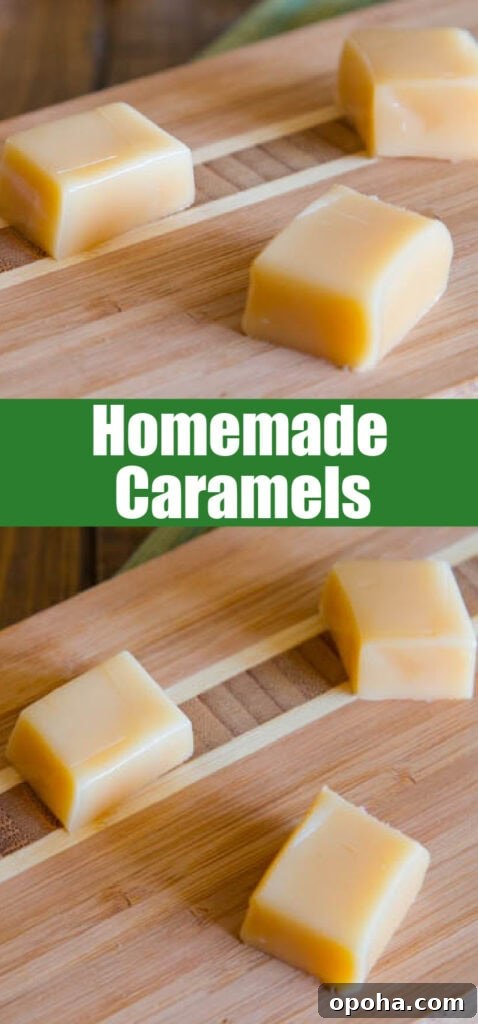
Classic homemade caramels that are soft, chewy, buttery, and delicious!
One of the most enjoyable holiday traditions in many kitchens is making homemade caramels. When done right, caramels are buttery, sweet, and perfectly chewy — a treat that stands out whether you give them as gifts or enjoy them at home. These caramels rely on a few simple pantry ingredients and careful attention on the stovetop.
Below you’ll find clear instructions, helpful tips, storage advice, and guidance for calibrating a candy thermometer so your caramels set up reliably every time. With a little patience and the right temperature, you’ll be rewarded with soft, irresistible caramels.
What You’ll Need
- Unsalted butter
- Granulated sugar
- Heavy cream
- Light corn syrup
- Vanilla extract
For consistent results, a reliable candy thermometer is highly recommended. Measuring the temperature accurately is the most important factor for achieving the right chew and firmness. If you do not have a thermometer, the cold water test (described below) will help you judge doneness.
How To Make Homemade Caramel
Be sure to read the full instructions and tips before you begin.
- Prepare an 8-inch square baking pan by greasing it lightly or lining it with parchment paper, leaving some overhang for easy removal.
- In a large, heavy-bottomed saucepan combine the sugar, butter, heavy cream, and light corn syrup. Place over medium heat and stir constantly. The mixture will come to a boil and then slowly darken. Continue stirring until the candy thermometer reads 245ºF (about 35 minutes total cook time from start to finish; usually 15–20 minutes once it reaches a full boil). Do not increase the heat to speed the process — cooking too quickly can make the caramel grainy or too hard.
- If you do not have a thermometer, use the cold water test: keep a cup of very cold water nearby and drop a small spoonful of the hot caramel into the water. When you can shape the cooled drop into a soft ball that holds its shape when pressed lightly, the caramel is ready.
- Remove the pan from the heat immediately and stir in the vanilla extract. Mix thoroughly so the vanilla is distributed evenly.
- Pour the hot caramel into the prepared pan and smooth the top with a spatula. Allow the caramel to cool completely at room temperature until fully set.
- Once firm, lift the slab from the pan using the parchment paper, trim any uneven edges, and cut into 1-inch squares. Wrap each piece individually in plastic wrap, wax paper, or foil to prevent sticking and to keep air out.
Recipe Tips
- Patience is essential. Keep the heat moderate and stir continuously to prevent scorching. Rushing the process typically leads to overcooked or grainy caramels.
- Use a heavy-bottomed saucepan to distribute heat evenly and minimize hot spots. This helps the mixture cook uniformly and reduces the risk of burning.
- Calibrate your thermometer periodically to ensure accuracy. Even a few degrees of error can change the texture from soft and chewy to hard and brittle.
- If the caramel crystallizes or becomes grainy, sometimes stirring in a tablespoon of corn syrup or a little cream and reheating gently can help smooth it out, but results vary. Prevention — by using the right heat and stirring steadily — is the best approach.
How To Calibrate Candy Thermometer
To check thermometer accuracy, place it in a pot of boiling water (do not let the thermometer touch the pot bottom). Water boils at 212ºF (at sea level). When the water reaches a rolling boil, note the temperature displayed. If it reads higher or lower than 212ºF, subtract or add that difference to your target caramel temperature. For example, if your thermometer reads 215ºF at boiling, it is 3º high, so you would stop cooking the caramel at 242ºF instead of 245ºF. Adjustments help account for altitude and thermometer variance.
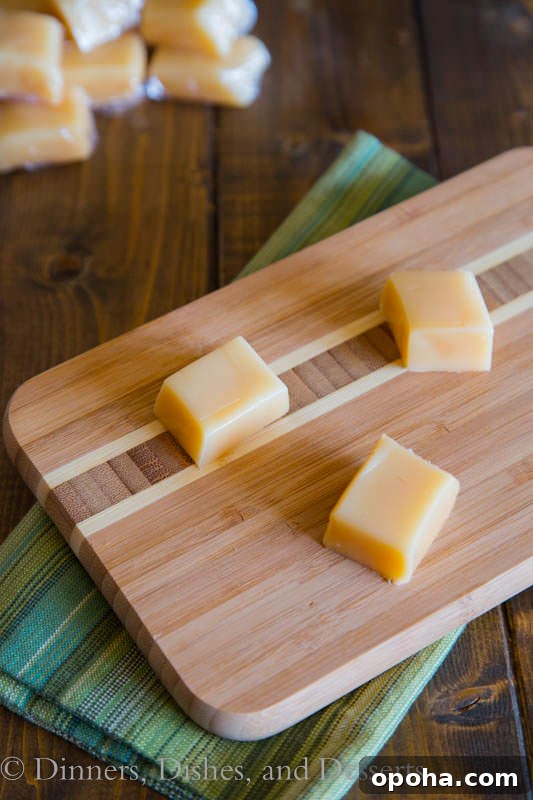
Hard caramels are usually the result of overcooking or the pan getting too hot. Monitor the temperature closely and use the cold water test often if you do not have a thermometer. Stop cooking as soon as the mixture reaches the target temperature and remove it from heat immediately.
You can try to salvage them by returning the cut pieces to a saucepan with a few tablespoons of water. Gently melt them down and reheat to the correct temperature, then pour into a prepared pan to set again. This may or may not restore the ideal texture depending on how far past the target temperature they were cooked.
If the caramels remain too soft, they likely did not reach a high enough temperature. You can try reheating them with a small amount of water and cooking to the correct temperature, but results vary. Be sure to test temperature accurately next time or use the cold water test frequently.
Storage
After the caramels have cooled and been cut, wrap each piece individually in plastic wrap, wax paper, or foil to prevent sticking and to keep out air. Store wrapped caramels at room temperature in an airtight container. Properly wrapped caramels should stay soft and chewy for about 2–3 weeks. For longer storage, you can refrigerate them, but note refrigeration can slightly firm the texture; bring them to room temperature before serving for the best chew.
More Christmas Dessert Recipes
- Reese’s Fudge
- Peanut Butter Balls
- Chocolate Fudge
- Chocolate Peppermint Cookies
- Cream Cheese Spritz Cookies
- Buckeye Cookies
- Chocolate Covered Oreos
- Gingerbread Truffles
Homemade Caramels
Ingredients
- 2 cups granulated sugar
- 1/2 cup unsalted butter
- 2 cups heavy cream
- 3/4 cup light corn syrup
- 1/2 teaspoon vanilla extract
Instructions
- Grease or line an 8-inch baking dish with parchment paper.
- Combine all ingredients in a large saucepan over medium heat. Stir constantly until the mixture reaches 245ºF on a candy thermometer. If you don’t have a thermometer, use the cold water test: drop a small amount into cold water and shape it into a ball; when it holds its shape until pressed, it is done.
- Remove the pan from the heat immediately and stir in the vanilla extract.
- Pour into the prepared baking dish and allow to cool completely.
- Cut into 1-inch squares and wrap each piece individually in plastic wrap, foil, or wax paper.
Notes
Recipe adapted from classic published sources. Exact yields and times may vary slightly depending on equipment and altitude.
Nutrition (per piece, approximate)
Calories: 74 | Carbohydrates: 10 g | Fat: 4 g
Nutrition information is automatically calculated and should be used as an approximation only.
If you enjoy making these caramels, try varying the vanilla or adding a pinch of sea salt on top for salted caramels. Small adjustments to flavor can create a range of delicious variations that are perfect for gifting.