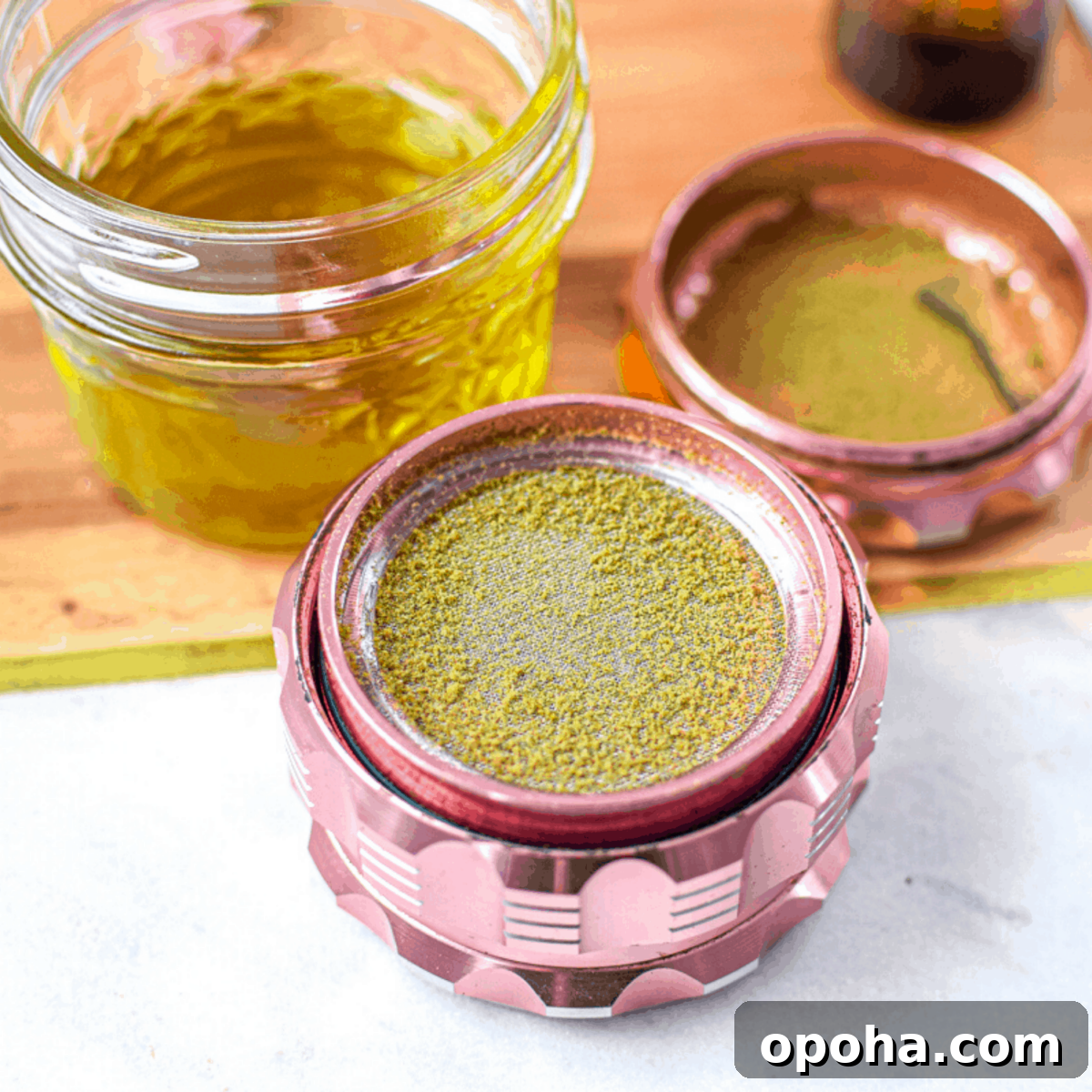
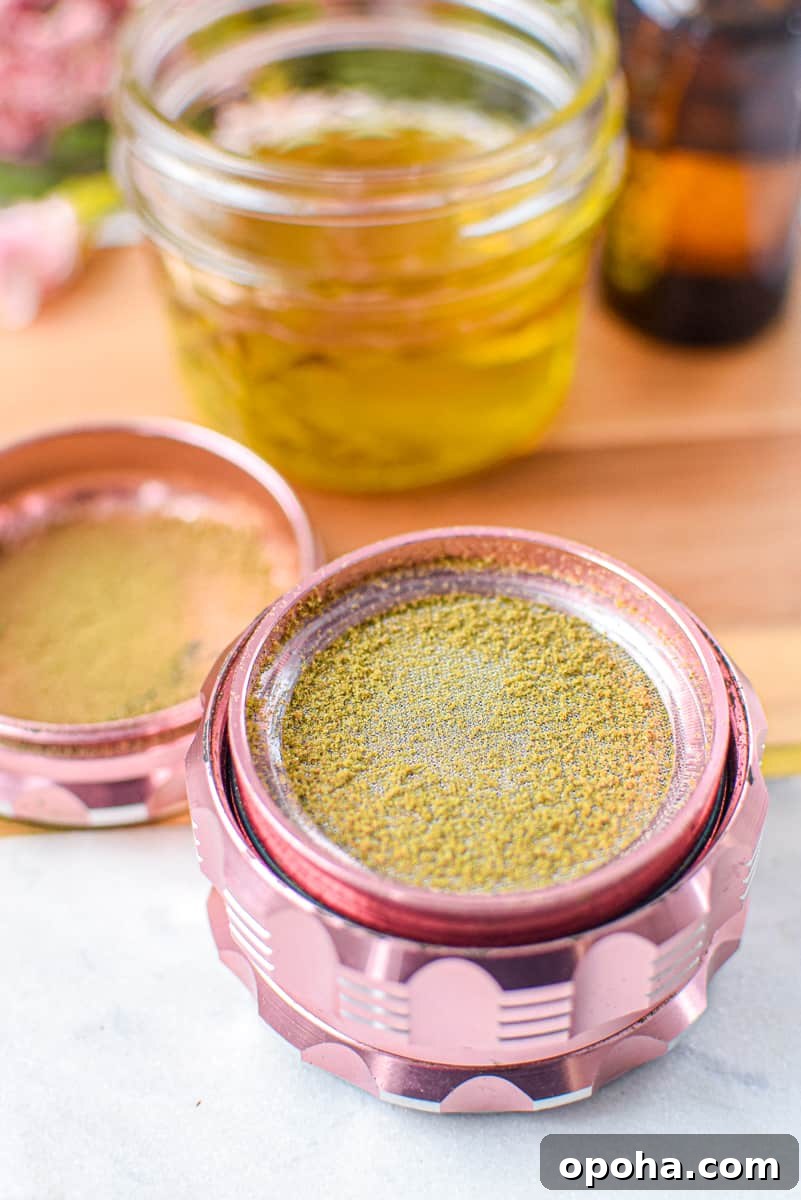
Do you have a kief collection and wonder if you can use it in homemade edibles? Learn how to decarb kief—the fine powdery substance collected in a grinder—and how to turn it into effective edibles, tinctures, oils, or topicals at home. This guide explains why kief can be especially potent and gives clear instructions for decarboxylating kief for the best results.
Article Features
- A step-by-step guide to decarboxylating kief
- Practical ways to use decarbed kief in edibles and other products
- Tips on potency, storage, and frequently asked questions
Why You Will Love This Guide
Kief is a concentrated, potent part of the cannabis plant. Just a small amount can dramatically increase potency in a recipe. This guide walks you through safe, reliable decarboxylation for kief and shows practical ways to use it in the kitchen or for topical formulations.
Decarboxylation is an essential step: raw kief contains cannabinoid acids (like THCA and CBDA) that need heat to convert into active forms (THC and CBD) you can feel. Below you’ll find step-by-step instructions, recommended temperatures and times, and storage tips to preserve potency and terpenes.
How to Decarb Kief for Edibles
Equipment
-
Oven-safe baking dish with a lid (or mason jar)
-
Parchment paper or aluminum foil
-
Digital scale
What You Need
- 1 gram kiefor your desired amount
Instructions
-
Preheat the oven to 240°F (116°C).
-
If infusing the kief into oil or butter, you can decarb it inside the jar you’ll use for infusion to avoid waste.
-
If not decarbing in a jar, line an oven-safe dish with parchment paper. Spread the kief evenly in a thin layer—avoid clumps or mounds. Cover with a lid or foil.
-
Weigh your kief with a digital scale so you know how much you’re working with.
-
Bake: 30–35 minutes for THC-dominant kief; 60–65 minutes for CBD-dominant kief. Keep heat low to preserve terpenes and avoid degrading cannabinoids.
-
Remove from oven and let the container cool completely, still covered.
-
Decarbed kief may darken and become slightly tacky. Once cooled, store in an airtight container in a cool, dark place until use.
Notes
Nutrition
What You’ll Need
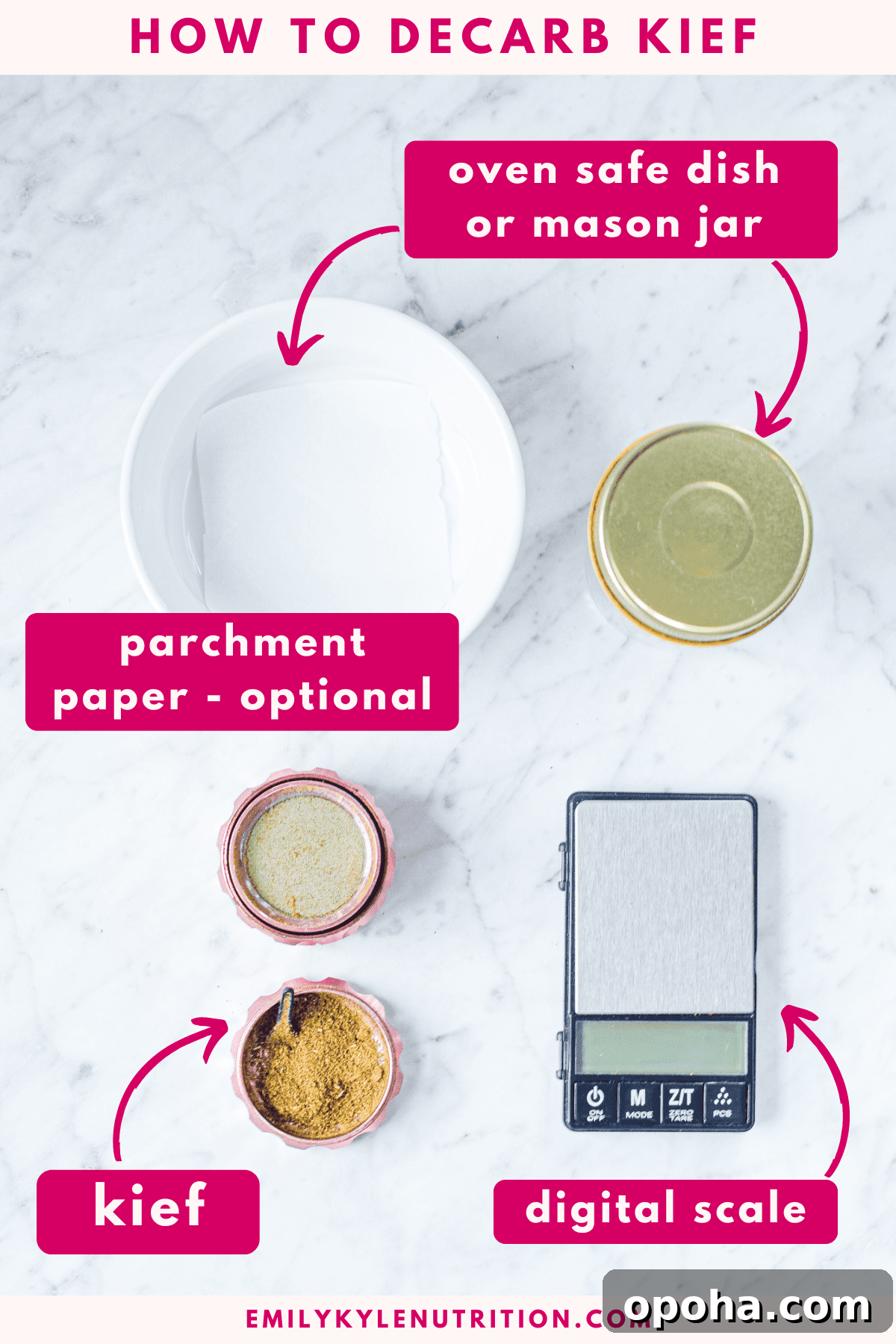
- Kief – any amount you’ve collected (common starting amounts: 1 g, 5 g, 7.5 g).
- Equipment – digital scale, mason jar or oven-safe baking dish with lid, and parchment paper or foil.
Note: a printable recipe card with full amounts and instructions is provided above.
Step-by-Step Instructions
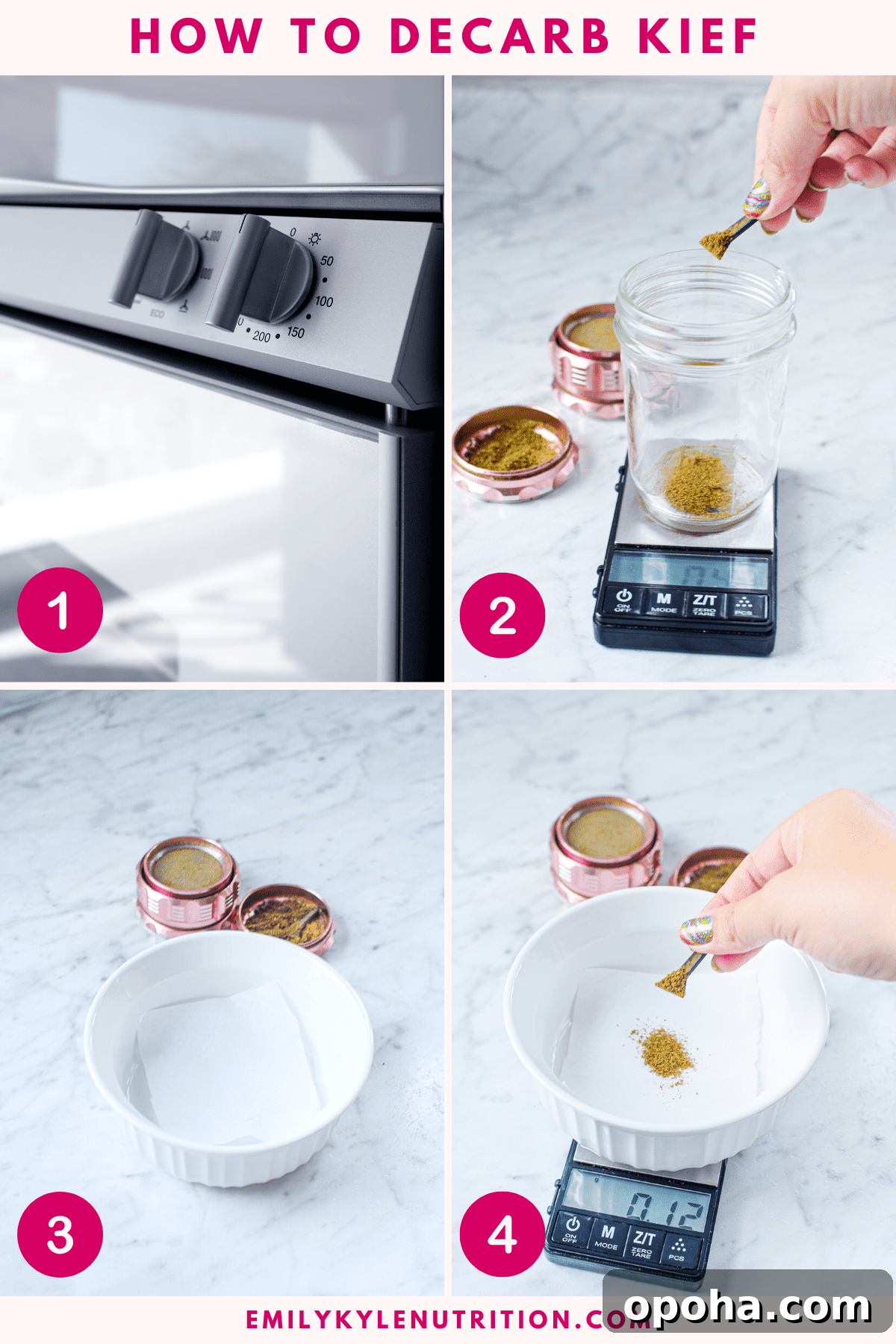
- Step 1 – Preheat oven to 240°F (116°C).
- Step 2 – Decarb inside the jar you plan to use for infusion when possible to avoid loss.
- Step 3 – If not using a jar, line an oven-safe dish with parchment and spread kief in a thin, even layer. Cover.
- Step 4 – Weigh your kief so you can calculate final potency later.
- Step 5 – Bake: 30–35 minutes for THC-dominant kief; 60–65 minutes for CBD-dominant kief.
- Step 6 – Cool fully with lid/cover on.
- Step 7 – Use immediately or store in an airtight container in a cool, dark place.
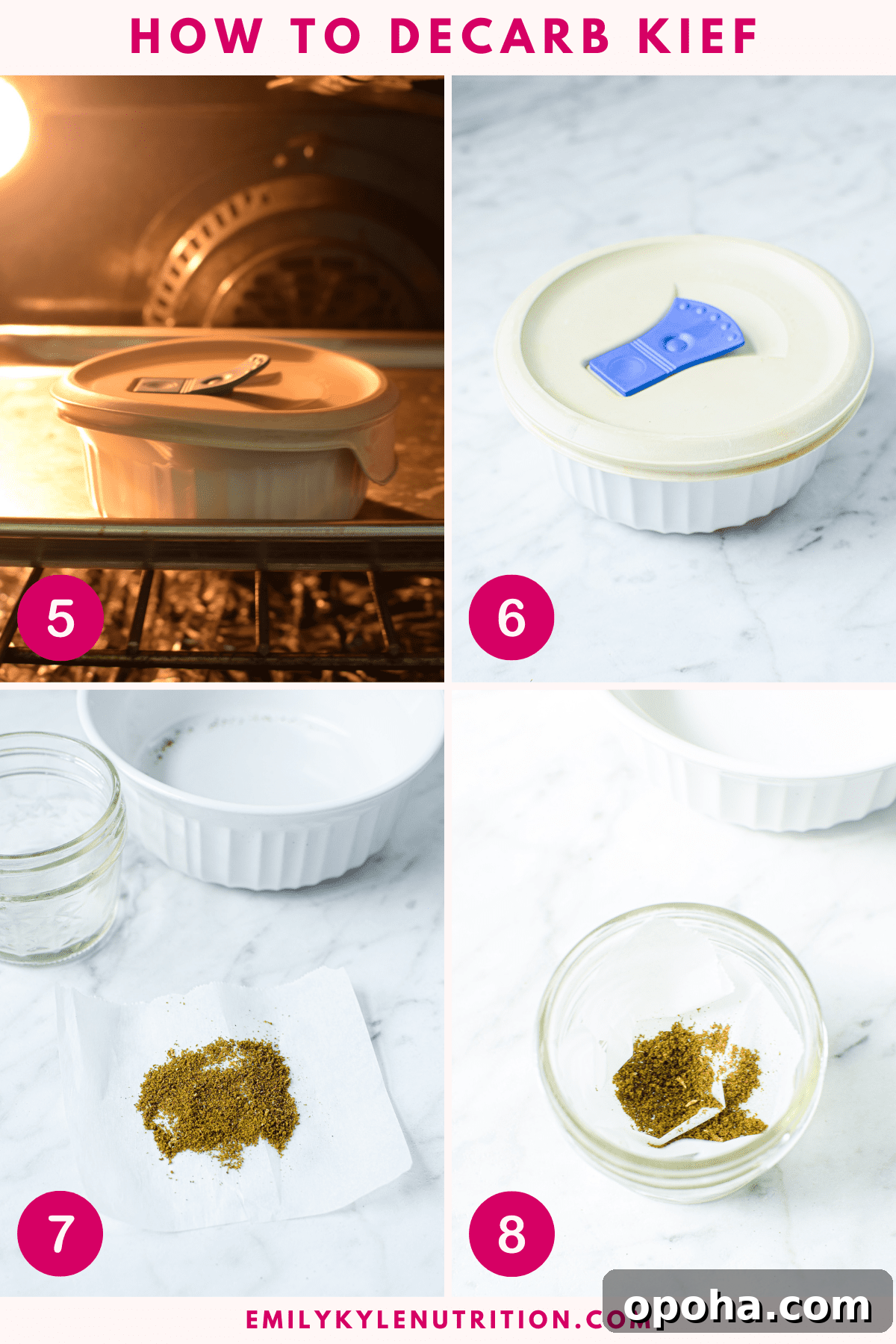
Note: printable, step-by-step instructions are in the recipe card above.
Storage Instructions
Store decarbed kief in an airtight container in a cool, dark place, or refrigerate or freeze for longer-term storage.
What Is Kief?
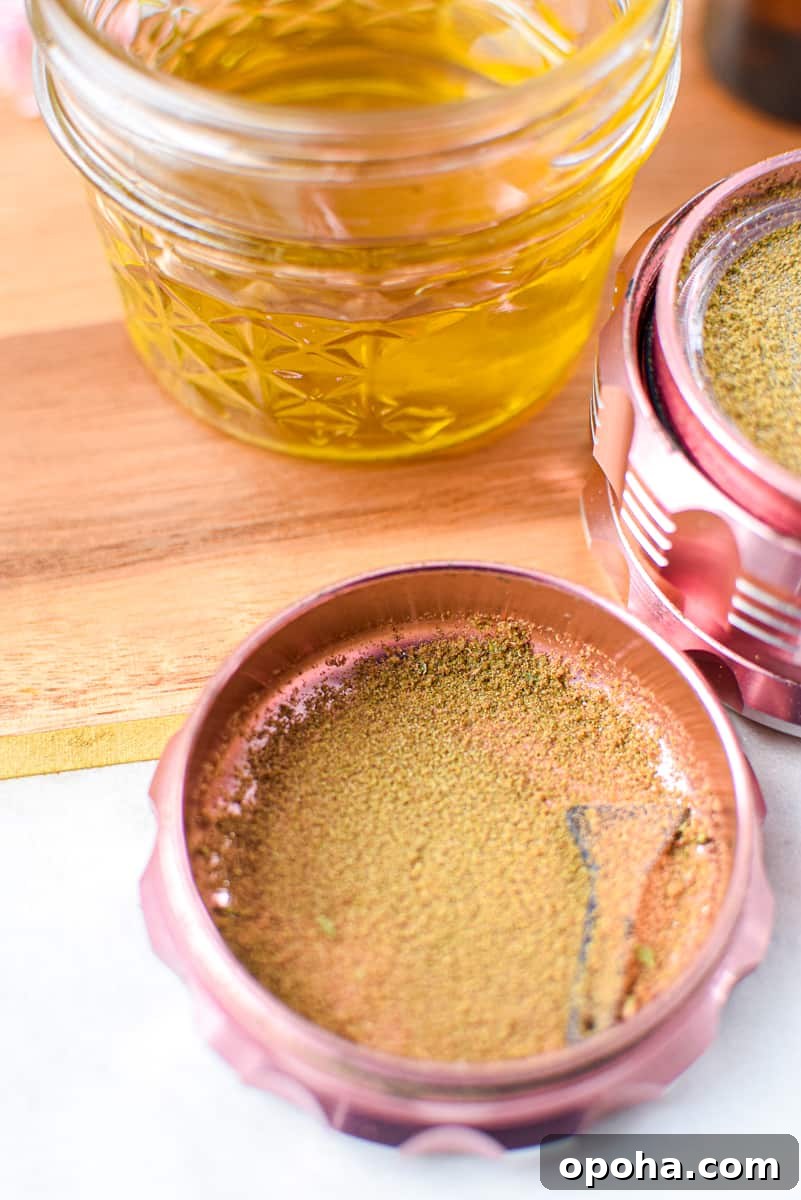
Kief (also called pollen or dry sift) is the powdery collection of resin glands, or trichomes, that falls to the bottom chamber of a multi-chamber grinder. Those trichomes contain concentrated cannabinoids and terpenes, making kief a potent form of cannabis concentrate.
Because kief is concentrated, its cannabinoid content is higher than whole flower: even a small amount can provide a strong effect depending on the source material (THC-dominant or CBD-dominant flower).
If you won’t smoke or vape the kief, decarboxylation is necessary to convert cannabinoid acids (like THCA or CBDA) into their active forms (THC or CBD) used in edibles and tinctures.
Why You Need to Decarb Kief
Raw cannabis contains cannabinoid acids that are not intoxicating. Decarboxylation uses heat to remove a carboxyl group and convert those acids into active cannabinoids (THC, CBD, etc.). Without decarbing, edibles made from raw kief will not produce the expected psychoactive or therapeutic effects.
Kief decarboxylation favors lower temperatures for longer times to preserve terpenes and prevent cannabinoid degradation. The oven method below is simple, reliable, and works well for home cooks.
Decarb Times
- THCA → Δ9-THC – bake at 240°F (116°C) for ~40 minutes
- CBDA → CBD – bake at 240°F (116°C) for ~90 minutes
- CBGA → CBG – bake at 220°F (105°C) for ~60 minutes
- Δ9-THC → CBN – extended baking (240°F/116°C for many hours) can form CBN; this is approximate and typically forms slowly with aging and oxygen exposure.
How Potent is Kief?
Potency varies with source material and processing. Whole flower often ranges 15–25% THC, while kief can be far stronger—sometimes much higher, depending on the strain and trichome content. If you need precision, lab testing is the only accurate measure; if not, estimate potency based on the original flower and start with a small dose.
A little kief can go a long way—many people begin with at least one gram and adjust based on experience or use a dosage calculator to estimate final strengths when infusing into fats.
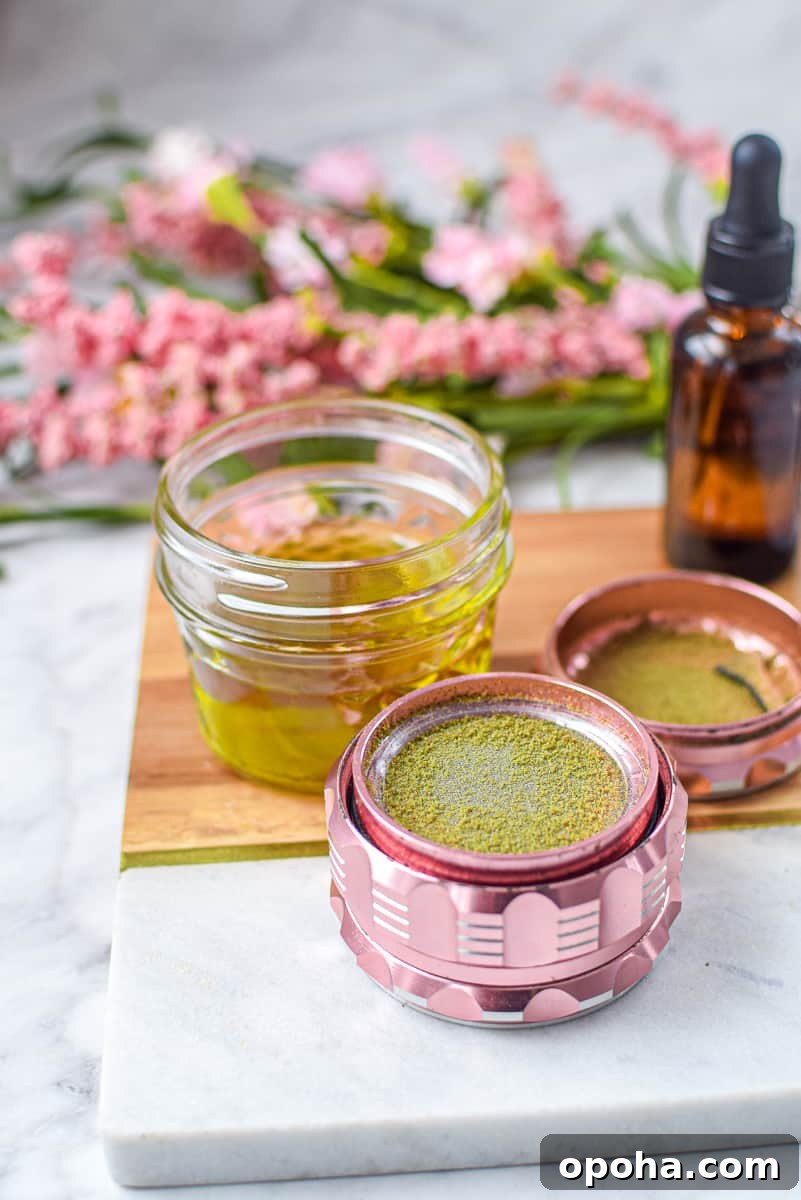
How to Make Edibles with Kief
Once decarbed, kief can be used in many ways: add it directly to recipes, infuse it into fat (butter or oil), make tinctures, fill capsules, or use it for topical preparations. Below are common approaches and tips for each method.
Use Kief Directly in a Recipe
Decarbed kief can be sprinkled into foods or mixed into batters and sauces. It blends easily thanks to its fine texture. For best absorption, pair kief with a fat source (butter, oil, cream), which enhances cannabinoid uptake.
Use Kief to Make Oil or Butter
Infusing kief into butter or oil creates a versatile base for baking and cooking. Decarb in the same jar if possible, then proceed with your preferred infusion method (slow cooker, stovetop, or Instant Pot). Coconut oil, olive oil, and MCT oil are common carriers.
Use Kief to Make a Tincture
Decarbed kief can be used to make alcohol-based tinctures (Green Dragon) or solvent-based extracts. Tinctures are convenient for dosing and can also be used to make candies, gummies, or flavored syrups.
Use Kief to Fill Capsules
Because kief is potent and dry, it can be placed directly into capsules or combined with a small amount of carrier oil to fill softer capsules. Capsules provide a tasteless, controlled-dose option for many users.
Frequently Asked Questions
Different cannabinoids decarboxylate at different times and temperatures. A common home method is 240°F (116°C) for 30–90 minutes depending on your target cannabinoid (shorter for THC, longer for CBD).
Skipping decarb leaves cannabinoids in their acid forms (THCA, CBDA), which are not psychoactive. Edibles made from raw kief will not deliver the expected effects.
You can spread kief on parchment on a baking sheet and cover with foil; just keep the layer thin and even.
Ovens vary. Use an oven thermometer to verify the actual internal temperature and adjust as needed to maintain low, consistent heat.
Use a fine mesh screen, dedicated kief collectors, or a multi-chamber grinder to maximize collection. Freezing plant material briefly before sifting can also increase yield.
Yes—sous vide, specialized decarb machines, or controlled low-temperature devices can decarb more discreetly or with less odor. Each method has pros and cons for terpene retention and convenience.

Take your edibles to the next level…
If you want guided, step-by-step instruction, consider an online course that covers infusion techniques, dosing, and recipes so you can safely and confidently make edibles at home.
More Guides You Will Love
Articles & How-To Guides
A More Accurate Edible Dosage & Potency Calculator
Articles & How-To Guides
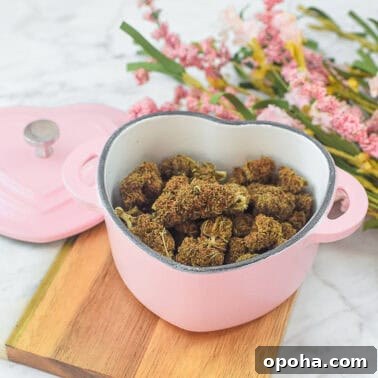
Easy Beginner’s Guide to Cannabis Decarboxylation
Articles & How-To Guides
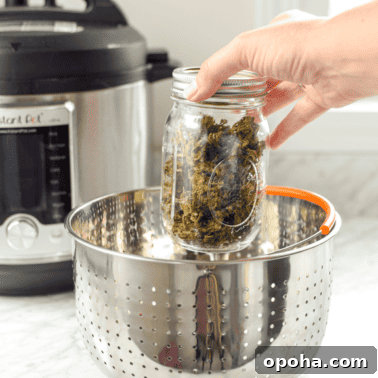
How To Decarb In An Instant Pot » Low Smell Method
Articles & How-To Guides