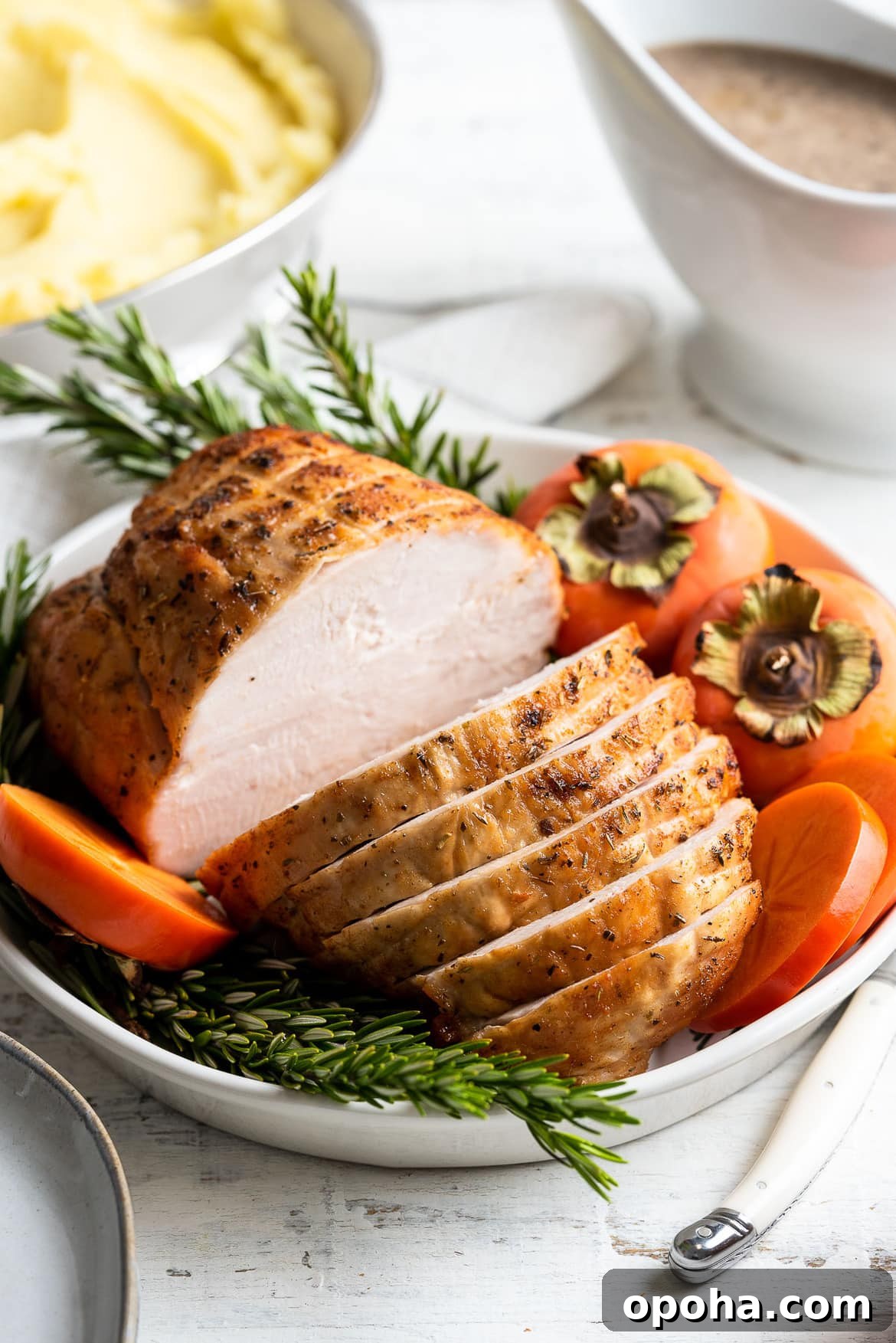
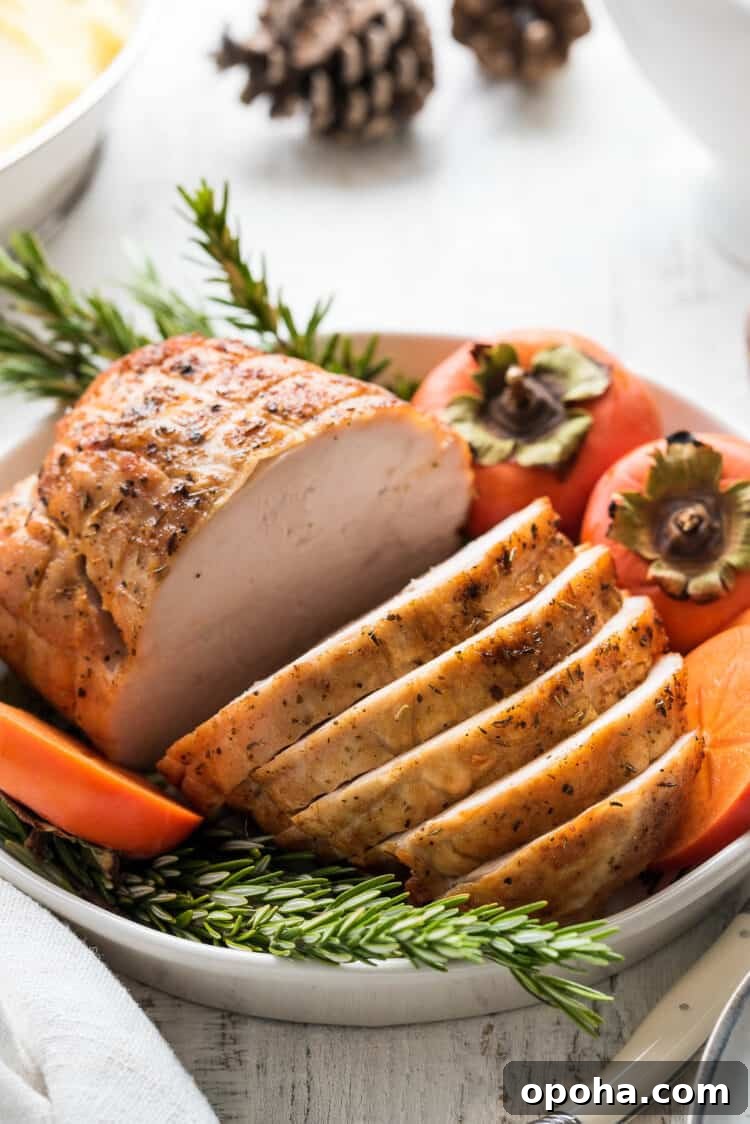
Roasted boneless turkey breast is an ideal choice for smaller gatherings—Friendsgiving, intimate holiday dinners, Thanksgiving with fewer meat eaters—or even a comforting weeknight meal. It’s straightforward to prepare and delivers all the flavor of a roast turkey without the fuss of a whole bird.
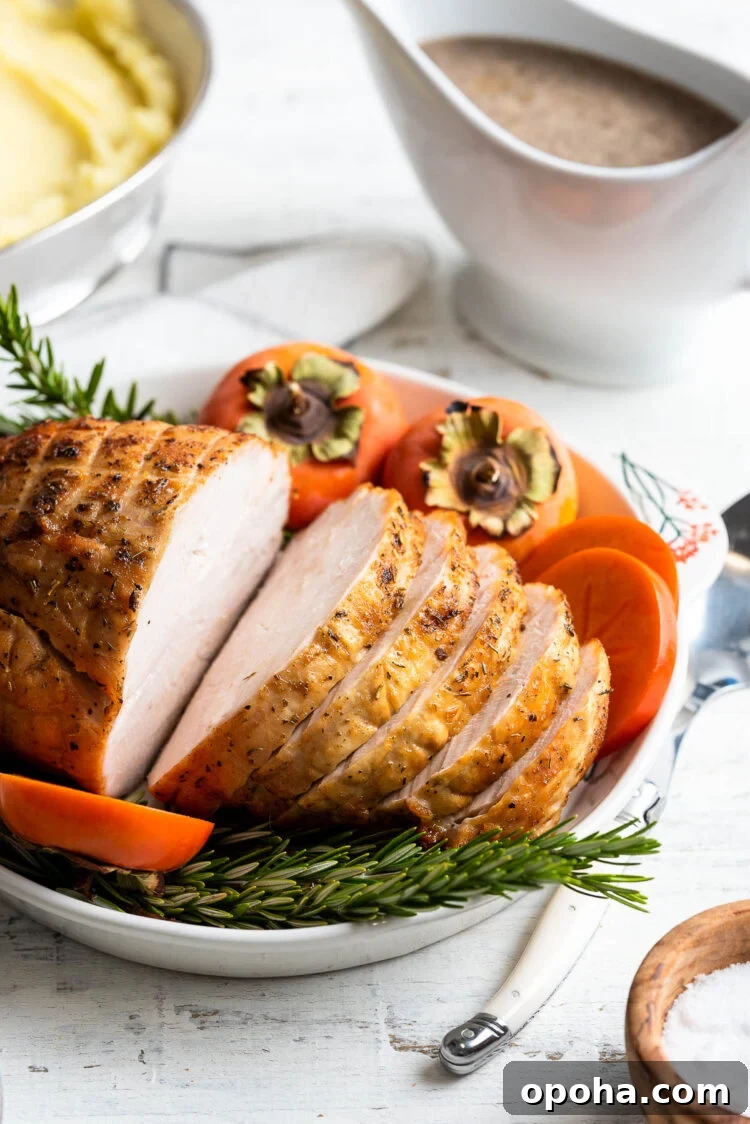
In years past we often roasted the largest turkey we could find, even when hosting just a few people. Leftovers were always welcome—great for soups or pressure-cooker stock—but our appetites and household needs have changed. With fewer meat eaters at the table, a full 20-pound bird is no longer necessary.
Roasting a turkey breast is a practical, delicious solution. You’ll be able to enjoy roast turkey without the time and storage demands of a whole bird.
When choosing a turkey breast, consider boneless versus bone-in. For simplicity, a boneless turkey breast is convenient: compact, easy to handle, and often sold rolled and tied, ready to roast. That makes it perfect for smaller holiday meals or a simple family dinner any night of the year.
Boneless Turkey Breast Cooking Tips
These tips apply whether you’re roasting a boneless breast or a whole bird. They’ll help you achieve evenly cooked, juicy meat and golden, crisp skin.
Netting
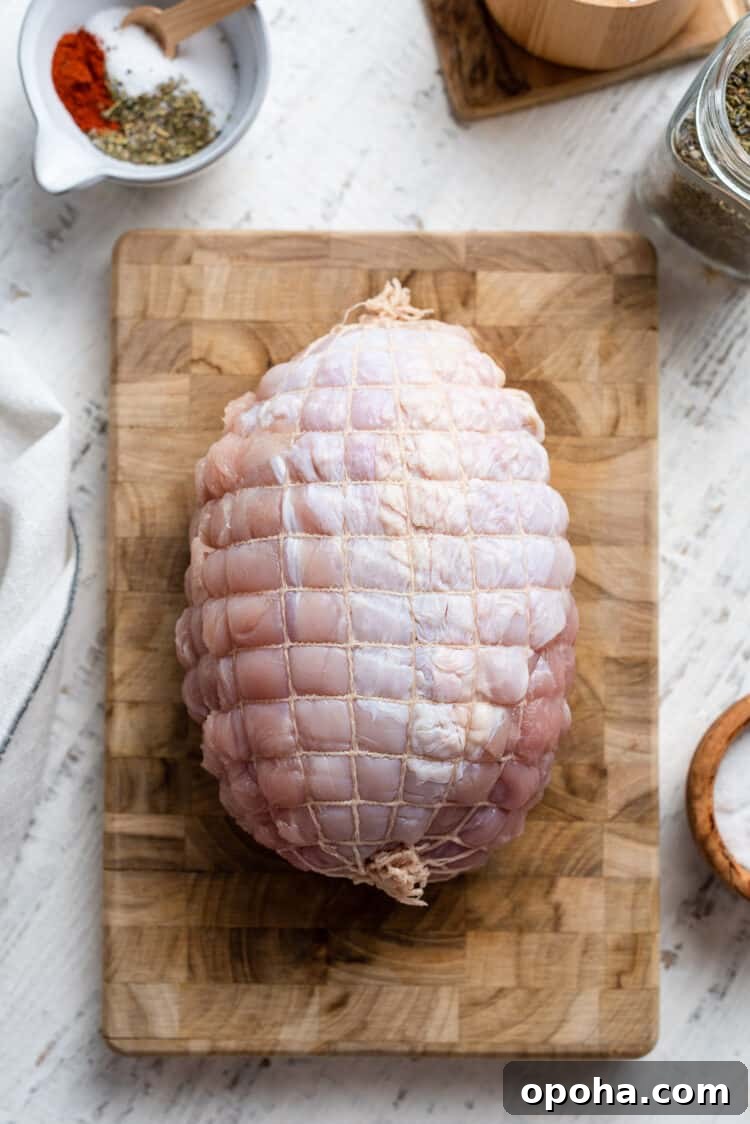
- Boneless turkey breasts are often sold with netting—leave it on while roasting to help the breast hold its shape.
- If your butcher didn’t net the breast, you can tuck some of the salt and spice mix between the skin and meat before tying or trussing it to help season the interior.
Kosher salt
- Salt quality matters. Different kosher salts have different grain sizes and salinity, so adjust amounts if using a brand other than what a recipe specifies.
-

Pat the turkey dry before seasoning; if it’s tied, keep the netting in place for roasting. -
A simple blend of salt and spices enhances the turkey. For extra flavor, dry-brine before roasting.
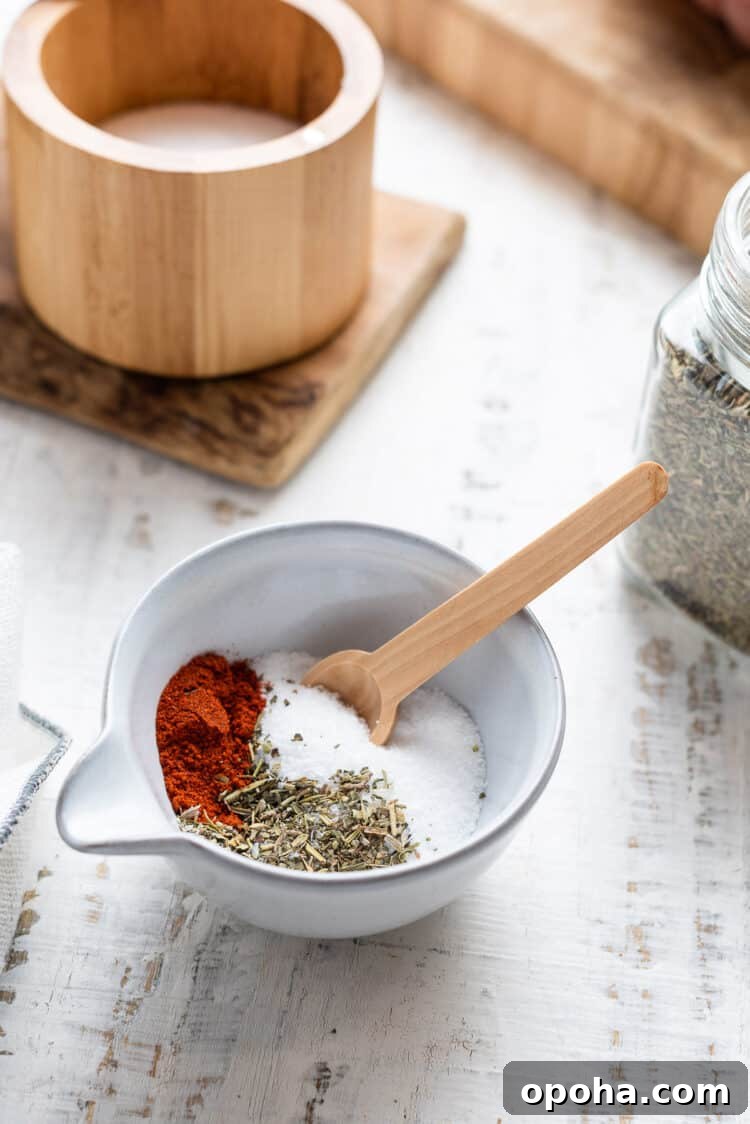
Dry brining
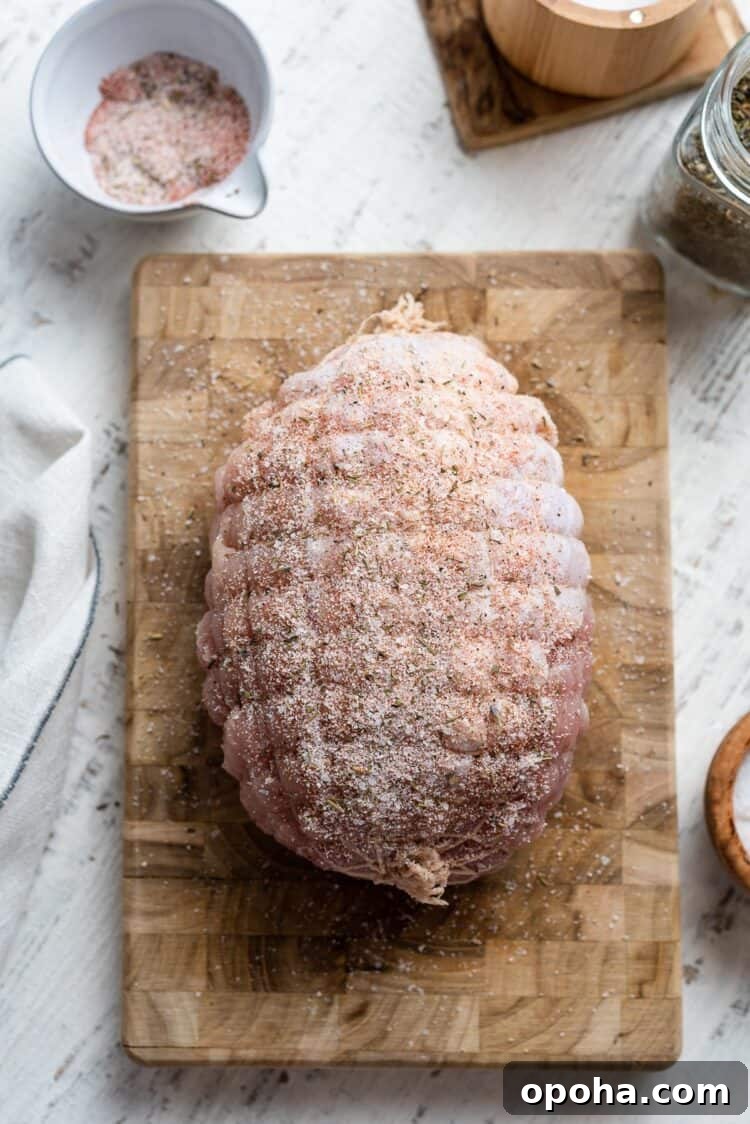
- Dry brining—letting the turkey rest in the refrigerator with a salt rub—pulls moisture into the meat for better flavor and helps dry the skin for crisping. Traditionally this is done for 6 hours to overnight, but for a smaller breast, an hour works well if you’re short on time.
- If you skip dry brining, season just before roasting. Leaving the turkey uncovered in the fridge, even briefly, helps the skin dry and crisp.
Roasting room-temperature turkey
- Allow the turkey to sit at room temperature for about 30 minutes before roasting to take off the chill. This promotes more even cooking.
-
Season the turkey evenly on all sides and let it rest in the refrigerator. -
Roast on a wire rack in a shallow rimmed baking sheet so all sides brown evenly.
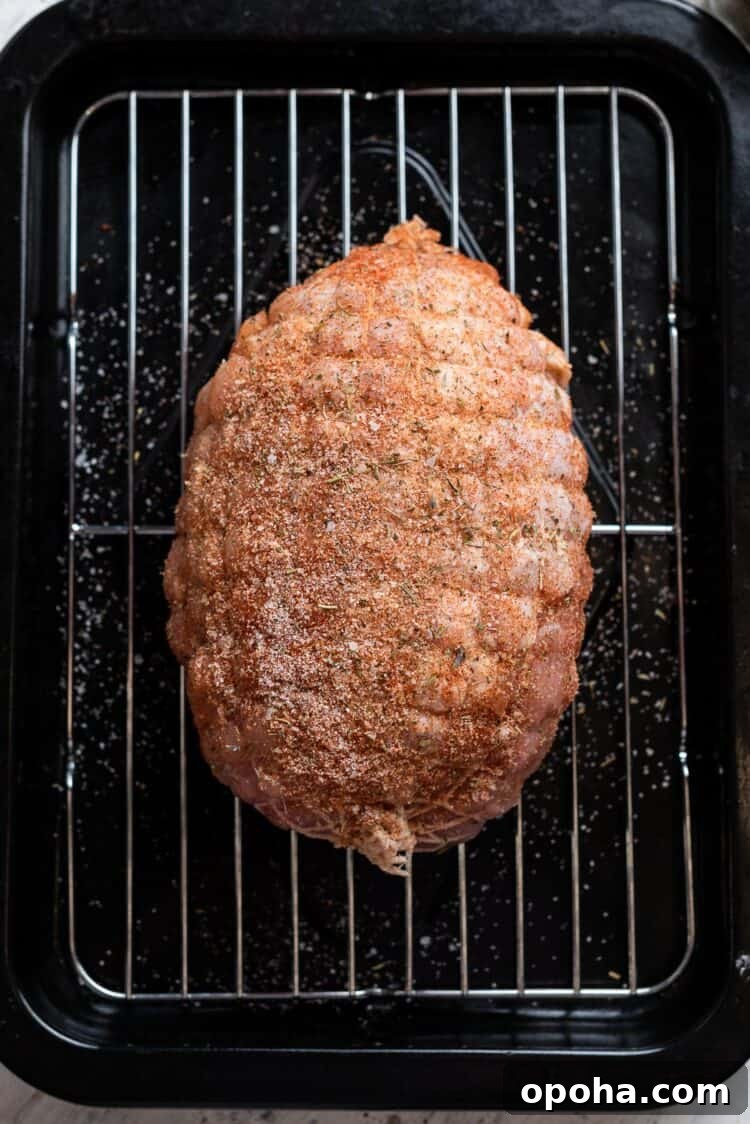
How long to cook a boneless turkey breast in the oven
- Roasting time depends on the breast’s size and shape. Thick, compact breasts will take longer than thinner, oblong ones. Use an instant-read thermometer and roast until the thickest part reaches 160°F, then allow it to rest to reach final temperature.
Resting after roasting
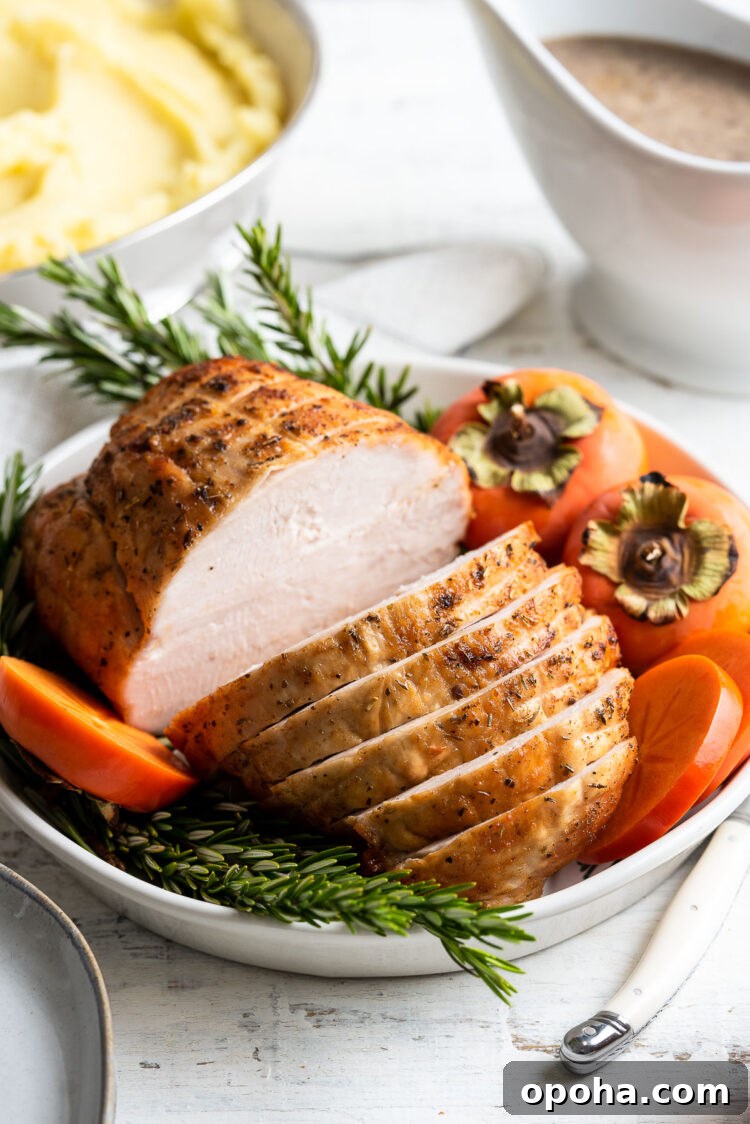
- Rest the turkey 15–20 minutes at room temperature before removing netting and slicing. Resting lets the juices redistribute so slices stay moist and don’t run all over your cutting board.
More Thanksgiving Recipes
Savory Herb Stuffing Bread
Pesto Pull-Apart Rolls
Butternut Squash Creamed Corn
Roasted Acorn Squash and Kale Salad
Roasted Butternut Squash Winter Salad with Kale, Farro and Cranberry Dressing
Cassava Pumpkin Pie with Graham Cracker Crust
Buttermilk Brined Cornish Hens
Pumpkin Leche Flan
Thanksgiving Leftover Recipes
Mashed Potato and Stuffing Waffles
Cranberry Hand Pies
Day-After Turkey Shepherd’s Pie
Cranberry Sauce Cornbread Muffins
Turkey Pumpkin Pot Pie
Cranberry Sauce Granola
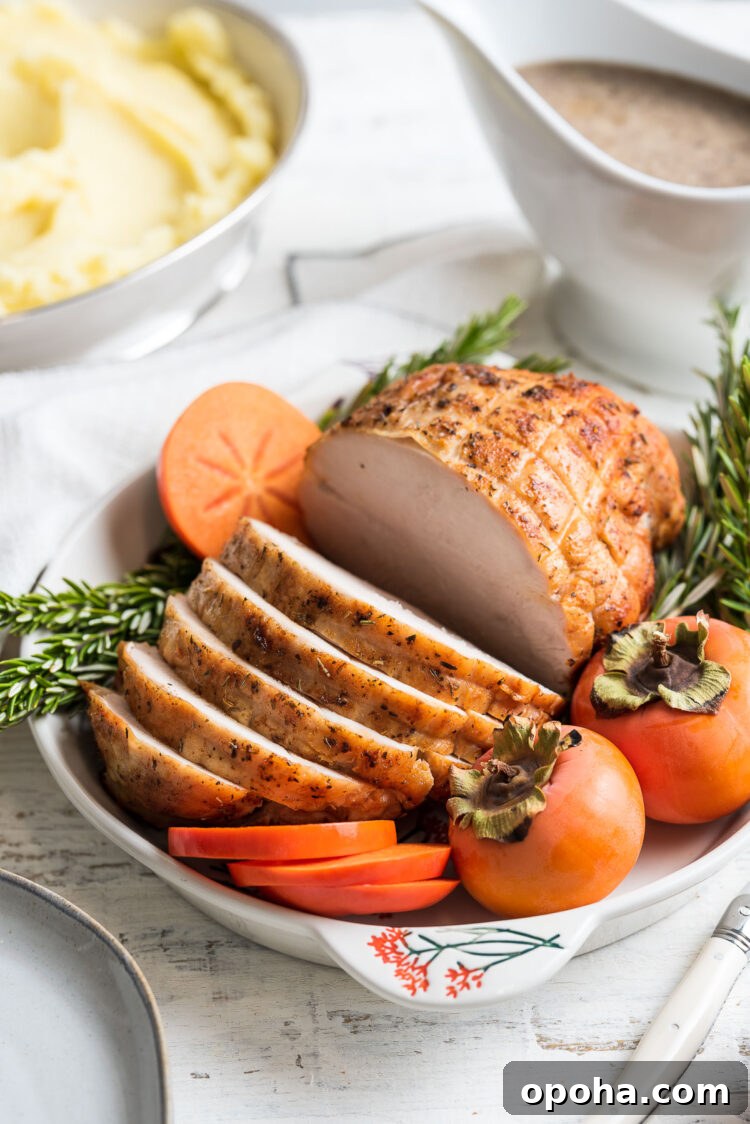
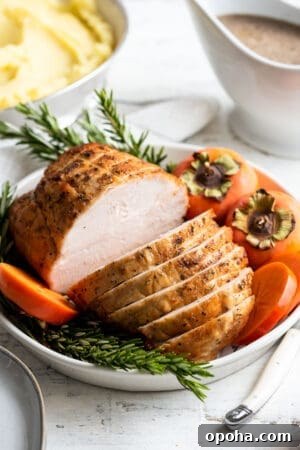
Roasted Boneless Turkey Breast
Ingredients
- 1 3–4 lb boneless turkey breast
- 1 1/2 tablespoons kosher salt (adjust for brand)
- 1 1/2 teaspoons paprika
- 1 teaspoon Herbes de Provence
- Olive oil spray
Instructions
-
Pat the turkey breast dry with paper towels and place it on a wire rack set over a rimmed baking sheet. Keep the netting on if the breast is tied.
-
In a small bowl, combine kosher salt, paprika, and Herbes de Provence. Sprinkle the mixture over the turkey and pat to coat all sides evenly. Discard any unused salt.
-
Chill the turkey uncovered in the refrigerator for 1 hour or up to overnight to dry-brine (see notes).
-
Preheat the oven to 450°F with a rack in the center. Remove the turkey from the refrigerator and let it sit at room temperature for 30 minutes while the oven heats.
-
Spray the turkey with olive oil and roast at 450°F for 20 minutes. Reduce the oven to 350°F and continue roasting another 30 minutes to 1 hour, or until an instant-read thermometer inserted into the thickest part reaches 160°F. Cooking time varies with the breast’s shape—check temperature toward the end of roasting.
-
Remove from the oven and let the turkey rest at room temperature for 15–20 minutes before removing the netting and slicing.
Notes
- Netting: Keep netting on during roasting to maintain shape. If you don’t have netting, tuck seasoning between skin and meat before trussing.
- Kosher salt: Adjust quantity if using a different brand or salt type; grain size affects salinity.
- Dry brining: For best texture and flavor, dry-brine 1 hour to overnight. Even a short brine improves skin crispness.
- Roasting time: Times vary by size and shape. Always rely on an instant-read thermometer rather than time alone.
- Resting: Rest the turkey 15–20 minutes after roasting so juices redistribute and slices stay moist.