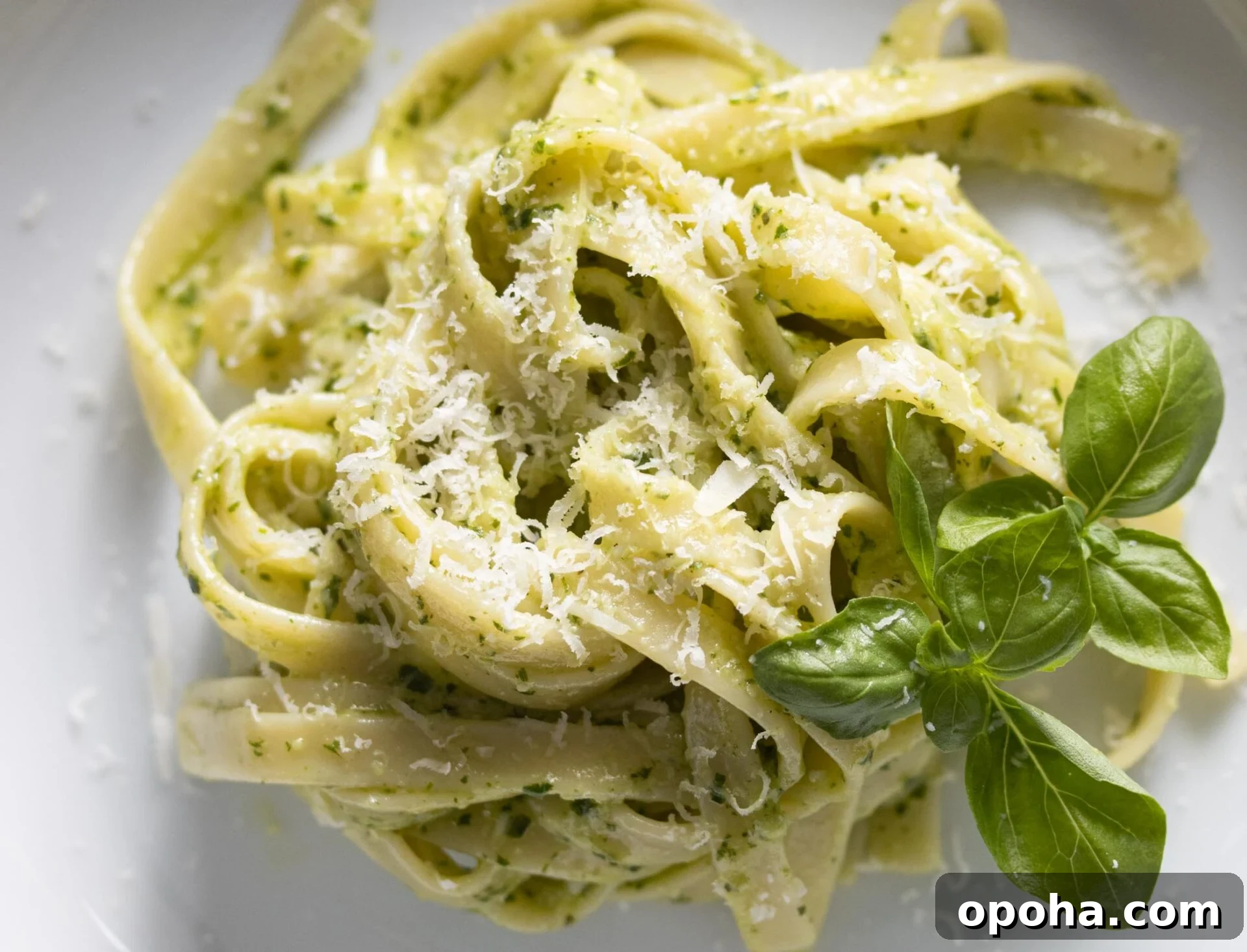
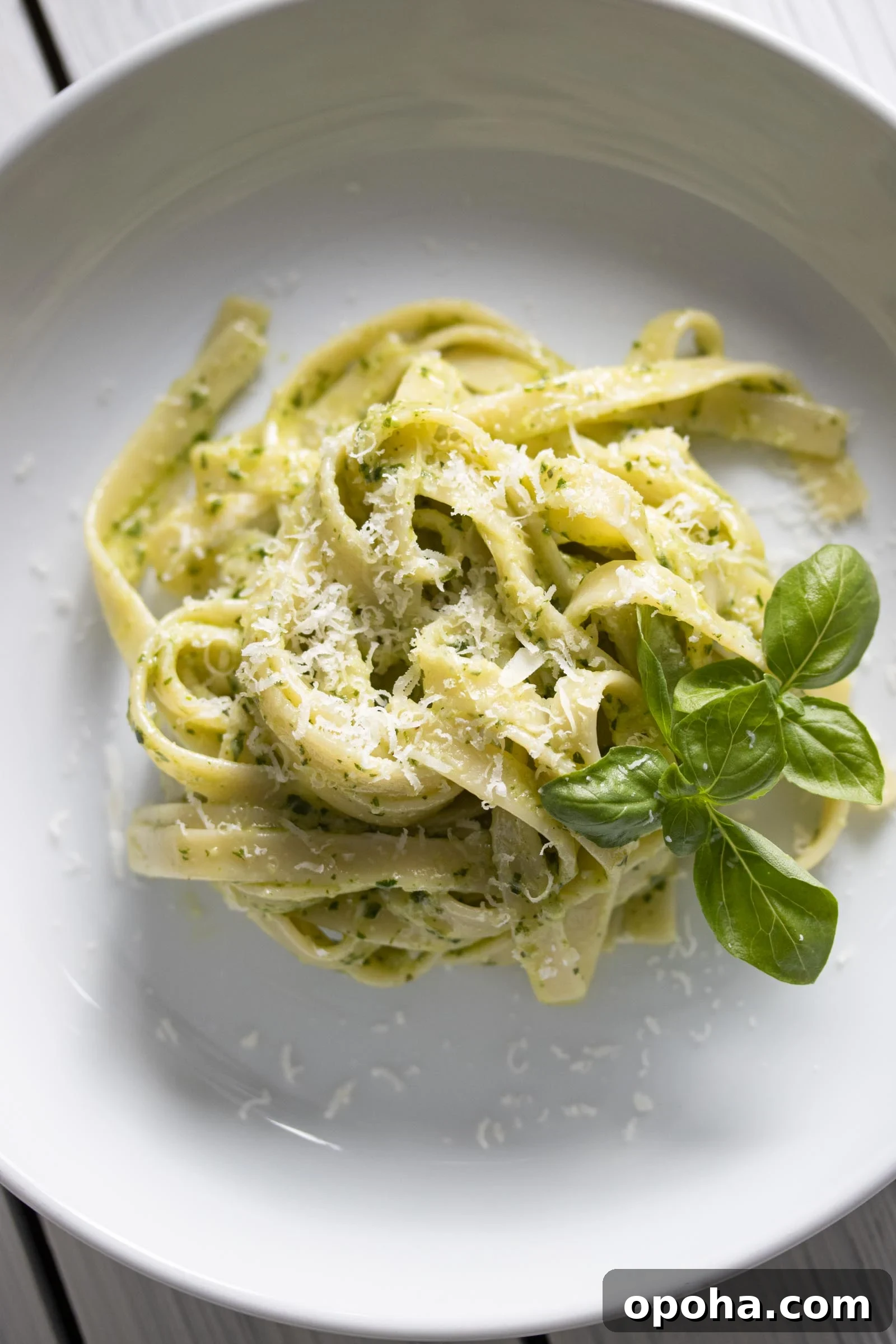
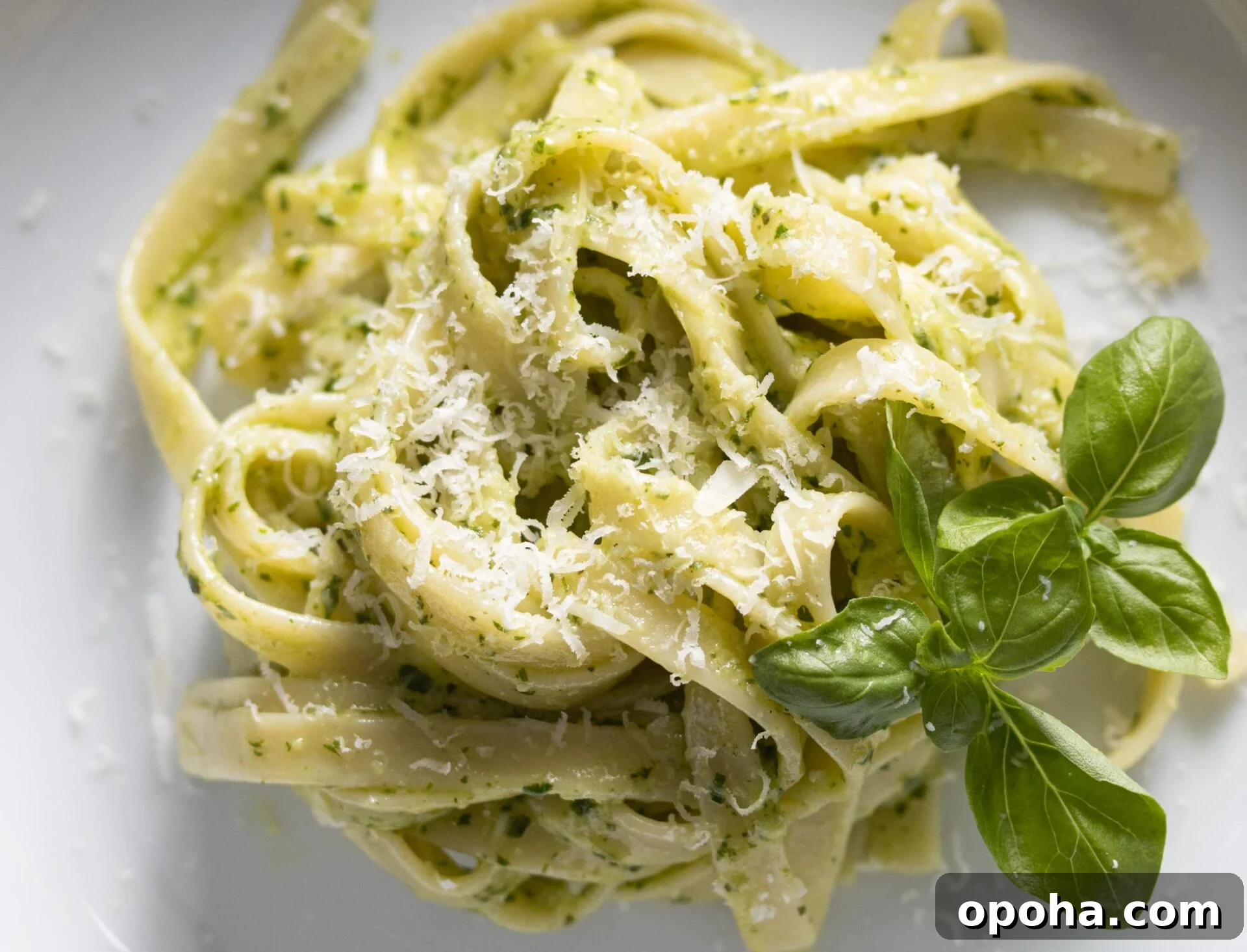
If you want to enjoy a classic Italian regional dish, Fettuccine al Pesto should be near the top of your list.
This simple recipe uses just a few quality ingredients to create the bright, aromatic flavors of Genova, the home of traditional pesto.
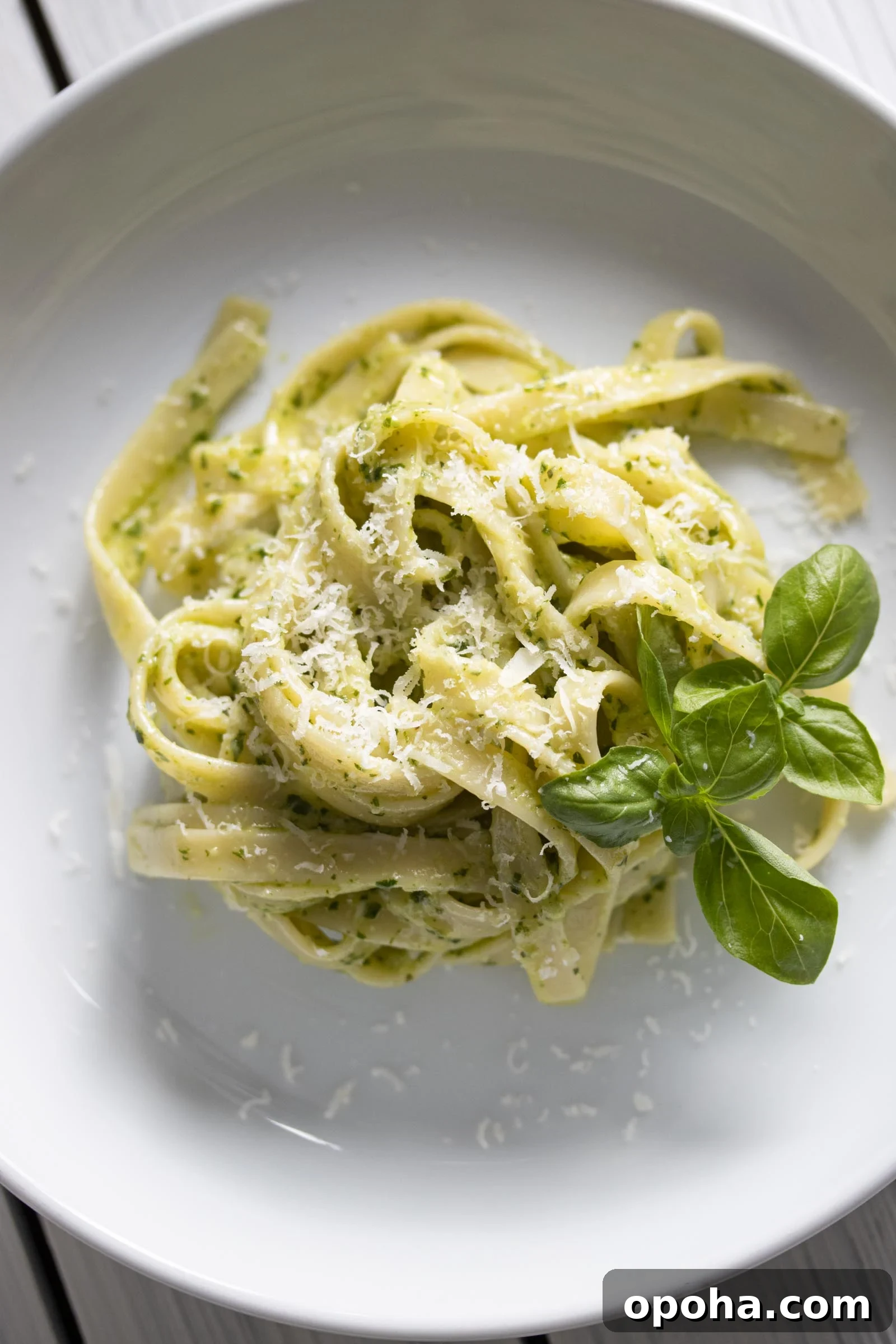
Here’s how to make an easy, family-friendly pesto fettuccine that stays true to its Genovese roots.
In this Article
- What is Fettuccine al Pesto?
- What is the Best Basil for Pesto?
- Cooking tips and step by step to make this creamy pesto sauce
- Step by Step
- Substitutes and Additions
- Storage
- Frequently Asked Questions
- Fettuccine al Pesto (Recipe)
What is Fettuccine al Pesto?
Pesto alla Genovese is a culinary tradition from Genoa, with roots going back centuries. The name “pesto” comes from the Italian verb pestare, meaning “to pound,” a reference to the original method of crushing ingredients with a mortar and pestle.
Classic pesto combines basil, nuts, garlic, cheese, and olive oil into a vibrant green sauce. Over time many variations have appeared, but the traditional Genovese pesto remains the benchmark for flavor and simplicity.
This recipe is a family favorite handed down through generations and adapted here to make it quick and accessible for home cooks. Fresh pasta is wonderful when time allows, but store-bought fettuccine works perfectly and pairs especially well with pesto.
What is the Best Basil for Pesto?
Several basil varieties grow well, but for authentic pesto I recommend Genovese (Italian) basil. Its medium-sized glossy leaves are aromatic and deliver the classic flavor. If you grow basil at home, pinch off flower buds as they appear to encourage more leaf growth and preserve flavor.
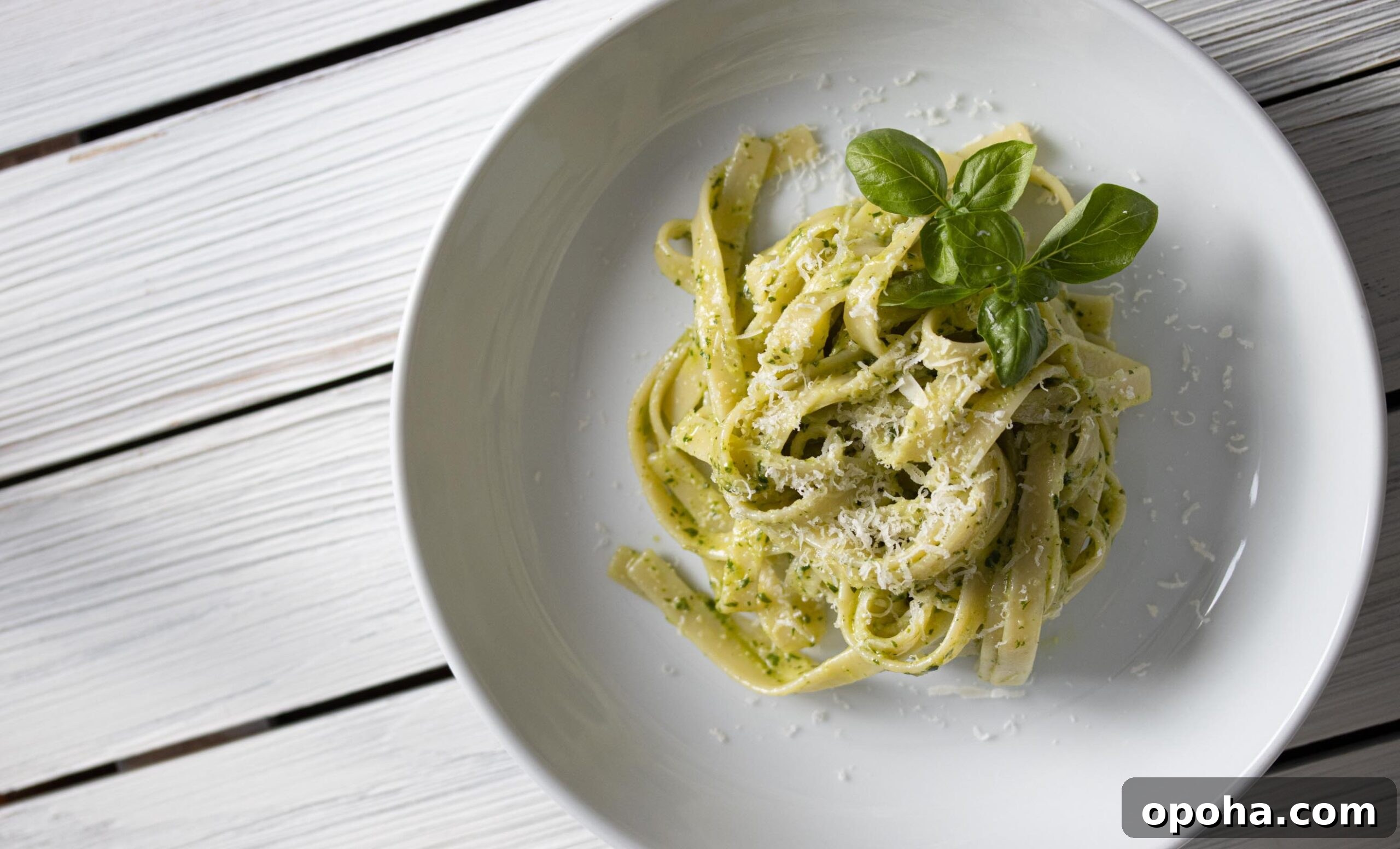
Cooking tips and step by step to make this creamy pesto sauce
- Blanch the basil for under a minute to tame any bitterness while preserving color.
- Do not skip the walnuts or pine nuts — they contribute texture and depth.
- Wide pasta like fettuccine holds pesto well and showcases the sauce.
- Adjust garlic carefully; too much can overpower basil and cheese.
- Add cream only at the end for a silkier sauce, and use reserved pasta water to bind the sauce to the noodles.
- Use good extra virgin olive oil and be generous with freshly grated Parmigiano.
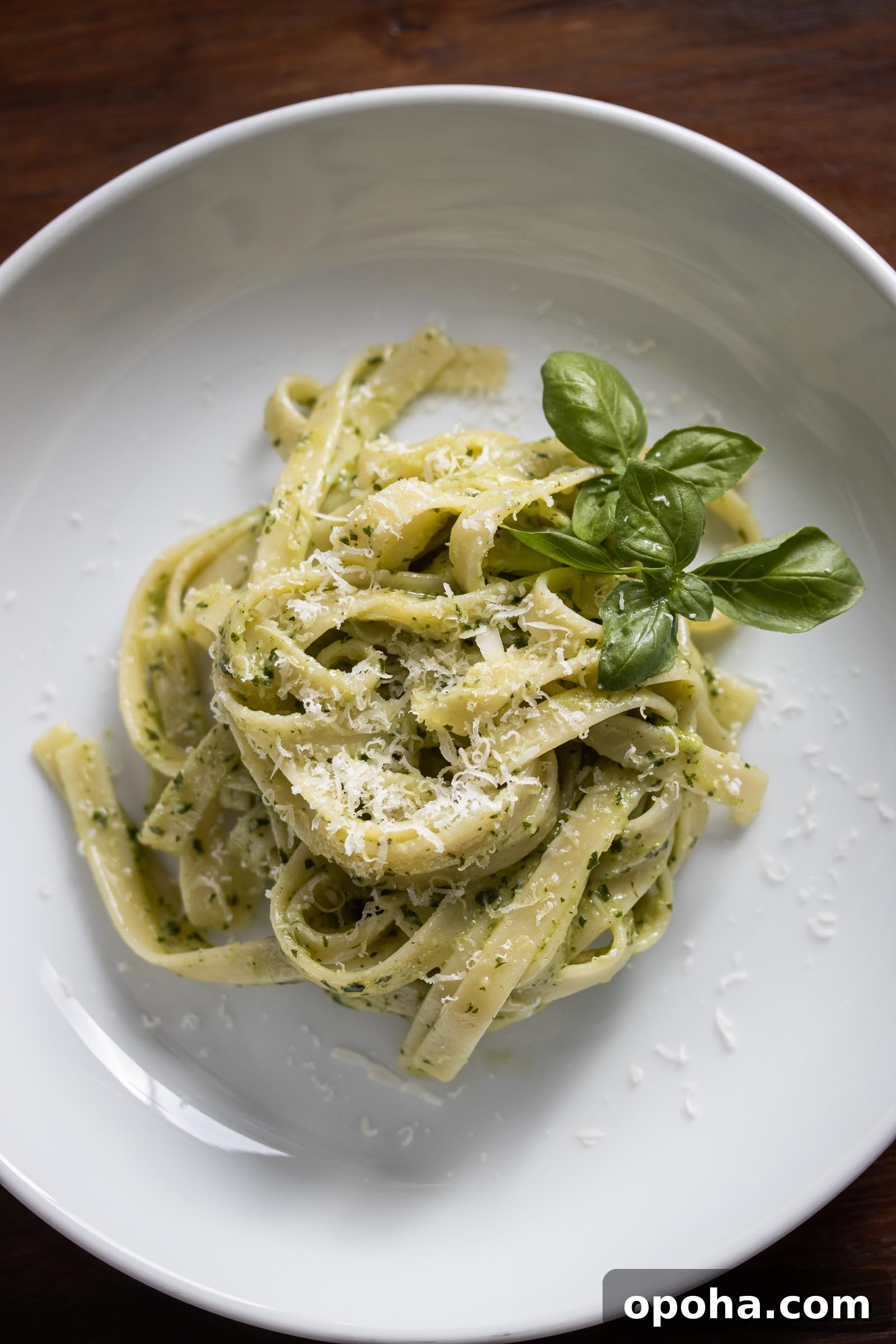
Step by Step
- Bring a large pot of well-salted water to a boil. Cook fettuccine until al dente according to package instructions. Optionally add sliced potato to the boiling water while the pasta cooks; the potato releases starch that helps thicken the sauce. Reserve 1/4 cup of the cooking water before draining.
Meanwhile, prepare the pesto
- Blanch the basil leaves in boiling water for less than a minute, then drain.
- In a blender or food processor, combine the blanched basil, pine nuts, walnuts, garlic, Parmigiano, and olive oil. Blend until smooth.
- Pulse in the heavy cream just to finish the texture — the sauce should be a bright, soft green paste.
Assemble your dish
In a serving bowl, melt the butter and add the pesto. Toss the drained pasta with the sauce, adding a splash of the reserved cooking water as needed to make the sauce cling and keep the pasta moist. Finish with a generous grating of Parmigiano and serve with crusty bread or garlic ciabatta.
Substitutes and Additions
While traditional pesto is simple, here are sensible substitutions and additions:
- Basil: If Genovese basil is unavailable, other basil varieties will work but will slightly change the flavor.
- Cheese: Parmigiano is ideal; for a creamier finish, mix in a bit of ricotta.
- Additions: Grilled chicken or shrimp make it a heartier main. Vegetarians can add sun-dried tomatoes or roasted peppers.
- Pasta: Fettuccine is preferred, but tagliatelle, spaghetti, or penne are fine. Use gluten-free pasta if needed.
- Cream: Replace with a non-dairy cream or milk for lactose-free or vegan versions, and use vegan cheese or nutritional yeast in place of Parmigiano.
Storage
Fettuccine al Pesto is best eaten fresh, but leftovers keep in an airtight container in the refrigerator for up to three days. Reheat gently in a skillet over medium heat with a splash of water or olive oil to prevent sticking.
For freezing pesto, omit the cream and freeze in airtight containers or ice cube trays for convenient portions. Frozen pesto keeps for up to three months; thaw overnight in the fridge and add cream only when ready to serve.
Frequently Asked Questions
Can I use dried basil instead of fresh basil?
Fresh basil is strongly recommended for authentic flavor and vibrant color. Dried basil will not produce the same bright taste or appearance.
Can I use a different cheese besides Parmigiano?
Parmigiano Reggiano gives the classic salty, nutty notes. Pecorino offers a sharper alternative; milder cheeses will change the character of the sauce.
Can I make this pesto vegan?
Yes. Replace Parmigiano with a vegan alternative or nutritional yeast and use plant-based cream or milk in place of heavy cream.
How can I make this recipe gluten-free?
Use gluten-free pasta and verify that all other packaged ingredients are labeled gluten-free.
Fettuccine al Pesto (Recipe)
Ingredients
- 2 bundles fresh basil, leaves removed and washed
- 1 tablespoon pine nuts
- 1 walnut
- 1/2 garlic clove (adjust to taste)
- 4 tablespoons Parmigiano Reggiano, plus extra for serving
- 4 tablespoons extra virgin olive oil
- 1 tablespoon heavy cream
- 1 tablespoon butter
- 1 pound fettuccine
- 1 potato, sliced (optional)
Instructions
- Bring a large pot of salted water to a boil.
- Add the basil to the boiling water and blanch for less than a minute, then drain.
- In a blender or food processor, combine the blanched basil, pine nuts, walnut, garlic, Parmigiano, and olive oil. Blend until smooth. Pulse in the heavy cream to finish.
- If using potato, add the sliced potato to the boiling water, then add the pasta and cook until al dente. Reserve 1/4 cup of the cooking water and drain.
- In a serving bowl melt the butter, add the pesto, and toss with the pasta, thinning with reserved cooking water as needed. Finish with grated Parmigiano and serve immediately.
Enjoy this straightforward, authentic-tasting pesto and make it your own with small additions or substitutions based on what you have on hand.