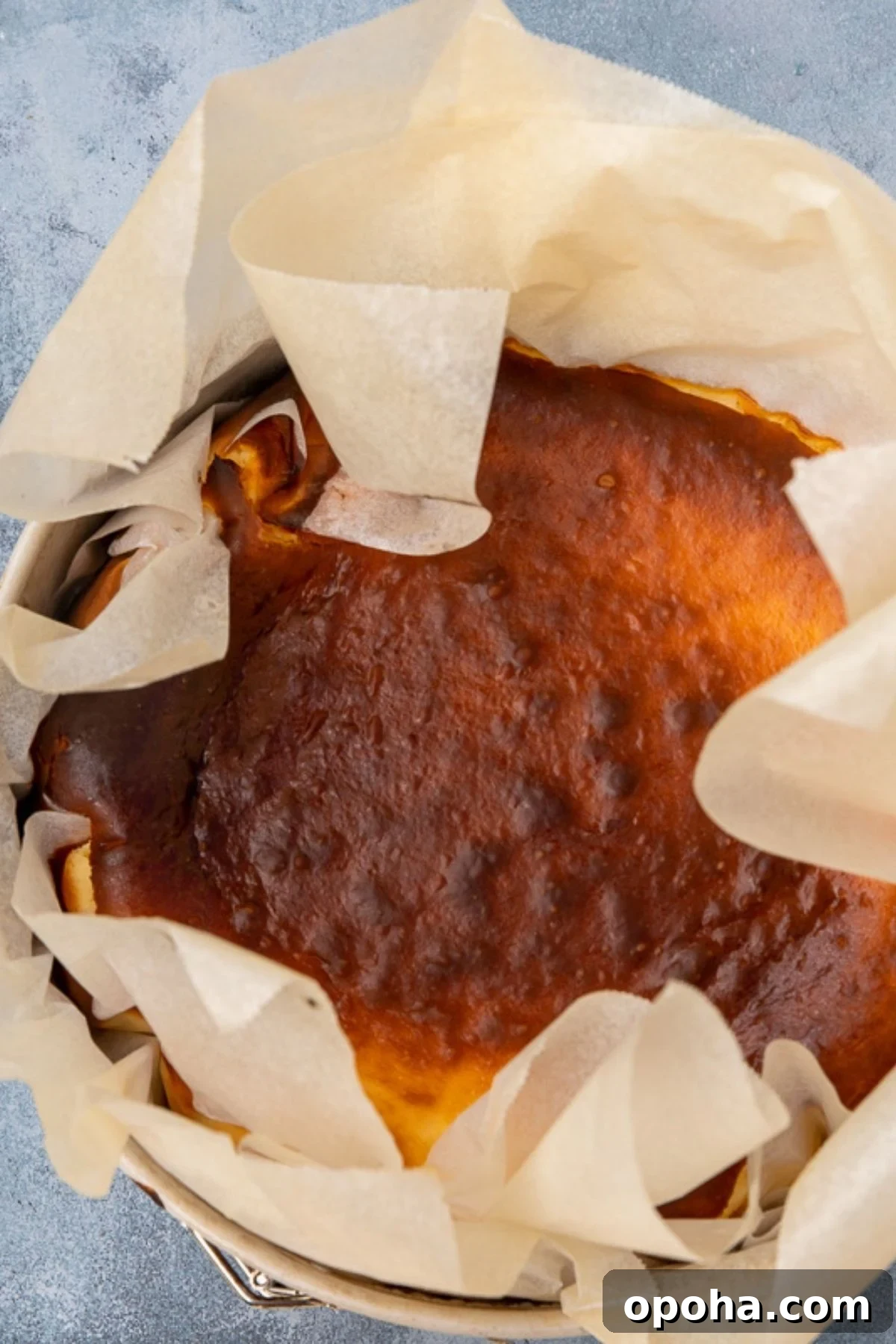
If there’s one rule in baking it’s “don’t burn.” Yet this Basque (or burnt) cheesecake breaks that rule to brilliant effect. This easy, crustless version — made with a touch of Greek yogurt for extra tang — bakes quickly at high heat to develop a deeply caramelized, dark golden top while keeping a soft, creamy interior. It’s an impressive but simple dessert for dinner parties or special occasions.
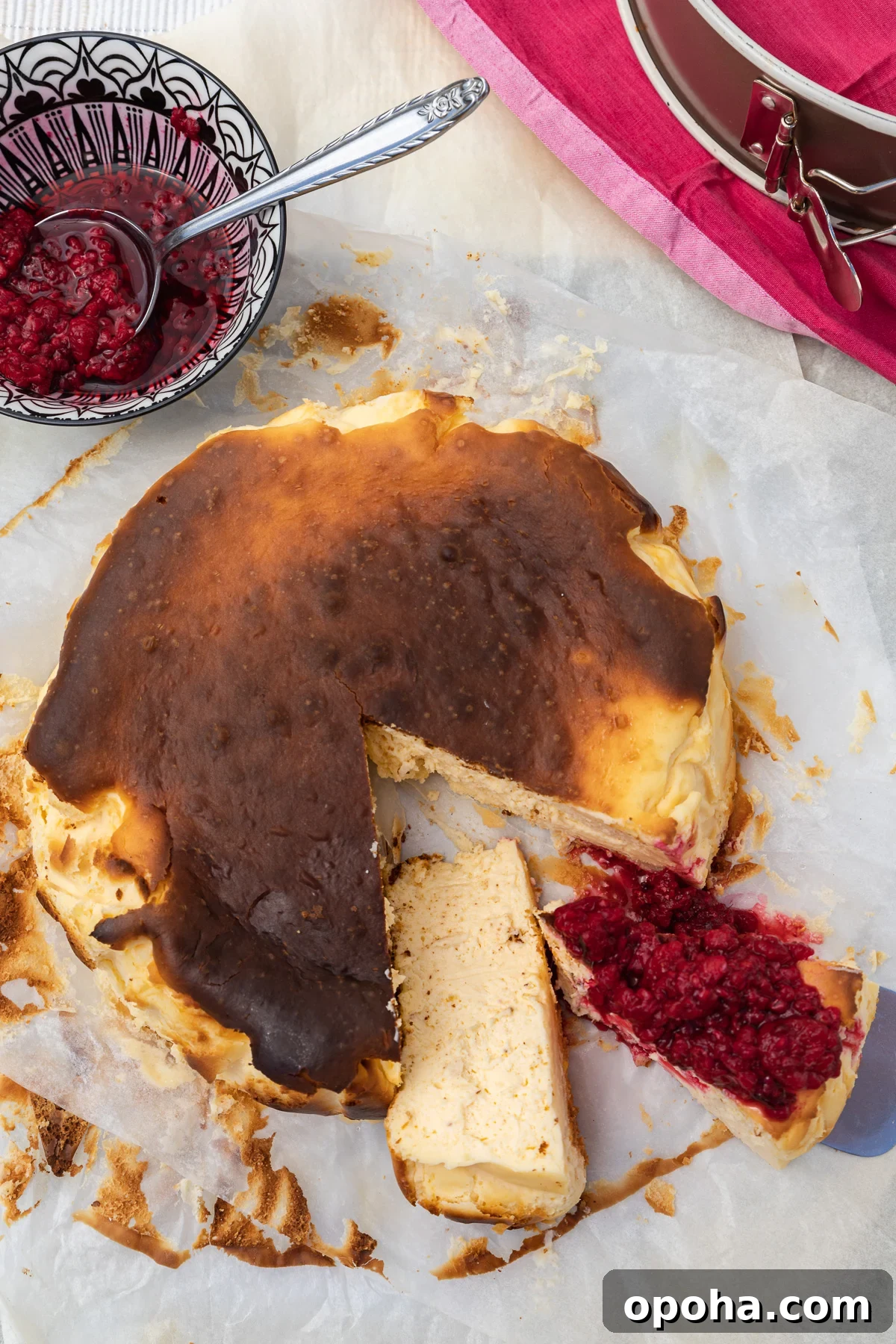
What’s a Basque cheesecake?
Also called a Basque burnt cheesecake or San Sebastián cheesecake, this modern Spanish dessert is famous for its dark, almost “burnt” top. It’s baked at a high temperature for a relatively short time, creating a caramelized exterior while the inside stays soft. The style originated at La Viña restaurant in San Sebastián, developed by Chef Santiago Rivera, and has since become a beloved classic.
It’s simple to make, looks dramatic, and tastes luxurious — a perfect choice when you want to impress without hours in the kitchen.
Why you’ll love it
Reasons this slightly lighter Basque cheesecake stands out:
- Light, silky interior: Adding Greek yogurt gives a delicate tang and helps lighten the texture. Bake for a shorter time for a custardy centre or a little longer for a firmer, denser slice.
- No crust: Being crustless makes this cheesecake quick to prepare — just mix, pour into a lined pan and bake. No water bath required.
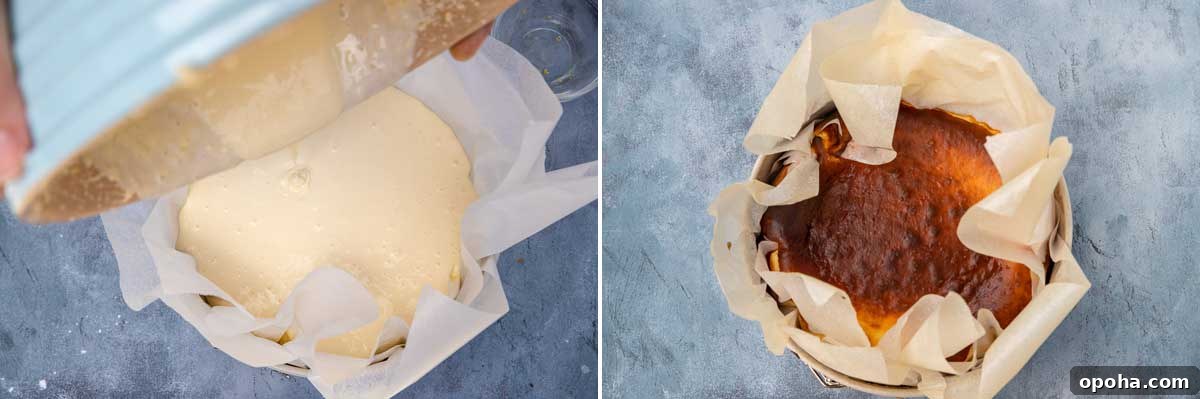
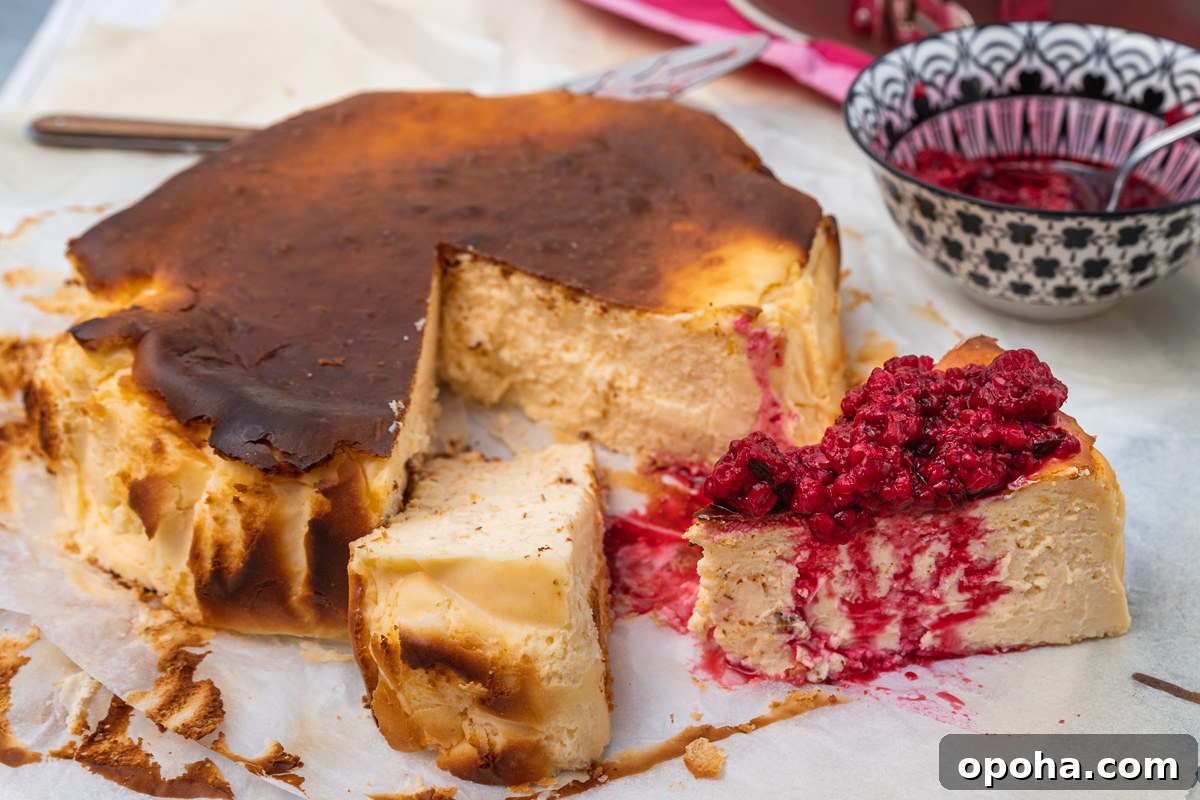
- Lovely presentation: The batter rises during baking and sinks as it cools, creating a striking tall edge and rustic look. Keep the tall parchment in place when serving — it’s part of the appeal.
- Flexible flavouring: The base is adaptable — add vanilla, citrus zest, salt, or other flavourings to suit your taste.
About the ingredients
This recipe uses a short list of reliable ingredients that deliver that signature creamy texture:
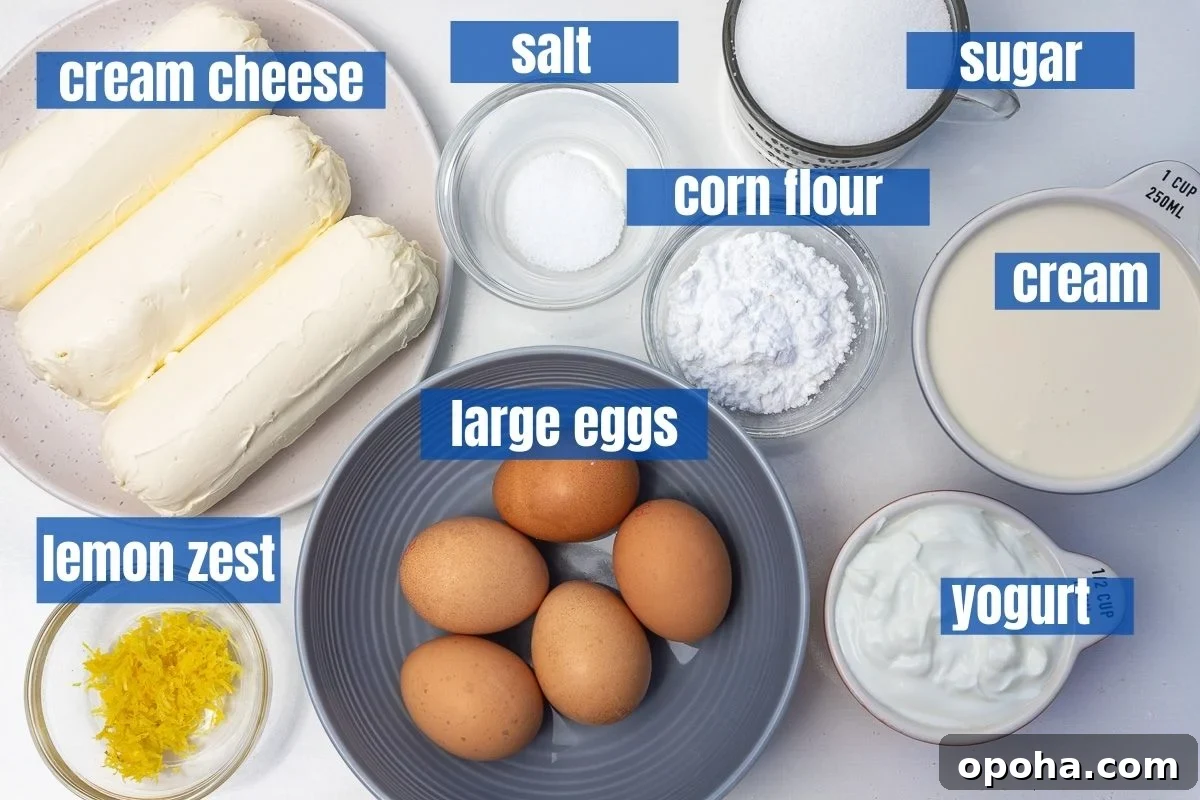
Cream cheese: Use full-fat cream cheese (e.g., Philadelphia or similar). For extra richness try swapping one third for mascarpone.
Sugar: Regular granulated sugar. The recipe keeps sweetness moderate; adjust to taste.
Eggs: Large eggs provide structure; they should be lightly whisked and preferably at room temperature.
Heavy cream: Use full-fat double or heavy cream for the best texture.
Greek yogurt: Half a cup adds a bright, tangy note. Sour cream or crème fraîche are suitable alternatives.
Salt: A teaspoon enhances the caramelized top and balances sweetness.
Cornflour (cornstarch): A small amount (3 tablespoons) helps the cheesecake set and makes the recipe naturally gluten free. Plain flour can be substituted if needed.
Lemon zest: Optional, but it lifts the flavour. Replace with orange or lime zest if preferred.
How to make it
This crustless cheesecake is straightforward. Key steps:
Step 1: Prepare an 8–9 inch springform pan by lining it with three layers of baking paper at different angles, keeping the paper tall and pointing up. Preheat the oven to 210°C / 410°F.
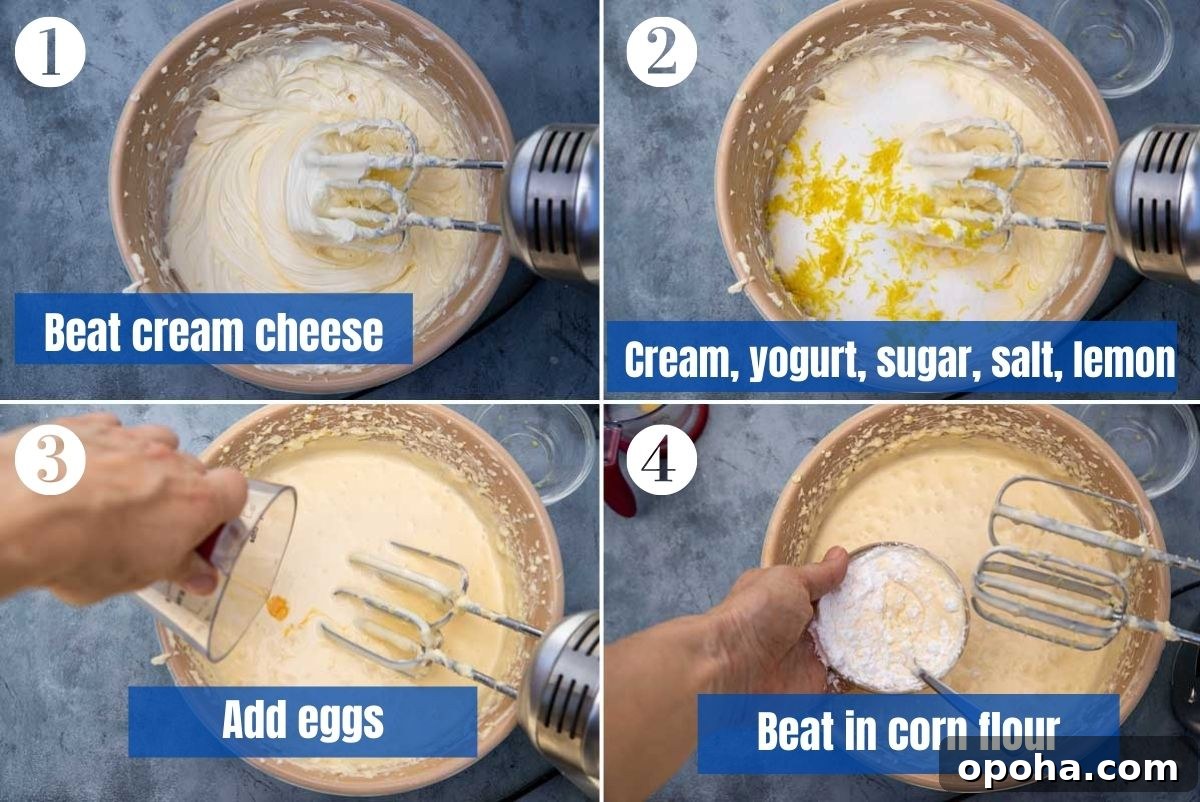
Step 2: In a large bowl, beat the cream cheese until smooth. Add the cream and yogurt, then the sugar, salt and lemon zest (if using).
Step 3: Gradually beat in the whisked eggs until incorporated, taking care not to overmix.
Step 4: Mix a little batter into the cornflour to loosen it, then fold that back into the main mixture (or sprinkle the cornflour over and whisk in).
Step 5: Pour into the prepared pan, tap to remove large air bubbles, and bake at high temperature for around 40 minutes. The edges should be set, the top deeply golden, and the centre still noticeably wobbly. It will firm as it cools.
Helen’s Top Tips
- Bring cold ingredients to room temperature for easier mixing and a smoother batter.
- Combine ingredients gradually at low speed to avoid an overly eggy texture. Stop once everything is evenly mixed.
- A food processor makes mixing quick and minimizes splatter if ingredients aren’t fully warmed.
- Keep the parchment in place until serving — it’s part of the rustic presentation.
How to serve and variations
This cheesecake is lovely on its own, but here are serving suggestions and simple variations:
- Serve slightly warm, at room temperature, or chilled — choose the texture you prefer.
- Offer a bowl of red berries (fresh or frozen) alongside for a fresh contrast. A sweet Spanish wine or sherry is a traditional accompaniment.
- Add 1½ teaspoons vanilla to the batter for a classic flavour.
- Chocolate variation: heat cream and pour over 200g dark chocolate, stir until smooth, cool slightly and use in place of the plain cream.
- Coffee version: dissolve 2 tablespoons instant coffee in warmed cream, cool and use instead of regular cream.
- Matcha: sift 2 tablespoons matcha into the batter for a dramatic green cheesecake.
- Oreo: fold crushed Oreos into the batter for an indulgent twist.
Top tip: A quick raspberry purée poured over the cheesecake makes a bright, easy finishing touch.
More things to know (recipe FAQ)
The Basque cheesecake has no bottom crust and develops a caramelized, dense exterior from high-heat baking. Texture and richness are similar to New York style but can be lighter or creamier depending on the recipe and whether it’s served warm or chilled. A Japanese cheesecake is another crustless style but is generally lighter and airier.
Bake roughly 30 minutes, then check. Continue baking until the edges are set, the top is well browned, and the centre remains noticeably wobbly. In most ovens this takes about 40 minutes. The cheesecake will firm up as it cools.
If the edges are set and the centre is jiggly after the recommended bake time but the top isn’t browned enough, briefly use the broiler/grill for a minute or two — watching constantly so it doesn’t actually burn.
Yes. Cool completely, then keep it in the pan wrapped well or remove it (keeping the parchment) and wrap tightly. Freeze up to a month for best quality.
This recipe is gluten free if you use cornflour (cornstarch) or another gluten free flour. It isn’t strictly keto because of the sugar; you can reduce or replace sugar to lower carbs, and you can omit the cornflour if desired.
More easy, impressive desserts
This Basque cheesecake is ideal for make-ahead entertaining. For other simple crowd-pleasers try gooey Scandinavian chocolate cake, an Italian torta tenerina, an easy apple cake (torta di mele) or a baked Biscoff cheesecake. A creamy blueberry clafoutis is another quick, custardy option.
Easy Basque Cheesecake (With Greek Yogurt)
Ingredients
- 1¾ pounds (750 g) cream cheese, room temperature
- 1 cup (250 ml) heavy cream
- ½ cup (250 g) Greek yogurt (or sour cream/crème fraîche)
- 1 cup (220 g) sugar
- 1 teaspoon salt
- Zest of 1 lemon (optional)
- 5 large eggs, lightly whisked
- 3 tablespoons cornflour (cornstarch)
Instructions
- Line an 8–9 inch springform pan with three layers of baking paper, leaving the paper tall and untrimmed. Preheat oven to 210°C / 410°F.
- Beat the cream cheese until smooth. Add the cream and yogurt, then the sugar, salt and lemon zest if using.
- Beat in the eggs gradually until just combined; avoid overmixing.
- Stir a little batter into the cornflour, then fold it back into the mixture (or sprinkle the cornflour over and mix in).
- Pour into the prepared pan, tap to release large air bubbles and bake for about 40 minutes, until the edges are set and the centre is still wobbly and the top is dark golden.
- Cool in the pan. Chill for a few hours or overnight, or serve slightly warm or at room temperature.
Notes
Room-temperature ingredients mix more smoothly. If ingredients are cold use a food processor to reduce splatter. If the top isn’t browned enough after baking, briefly use the broiler while watching closely. Store covered in the fridge up to 5 days or freeze up to 1 month.
Nutrition (per serving)
Calories: 401 kcal • Carbohydrates: 23 g • Protein: 8 g • Fat: 32 g