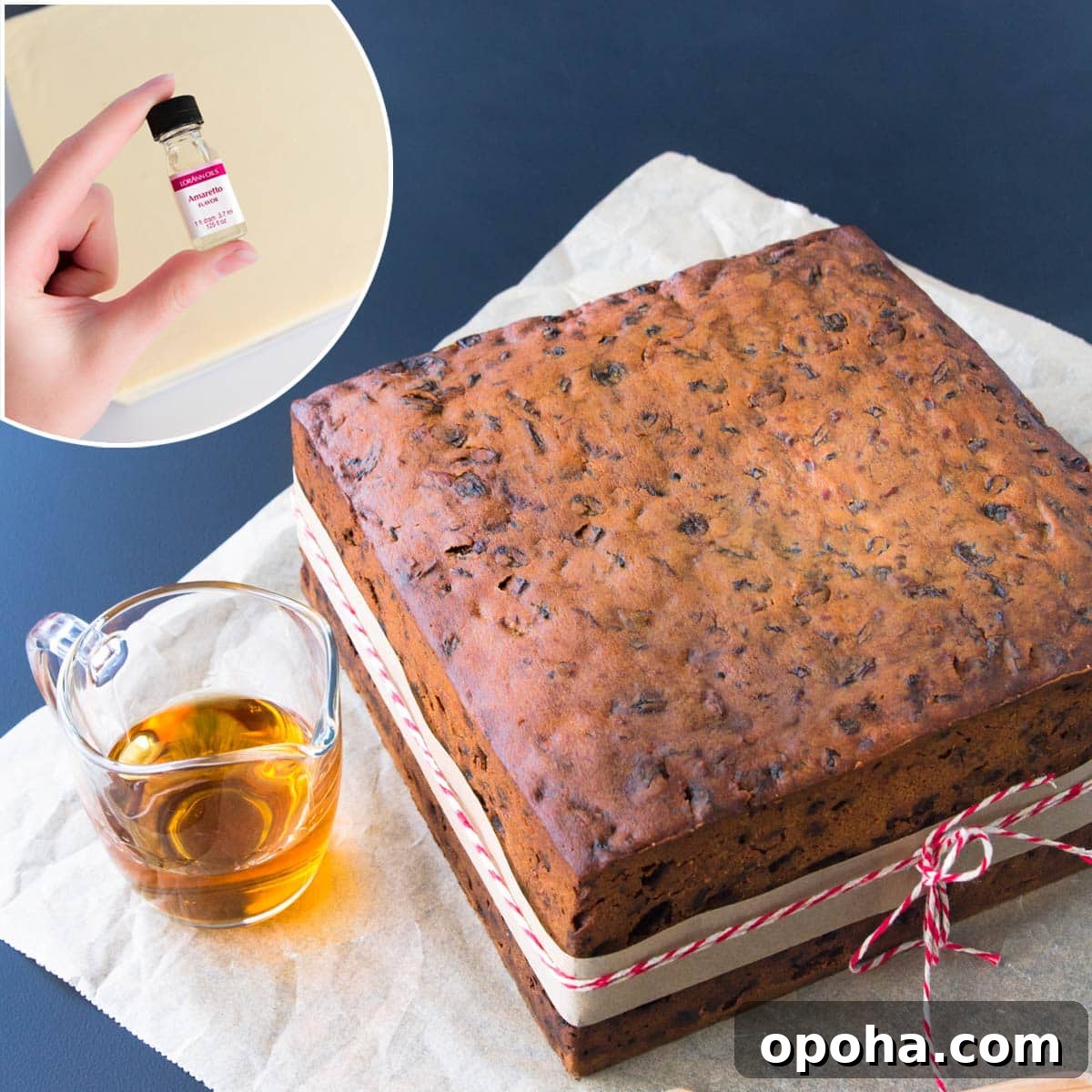
The question “Can you ganache a fruit cake?” often sparks a lively debate. There are three common responses. The traditionalist will reply: “Of course not—blasphemy! Fruit cakes are covered in marzipan and then fondant. End of story.”
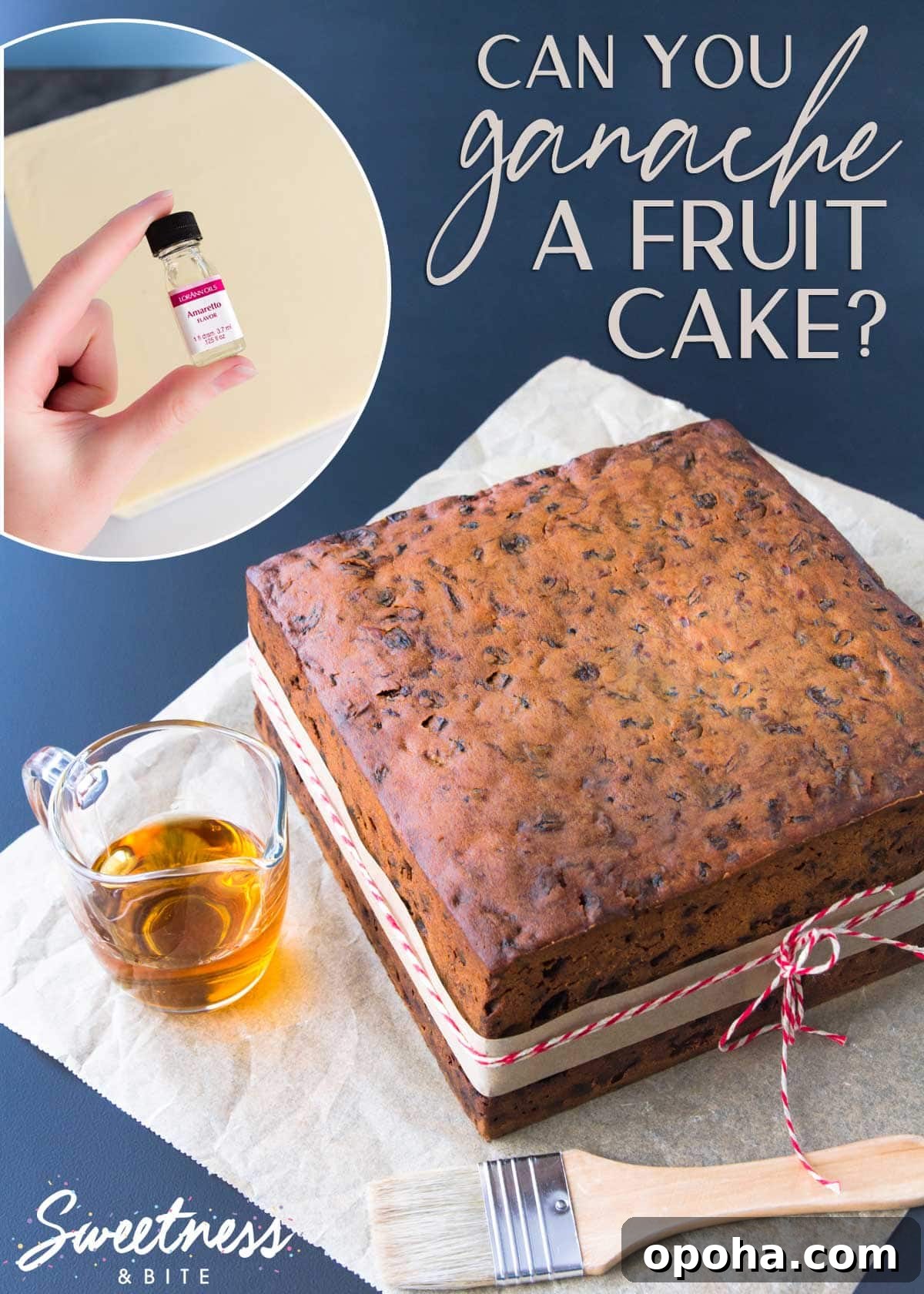
A slightly less rigid view says: “No—use almond icing (almond-flavoured fondant) and then cover with fondant.”
My view is simpler: “Yes—if you want. It’s not traditional, but it’s your cake. As long as you don’t need to store it for months after covering, you can absolutely ganache it. Nobody will come after you with a block of marzipan for daring to use chocolate.”
That answer may be cheeky, but if you’ve read this far it’s probably the reply you were hoping to hear.
The main non-taste reason to avoid ganache on a fruit cake is long-term storage. Ganache under fondant will keep safely for a week or two—possibly a little longer depending on temperature—but that’s far shorter than a cake covered in marzipan and fondant, which can last for months. If your plan is to keep a tier for an anniversary or for extended storage, stick with marzipan or almond icing.
However, if your timeline is shorter, you can ganache a fruit cake just as you would any other flavored cake. Fruit cake layers are still popular in wedding cakes and other multi-tiered creations—often as a top tier to be saved or simply for family members who prefer the traditional flavor.
The challenge comes when you want the fruit cake tier to match the appearance of other tiers. Fruit cakes often shrink slightly from the tin, usually along the top edge, producing a tapered side. Simply applying a standard layer of marzipan or fondant won’t always correct that taper. If your other tiers are ganached or buttercreamed with perfectly straight sides, a tapered fruit cake tier will look out of place.
Fruit cakes can also develop holes where dried fruit shrinks during baking. While there are techniques to reduce those holes, if you haven’t used them you may need to fill gaps with marzipan first. That process is time-consuming and can be tricky to finish seamlessly.
Fortunately, there’s a compromise that pleases both traditional almond fans and those who prefer ganache: aromatize white chocolate ganache with an oil-based amaretto or almond-flavored extract. I use a small bottle of LorAnn Amaretto oil to flavor white chocolate ganache so it tastes very close to almond icing, and somewhat similar to marzipan. Other oil- or alcohol-based almond extracts will work too—avoid water-based extracts, which can split ganache.
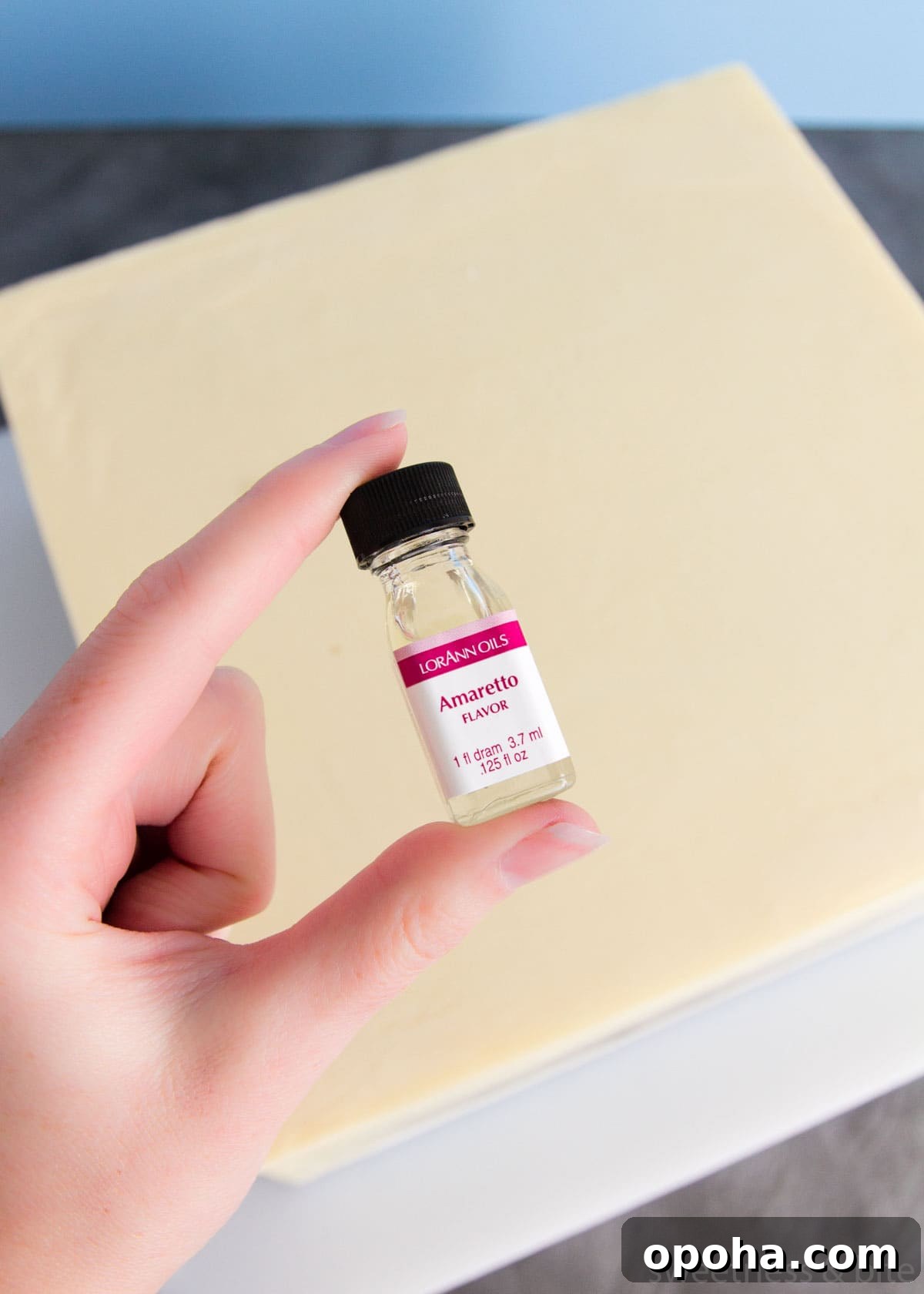
To make almond-style ganache, prepare your white chocolate ganache as usual and add the oil or extract to taste. Taste-testing is essential because extract strength and batch size determine how much you need. Aim for a light almond note that softens the white chocolate flavor rather than overpowering it.
Years ago I made a cake for some traditional fruit-cake lovers and they didn’t realize the layer under the fondant was ganache, not almond icing—so the trick can be very convincing.
Some bakers do prefer dark chocolate ganache on fruit cake. That’s entirely a matter of taste—if you like it, go for it.
Practical tips when ganaching a fruit cake: cover only the outside with ganache—slicing a fruit cake into layers is generally ill-advised because the fruit can fall out and make a mess. Also bake your fruit cake to a height similar to your other tiers; if you prefer taller tiers (4″ or more), increase the recipe quantity so the cake rises to the desired height.
Use baking strips to slow the baking of the cake’s outer edge and avoid burnt fruit—nobody wants charred fruit pieces in a cake.
In short: yes, you can ganache a fruit cake if that suits your timeline and taste. If you need long-term storage, stick with marzipan and fondant. If you want the look of ganache with the flavor of almond icing, flavor a white chocolate ganache with an oil-based almond extract.
Natalie
xx