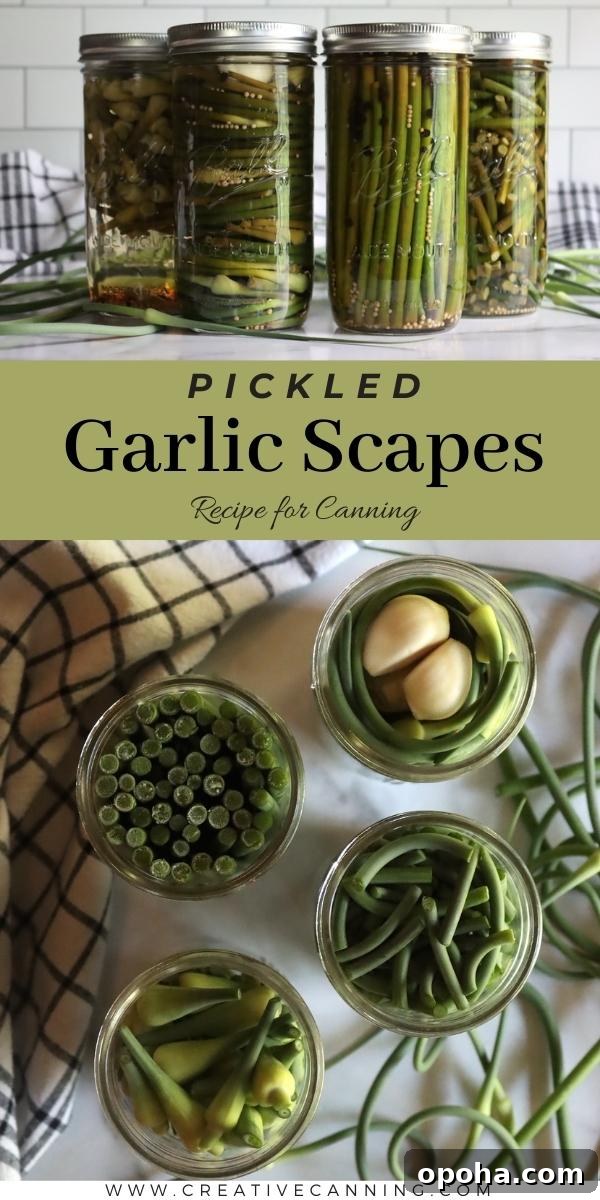
Pickled garlic scapes are a simple, creative way to preserve the bright, garlicky flavor of spring scapes for year‑round use.
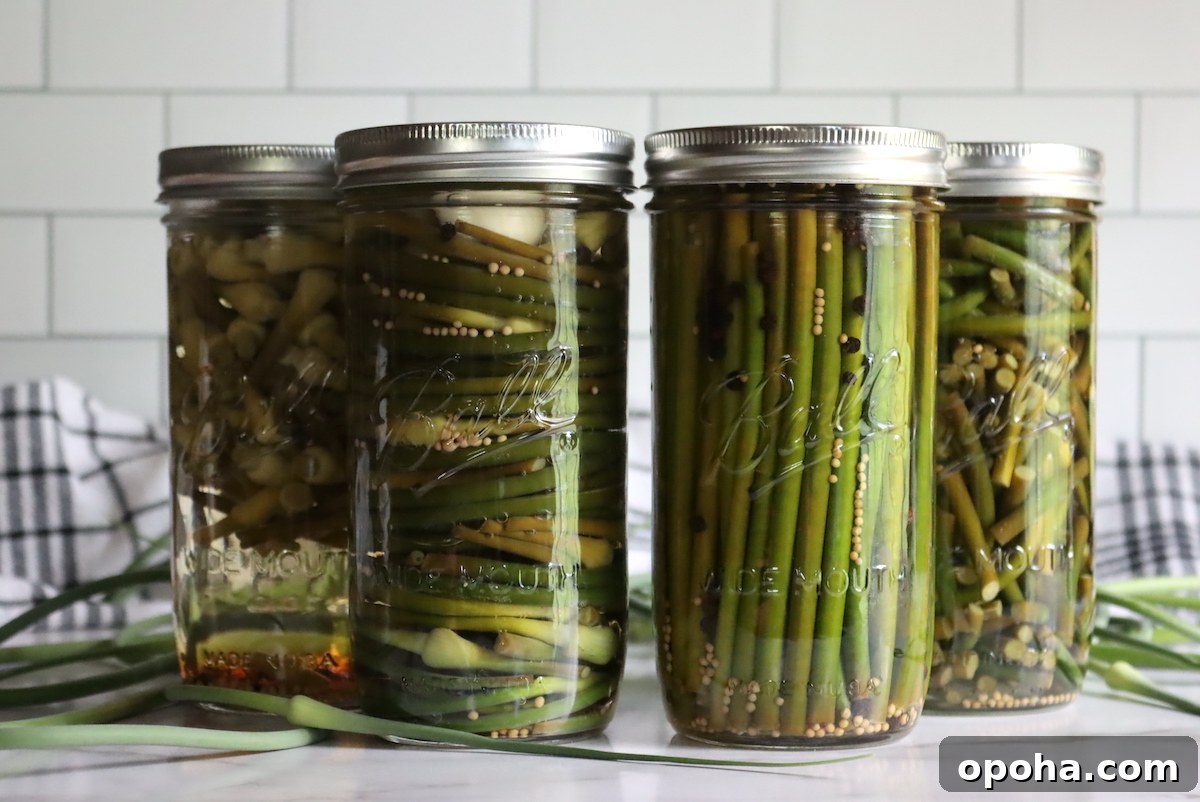
We grow a lot of garlic on our homestead, and a large patch of hardneck garlic means a spring bounty of garlic scapes. Hardneck varieties thrive in cooler climates and often offer richer, more complex flavor than many store‑bought garlics. The scapes are an enjoyable early crop and pick up pickling flavors beautifully.
Pickled garlic scapes are one of my favorite ways to use that seasonal harvest. They’re crunchy, mildly garlicky, and a terrific pantry condiment. Think of them as a cross between classic dilly beans and pickled garlic—crisp and tangy with a subtle garlic bite. They’re delicious straight from the jar, on a charcuterie board, or next to sandwiches.
Choosing Garlic Scapes for Pickling
Harvest scapes early, when they’re just beginning to uncurl. Once the flower starts to open the scape becomes tougher and stringier. Ideal scapes are generally under 12 inches, though slightly longer stems can work if they’re still tender from a cool spring.
When buying scapes at a market, look for bright, fresh bunches with a tight curl. Straighter scapes will still pickle fine but may be a bit firmer. Tender scapes make the best pickles, but any fresh scape will preserve nicely if prepared properly.
Preparing Garlic Scapes for Pickling
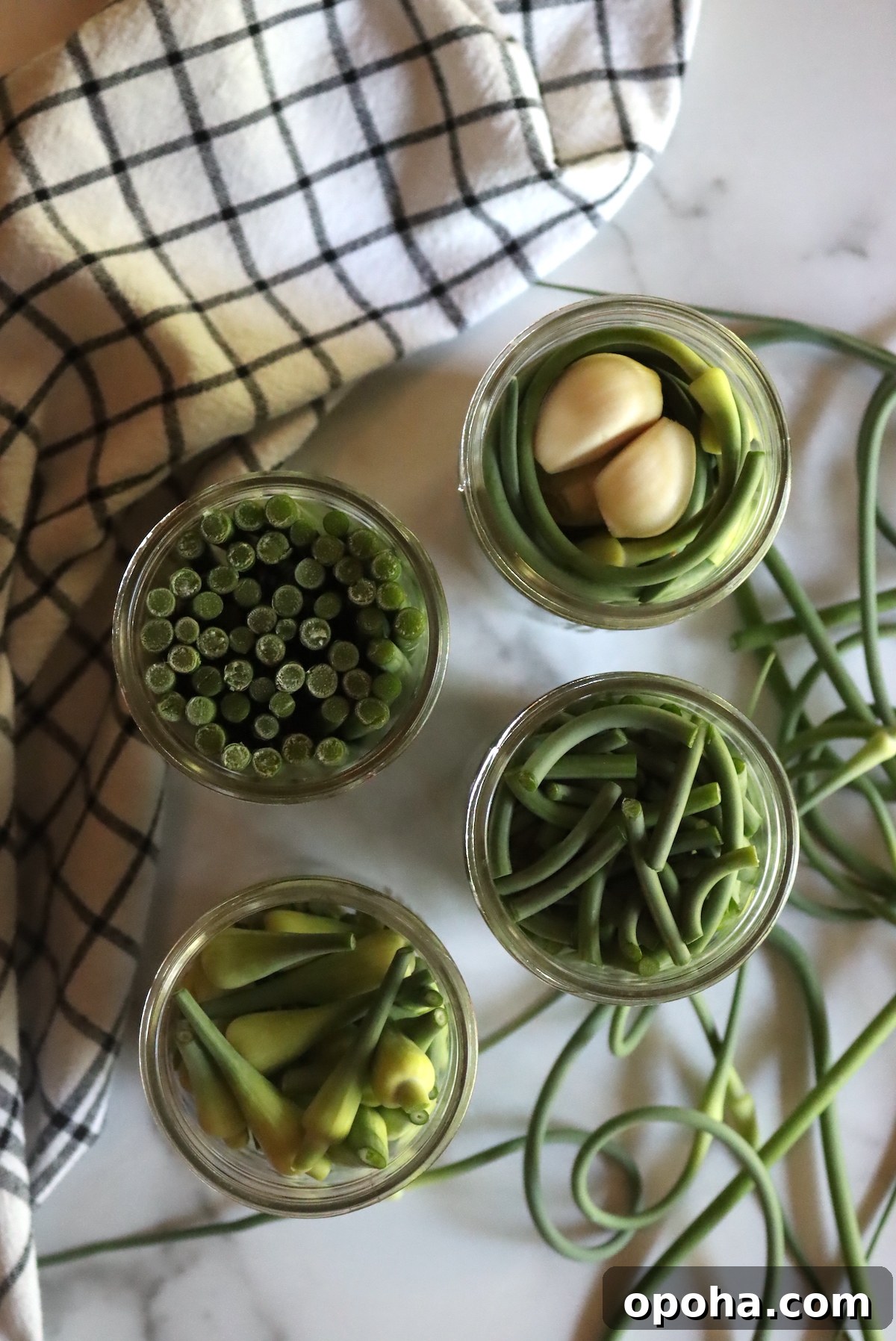
You can prepare garlic scapes several ways depending on how you want them to look and how you plan to serve them.
Small Pieces
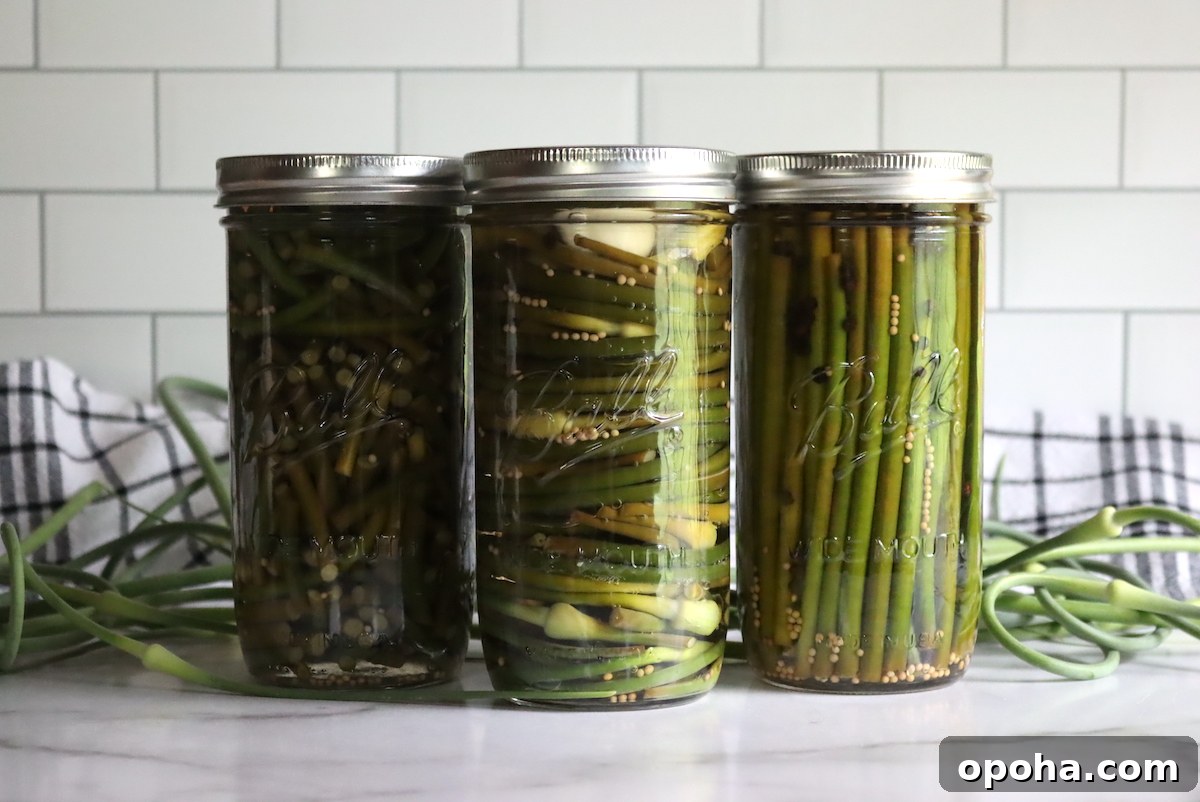
The easiest method is to cut scapes into short segments—about 1 to 3 inches long. These pack quickly into jars and are convenient for snacking or serving beside a sandwich. Short pieces are practical and efficient when you have a lot of scapes to preserve.
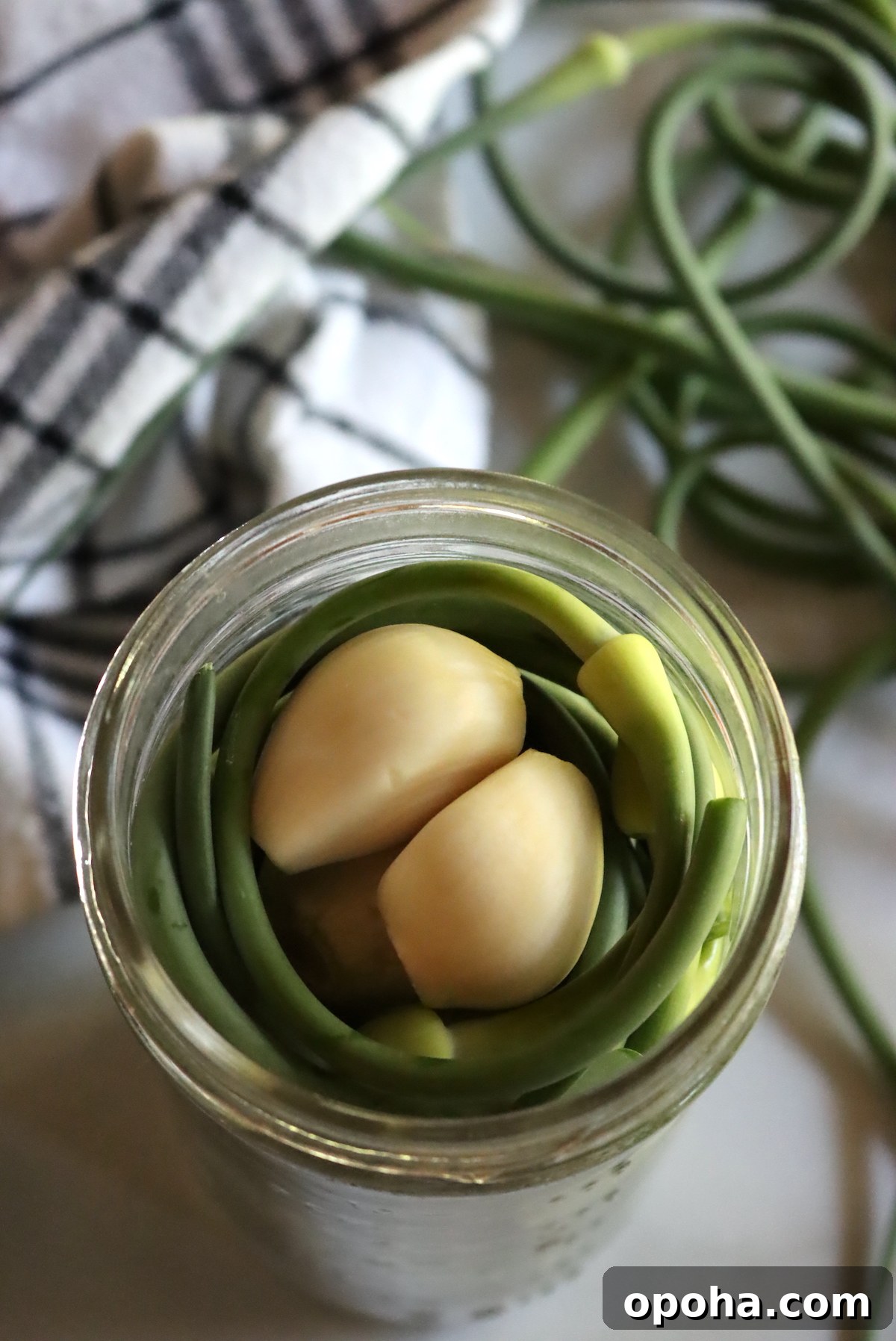
Curls: Extra‑curly scapes can be wound into the jar to create an attractive spiral presentation. Curled scapes look lovely on charcuterie plates and show off the preserved shape. They can be trickier to pack but make an eye‑catching jar.
Straight Sticks
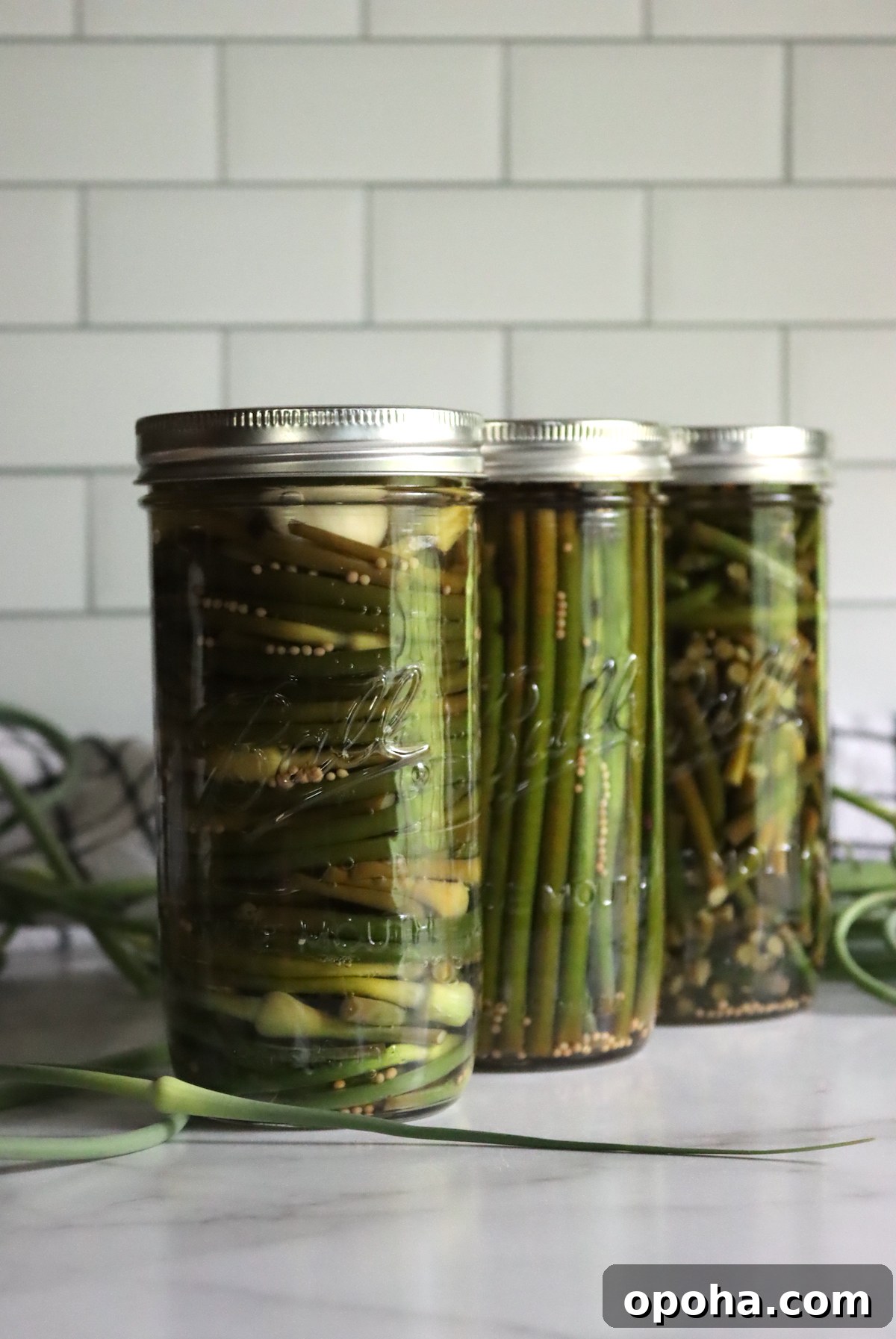
Letting some scapes grow slightly longer gives straight sections that resemble pickled asparagus. These long pieces pack vertically and make a striking jar full of crisp, garlicky spears.
Flower Blossoms
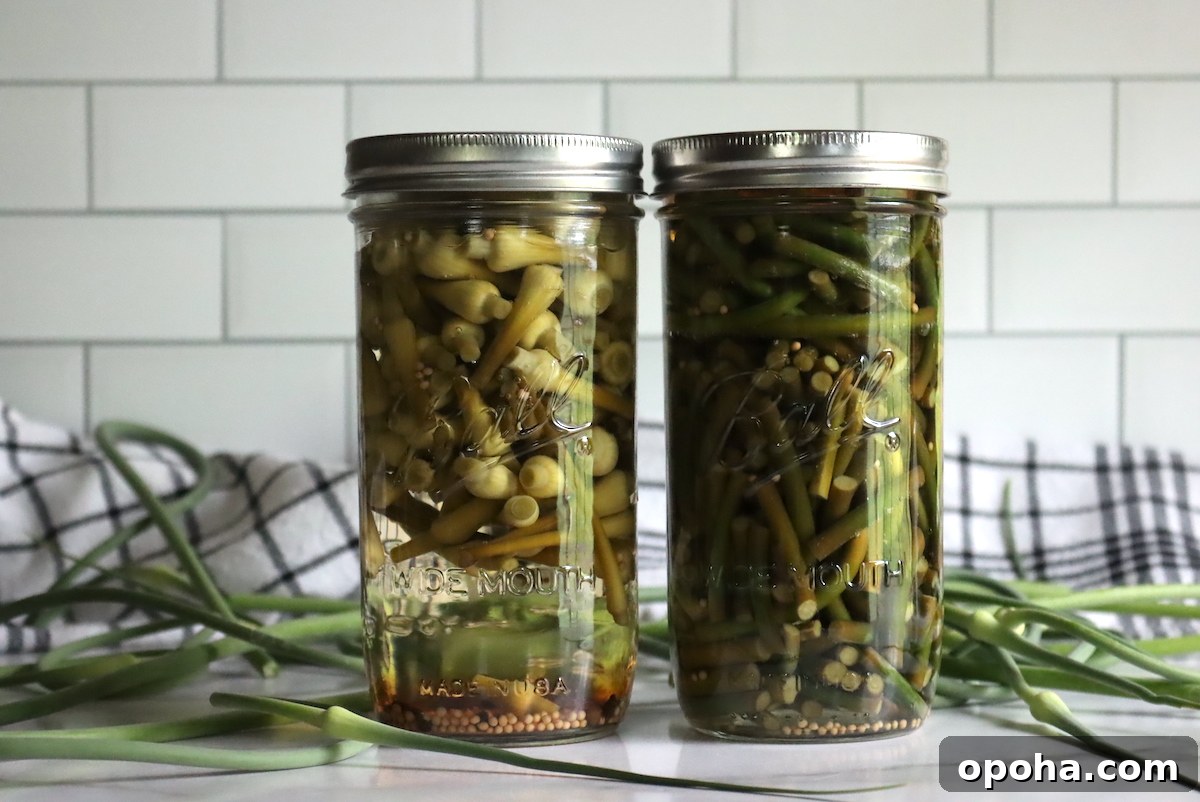
The blossom ends make an especially interesting pickle. I sometimes remove and jar the buds separately for a special occasion—they add unique texture and presentation. You can also leave the buds attached and pickle them with the stems if you prefer.
Ultimately the choice is yours: keep it simple with chopped segments or take the time to arrange spirals and long sticks for a fancier presentation. If you separate blossoms from stems, remember blossoms contain air and will shrink or float when pickled.
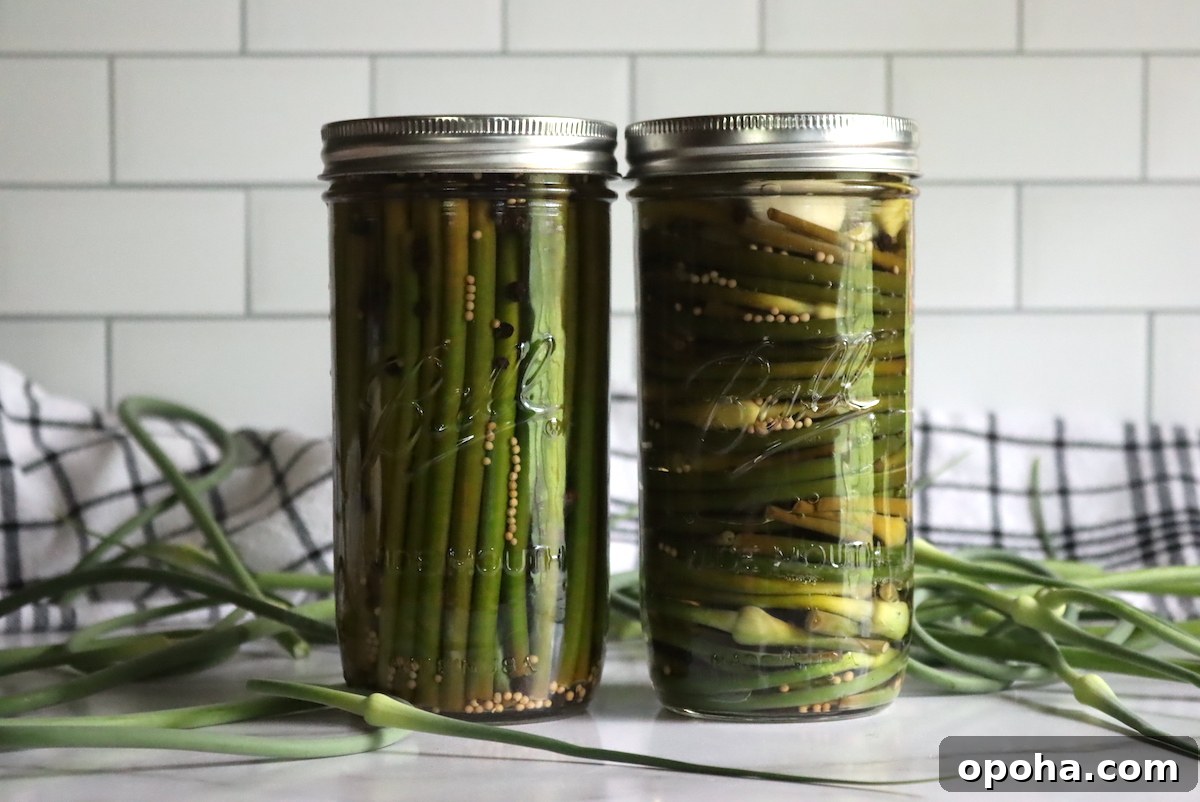
Chopping scapes into short pieces is the quickest approach and works well for most uses. If you have fewer scapes than jars, add other vegetables like garlic cloves or sliced onion to fill space—both pickle well alongside scapes.
Brine for Pickled Garlic Scapes
The method is the same regardless of shape: pack raw scapes into sanitized jars, add spices, and pour hot brine over them. Below are four brine variations—basic, dill, bread‑and‑butter, and spicy—each scaled to pickle roughly 1/2 pound of scapes (about two pints total).
These can be made as refrigerator pickles or processed with a water bath canner for shelf‑stable storage. For each pint jar plan on about 1/4 pound of scapes and slightly over 1 cup of brine.
Basic Pickled Garlic Scapes
- 1 1/4 cup water
- 1 1/4 cup vinegar (white, cider, or any 5% acidity vinegar)
- 1 1/2 Tbsp salt
- 1 Tbsp sugar
- 2 tsp mustard seeds (about 1/2 tsp per pint)
- 2 tsp black peppercorns (about 1/2 tsp per pint)
Dill Pickled Garlic Scapes
- 1 1/4 cup water
- 1 1/4 cup vinegar (5% acidity)
- 2 Tbsp salt
- 2 tsp dill seeds (about 1/2 tsp per pint)
- 2 tsp black peppercorns (about 1/2 tsp per pint)
- Fresh dill fronds, optional
Bread and Butter Pickled Garlic Scapes
- 2 cups white vinegar
- 1 cup granulated sugar
- 1 Tbsp salt
- 2 Tbsp mustard seeds (about 1/2 Tbsp per jar)
- 1 tsp celery seed (about 1/4 tsp per jar)
- 1 tsp ground turmeric (about 1/4 tsp per jar)
Spicy Pickled Garlic Scapes
- 1 1/4 cup water
- 1 1/4 cup vinegar (5% acidity)
- 1 Tbsp canning salt
- 1 Tbsp sugar
- 2–4 tsp red pepper flakes (1–2 tsp per pint)
- 4 tsp black peppercorns (about 1 tsp per pint)
Pack scapes into jars, add the dry spices and any optional herbs, then bring your chosen brine to a boil and stir until the salt and sugar dissolve. Pour the boiling brine over the scapes, leaving 1/2 inch headspace. Seal and either cool for refrigerator pickles or proceed to canning.
Canning Pickled Garlic Scapes
Water bath canning is optional. Refrigerator pickles will keep at least a month, but canning lets you store jars on the shelf. If you plan to can, prepare a water bath canner and follow standard canning practice.
Packing and processing summary:
- Pack raw scapes into jars, add dry spices, and leave 1/2 inch headspace.
- Heat brine until boiling and pour over scapes, maintaining 1/2 inch headspace.
- Seal jars with clean two‑part lids.
- Process in a water bath canner for 10 minutes (15 minutes above 6,000 ft elevation).
For refrigerator pickles, let jars cool to room temperature, then refrigerate. Allow at least two days for flavors to develop before eating. Properly canned jars will keep at peak quality for about 12 months; refrigerate after opening.
Garlic Scape Recipes
If you want more ways to use garlic scapes beyond pickling, try them in tempura, pesto, hummus, or compound butter. They’re versatile and add a mild garlic note to many dishes.
Pickled Garlic Scapes
Ingredients
- 1/2 lb Garlic Scapes (about 2 to 3 farmer’s market bunches)
Basic Pickled Garlic Scapes
- 1 1/4 cup water
- 1 1/4 cup vinegar (5% acidity)
- 1 1/2 Tbsp salt
- 1 Tbsp sugar
- 2 tsp mustard seeds
- 2 tsp black peppercorns
Dill Pickled Garlic Scapes
- 1 1/4 cup water
- 1 1/4 cup vinegar (5% acidity)
- 2 Tbsp salt
- 2 tsp dill seeds
- 2 tsp black peppercorns
- Fresh dill fronds (optional)
Bread and Butter Pickled Garlic Scapes
- 2 cups white vinegar
- 1 cup granulated sugar
- 1 Tbsp salt
- 2 Tbsp mustard seeds
- 1 tsp celery seed
- 1 tsp ground turmeric
Spicy Pickled Garlic Scapes
- 1 1/4 cup water
- 1 1/4 cup vinegar (5% acidity)
- 1 Tbsp canning salt
- 1 Tbsp sugar
- 2–4 tsp red pepper flakes
- 4 tsp black peppercorns
Instructions
- Choose a brine from the options above. Each makes enough brine to pickle roughly 1/2 lb of scapes (about 2 pints).
- Trim and cut the scapes into your preferred shape—short segments, curls, long sticks, or blossom buds. Pack them into jars leaving 1/2 inch headspace.
- Add dry spices or fresh herbs to each jar.
- If canning, prepare a water bath canner now (optional).
- Combine brine ingredients (water, vinegar, salt, sugar) in a saucepan and bring to a boil, stirring to dissolve salt and sugar.
- Pour boiling brine over the packed scapes, keeping 1/2 inch headspace, then seal jars with two‑part lids.
- For refrigerator pickles: cool to room temperature, refrigerate, and wait at least 2 days before eating. They’ll keep at least a month.
- For shelf storage: process jars in a water bath canner for 10 minutes (15 minutes above 6,000 ft). Check seals and refrigerate any jars that didn’t seal. Properly canned jars keep best for about 12 months; refrigerate after opening.
Notes
Each brine variation listed above yields enough liquid for 1/2 lb of scapes (2 pints). Adjust quantities up or down based on how many scapes you have. Pack the jars first so you know how much brine you’ll need—well‑packed pint jars require just over 1 cup of brine each.
If you don’t have enough scapes to fill jars, add vegetables such as whole garlic cloves or sliced onion to fill space and add flavor. For canning, use canning‑approved vegetables; for refrigerator pickles, any additions are fine.
Nutrition
Nutrition information is an estimate. Calories: 121 kcal; Carbs: 23 g; Protein: 2 g; Fat: 1 g; Sodium: 2066 mg (values per recipe serving may vary).
Pickling Recipes
For more pickling ideas, try simple recipes like pickled corn salad, three‑bean salad, pickled green tomatoes, dilly beans, pickled jalapeños, or pickled fiddleheads when they’re in season.