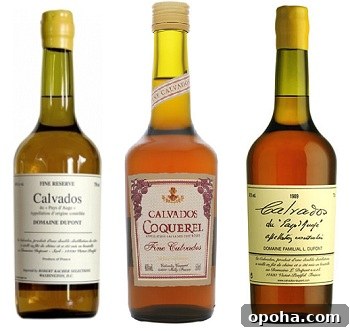
Calvados is an apple brandy from Normandy, France, prized for intensifying and rounding out apple dishes. Many apple-based recipes—from pies and cakes to compotes and preserves—call for Calvados because it adds a concentrated apple aroma and depth that simple extracts can’t fully replicate.
The production begins with fresh apples that are pressed for juice. That juice ferments into an apple cider, which is then distilled into an eau-de-vie, a clear fruit brandy. To become Calvados, the eau-de-vie matures in oak casks for at least two years. Extended aging softens the spirit, deepens its flavor profile, and adds notes of oak and dried fruit while darkening its color slightly.
In European and British kitchens, Calvados is used more commonly than in the United States, but it can be incorporated easily into home cooking. It functions similarly to a flavored extract: only a small amount is needed to lend complexity. A tablespoon or so folded into apple cake batter, stirred into caramelized apples before serving, or added to fruit-based sauces will elevate the dish without overpowering it. During cooking or baking most of the alcohol evaporates, leaving the concentrated flavors behind.
Because Calvados carries both fresh apple character and aged oak notes, it pairs well with warm spices like cinnamon and nutmeg, butter-rich desserts, custards, and cream-based sauces. It can also enhance savory preparations that feature pork or poultry, providing a subtle fruit-forward counterpoint. When using Calvados, start with a small amount and adjust to taste: the spirit is potent, and a little contributes significant aromatic lift.
For home cooks who want an approachable way to introduce more nuanced apple flavor into recipes, Calvados offers a natural and flavorful option. Whether stirred into batter, flamed briefly with fruit, or reduced into a glaze, it brings a distinct Norman character that complements the sweetness and texture of apples while adding warmth and complexity.