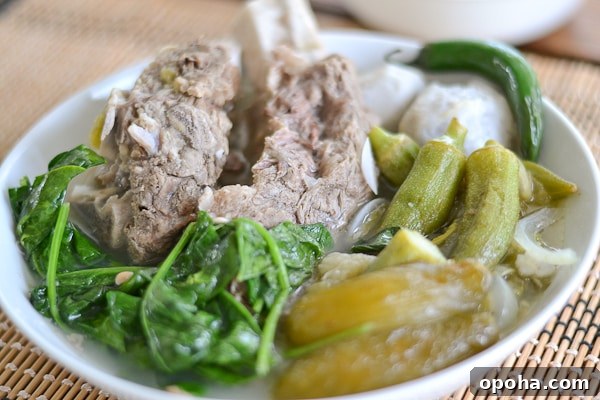
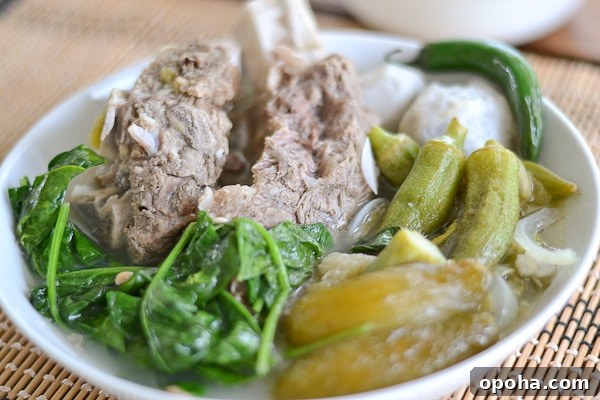
 Sinigang—whether made with pork, fish, shrimp, chicken, or beef—was a childhood favorite in my home. My mother made it often because it was delicious, filling, and relatively simple to prepare for a large family. With a store to run and seven children to feed, she relied on fresh sour fruits to flavor the broth: green mango, santol, guava, calamansi, and kamias (bilimbi) were all used at different times. Today many households use commercial sinigang mix for convenience and cost, but I’ve returned to natural souring agents now that my family pays closer attention to what we eat. My personal favorite is guava, which is available year-round where I live in Vancouver. Recently I used frozen kamias for a beef sinigang when tamarind wasn’t available, and the result was just like the memories of my mother’s soup—naturally tart and comforting, though milder than the packet mix and much healthier.
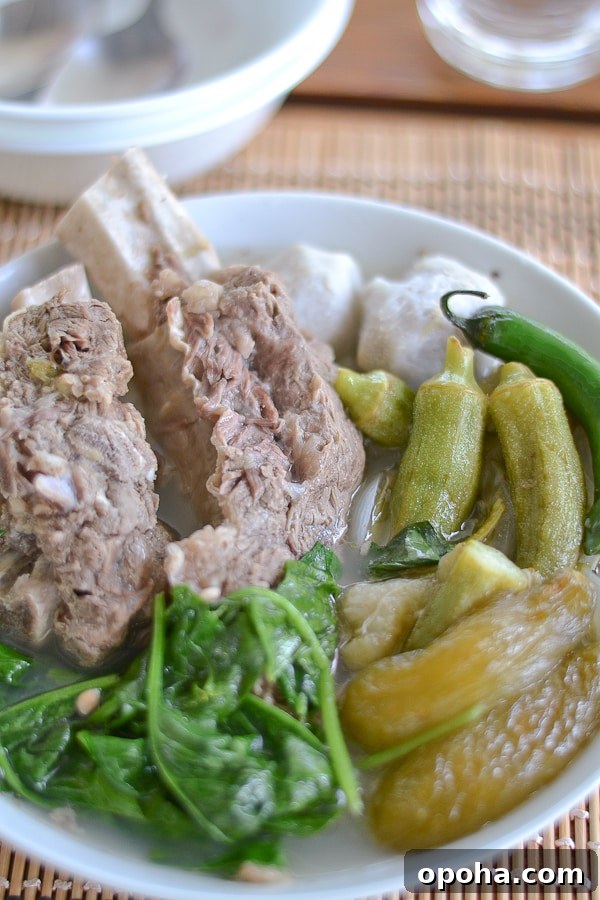

Cooking Tips for Perfect Sinigang
For a rich, well-developed sinigang broth, begin by searing the beef ribs in your pot to concentrate the meat’s flavor. Add water and simmer gently for at least an hour to an hour and a half; the longer it cooks, the more tender the ribs will become. If you’re using kamias, add it later in the cooking process so it softens without losing all texture. Onions and tomatoes added early will break down and enhance the broth’s complexity. Taste the soup before serving and adjust seasoning—fish sauce or a squeeze of calamansi will brighten the flavors and let you fine-tune the sourness to your preference.
Serving Suggestions and Pairings
Sinigang is best enjoyed hot with steamed rice to balance the tangy broth. For a fuller meal, serve alongside grilled fish or fried eggplant. A simple green salad with a light vinaigrette adds a refreshing contrast, and fresh chili peppers at the table let diners add heat to taste. Cold beverages like mango juice or calamansi soda are classic accompaniments. Most importantly, sinigang is a communal, comforting dish—share it with family and friends for the full experience.
Frequently Asked Questions
What can I substitute for kamias if I can’t find it?
If kamias isn’t available, use tamarind paste or fresh green mango to achieve a pleasant, natural sourness in the broth.
How should I store leftovers?
Store leftover sinigang in an airtight container in the refrigerator for up to three days. You can freeze it for longer storage, although some vegetables may lose their texture when thawed.
Can I make this sinigang in advance?
Yes. Prepare the broth and ribs a day ahead, then reheat and add fresh vegetables just before serving to keep them crisp.
What side dishes go well with sinigang?
Steam rice is a must. Grilled or fried fish complements the soup nicely, and a light salad works well too.
What are common mistakes to avoid when making sinigang?
Don’t rush the simmering—insufficient cooking time results in tougher meat. Also add the souring agent gradually and taste as you go; it’s easy to overdo the tartness.
Beef Ribs Sinigang with Kamias (Bilimbi)
Liza A
Pin Recipe
Ingredients
- 3 lbs beef back ribs or short ribs cut into serving pieces
- 8-10 pcs of taro roots peeled and cut into bite-sized pieces
- ½ lb okra
- 2 227g packages of frozen bilimbi (kamias), thawed (available in the frozen section of Asian store)
- 2 Serrano peppers
- 1 large onion sliced
- Fish sauce or salt to taste
- Bunch of spinach rinsed and trimmed
Instructions
-
Place beef ribs in a large pot and add enough water to cover. Add salt and bring to a boil over high heat. Skim off any scum that rises to the surface, reduce heat to medium, cover, and simmer for an hour and a half or until the meat is fall-off-the-bone tender. Add water as needed.
-
Add taro and cook 10 minutes. Add okra and continue cooking until the taro is fork-tender, about 5–7 minutes.
-
Add bilimbi (kamias) and cook until softened, about 7–8 minutes. Press some kamias against the side of the pot with the back of a spoon to release more juice into the soup.
-
Add peppers, onion, and fish sauce or salt to taste. Simmer 5 more minutes, then stir in spinach. Remove from heat.
-
Serve hot with steamed rice. Enjoy!
Nutrition