Up until a few weeks ago the chilli seedlings had been growing under regular fluorescent tube lights down in the cellar. When the weather improved briefly I moved them out to a mini greenhouse, but the conditions have become changeable again—sunny one moment, cool and cloudy the next.
Last summer’s cool, wet conditions with limited sunshine meant a disappointing season for many of my plants. Varieties that need more time to fruit, such as chocolate habanero, produced only a few pods before autumn arrived. This year I’m determined to avoid the same outcome, even though I started very late.
I’m a little concerned my plants are undersized for the time of year—I didn’t sow seeds until March, whereas in previous years I began in November. Our garden receives only a couple of hours of direct sunlight daily, so I decided to give the seedlings an extra boost to help them catch up.
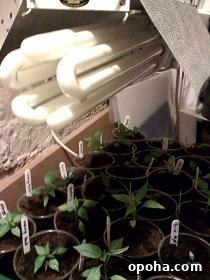
I had an old 125W compact fluorescent (CFL) grow light that I bought a couple of years ago but never used. I’ve finally set it up in the cellar. The lamp produces a significant amount of light, and when I first bought it it came with a small reflector that seems inadequate for my needs. To concentrate more light on the seedlings I plan to line the inside of a large cardboard box with aluminum foil and place the pots inside the box to reflect light toward the plants.
One important consideration is the heat the CFL produces. The seedlings are still small and delicate, so I need to avoid overheating them. I’ve started with the bulb approximately 10 inches above the plant tops and will lower it a little each day until it reaches 3–4 inches, provided the leaves don’t wilt or scorch. If I see any singeing, I’ll raise the bulb an inch or two and keep it there.
Although CFLs emit more heat than standard household fluorescents, they are cooler than many other grow lamps. Still, I’m thinking about adding a small fan to improve ventilation. A fan helps dissipate heat and reduces humidity levels that can encourage fungal growth. Better air circulation also strengthens stems, helping seedlings develop sturdy foliage and stand up to the breeze when they are eventually moved outdoors.