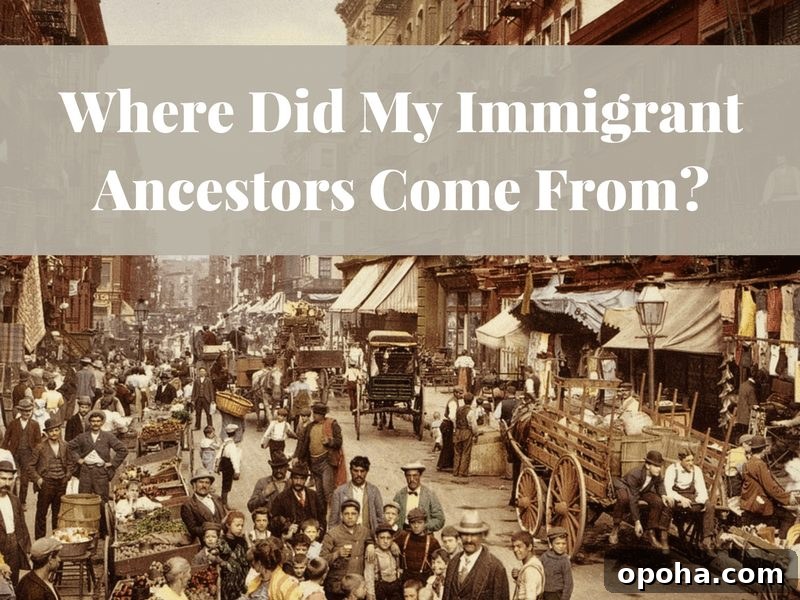
Research into immigrant ancestors should begin with U.S. records. Learn which records are most useful and how to use them effectively.
During college I spent a summer in London. Before I left, my father asked me to see what I could learn about our Talbott family and any English ancestors. I visited the National Archives in London and met a cordial archivist in an ornate reading room. After I described the small amount I already knew, he asked a simple but crucial question: who was our immigrating ancestor?
I didn’t know. He politely told me that without identifying the immigrating ancestor first, I was looking on the wrong side of the ocean. I left feeling humbled — it was my first real encounter with genealogical research, and it made an impression. Years later I came to love the work of tracing family history and to appreciate that archivist’s advice.
Where Did Our Immigrant Ancestors Come From?
That archivist made a very important point: without knowing which relative actually immigrated, you cannot narrow the search enough to be successful.
We cannot research immigrant ancestors abroad unless we know who the immigrating ancestor is.
This is a fundamental principle in genealogy: do not skip a generation. Identify the generation here in America — including the immigrating ancestor — first. Research that person thoroughly in U.S. records so you would recognize them if they appeared at your door. Those American records often contain clues about their lives before arrival.
Many researchers also use DNA testing from companies like AncestryDNA or FamilyTreeDNA. DNA can help narrow searches, but it does not replace document-based research. DNA testing and traditional paper research work best together.
What types of records can you use to learn more about your immigrating ancestor?
Census Records
Census records are a primary source for birthplace information. Check every applicable census year for your ancestor and take note of the columns that record birthplace for the individual and, in later censuses, the birthplace of their parents. These entries can point you toward a country or region.
For example, Israel Lisson immigrated in 1886. The 1900 census lists his birthplace as Russia and notes his parents were also born in Russia.

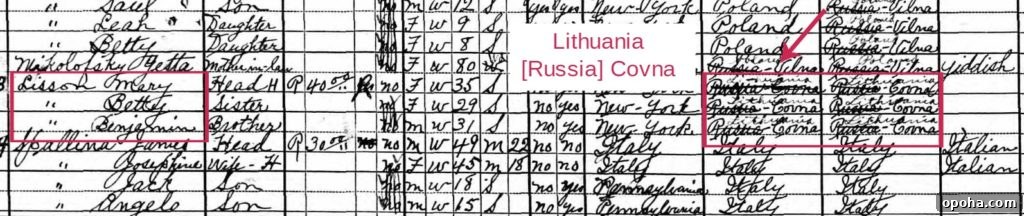
Always examine children’s later census records as well. The 1930 census for Israel’s daughter Mary shows her parents’ birthplace first recorded as “Russia” with “Lithuania” written above. Border changes over time mean an ancestor listed as born in “Russia” might actually have been from an area that is now part of another country.
Tip: Learn the historical boundary changes and political context for the region you suspect.
Naturalization Records
Naturalization records can be like striking gold. They often include names, ages, place of birth, arrival dates, and sometimes even the ship name or last residence abroad. If census records indicate an ancestor was naturalized, search for declarations of intent, petitions for naturalization, and certificates of naturalization. These documents evolved over time, so learn the legal process for the relevant period.
Types of Naturalization Records
- Declaration of Intent (First Papers): The initial statement of intent to become a citizen, often giving name, age, and place of birth.
- Petition for Naturalization (Final Papers): Filed after the waiting period, this usually contains more detailed biographical and family information.
- Certificate of Naturalization: The final document granting U.S. citizenship, consolidating information from the process.
Ship Passenger Lists
Passenger lists recorded travelers on voyages and often include name, age, occupation, place of origin, and intended destination. If a census gives an arrival year, search passenger lists around that date to locate the voyage and passenger entry.
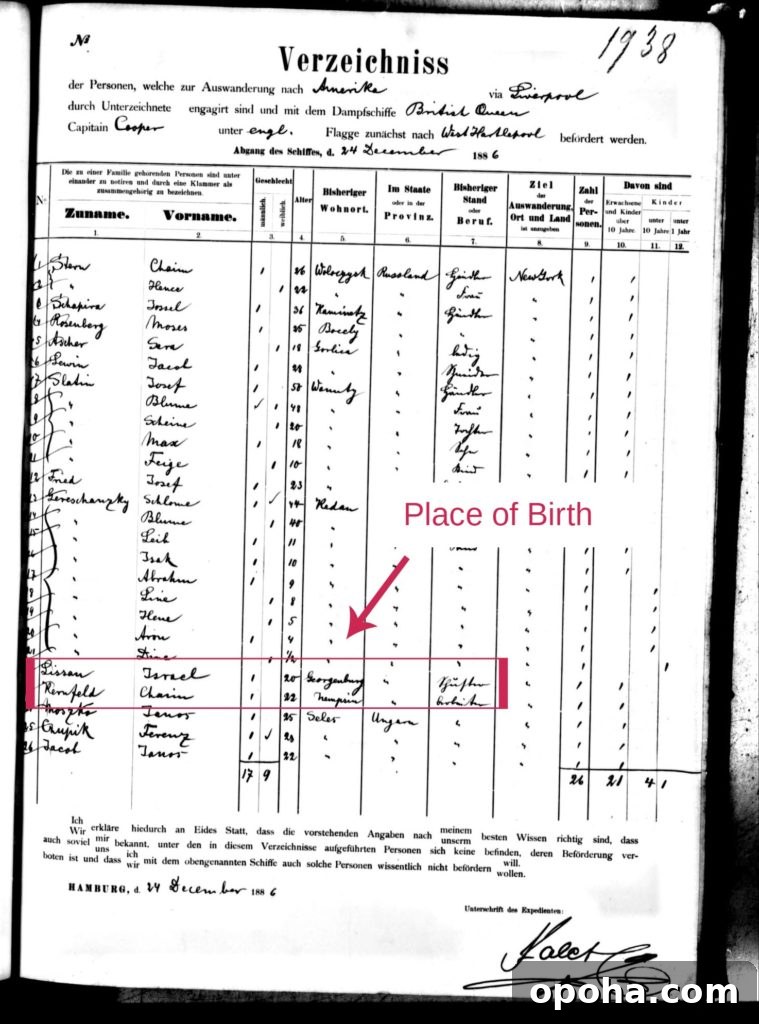
In Israel Lisson’s case, the 1900 census indicated an 1886 arrival; a search of passenger lists revealed his entry and residence information.
Finding Ship Passenger Lists
Digitization has made many passenger lists accessible online. Major databases host extensive collections and local newspapers from the arrival period sometimes printed passenger lists or accounts of voyages and shipwrecks, which can fill in details not found elsewhere.
San Francisco, California · Wednesday, July 16, 1913
Obituaries
Obituaries often note place of birth and arrival details. Check obituaries for your ancestor and for other family members; they can provide arrival years, whether the person immigrated with family, and sometimes the town of origin.
Lynn, Massachusetts • Wed, Jul 17, 1935
For example, Minnie Jacobs’ obituary lists Russia as her birthplace and indicates she arrived in the United States in 1881 with her parents — a valuable clue for further research.
When traditional records don’t provide the answers
Examine the community where the immigrant settled. Many immigrants clustered with people from the same town or region, or with relatives who arrived earlier. Investigate churches, synagogues, fraternal organizations, and other community records. The FAN principle — Friends, Associates, Neighbors — often reveals leads. In Israel Lisson’s case, he settled in Rochester, New York, was active in a synagogue, and frequently appeared alongside another Russian immigrant, Barnet Lisson. Researching that associate yielded additional clues.
Overcoming Name Hurdles for Your Ancestor
Names can change at immigration, be recorded phonetically, or be misspelled due to accents and handwriting. These variations can block searches unless you plan for them.
Two practical tips:
- Ask family members for known name variations or whether a formal name change occurred.
- Use wildcard searches in databases to capture alternate spellings (for example: L*sson, Lis*, or L*ss*n).
Not every question will be answerable: wars, shifting borders, lost records, and vanished towns create gaps. DNA testing, combined with careful paper research, increasingly helps researchers break through brick walls.
Have you been successful in discovering your immigrant ancestor’s story? Leave a comment and share your experience — we can all learn from each other.
Resources to explore
- FindMyPast’s blog is a helpful free resource with practical tips for tracing immigrant ancestors.
- Review immigration and naturalization records guidance at the National Archives for process details and record types.
- When exploring DNA, consider reputable guides such as Blaine Bettinger’s The Family Tree Guide to DNA Testing and Genetic Genealogy to learn how DNA complements documentary research.
Related posts of interest
- How To Start Researching Your Irish Immigrant Ancestor
- Free Genealogy Websites To Start Finding Your UK Ancestors
- Successful Research With A Genealogical Records Timeline
- How To Find and Use Historical Newspapers in Your Genealogy Research